Mirai Trading LLC · Japan-sourced kei vans

Popular Kei Vans by Country, Year & Chassis Code

Compare the Japanese kei vans most visible in the USA, UK, Canada, New Zealand and Australia. Start with the destination and intended job, then narrow the search by cargo/passenger body, model year and chassis code.

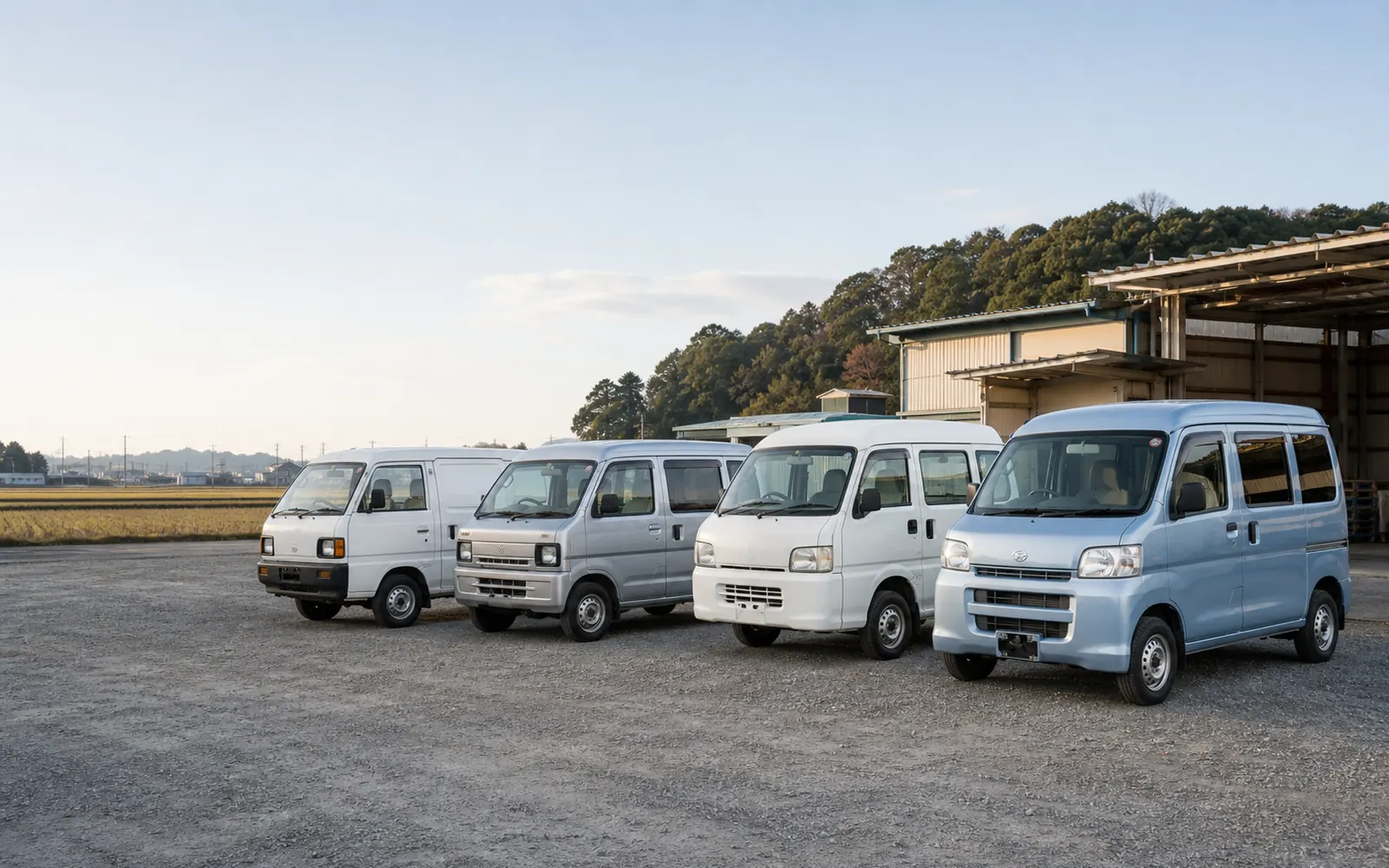
Lineup of popular Japanese kei vans from classic to current generations
Original Mirai Trading editorial image. Illustrative lineup only; confirm every vehicle from its export certificate, model plate and physical configuration.
5Core markets

USA, UK, Canada, New Zealand and Australia.

5Core van families

Every, Honda vans, Sambar, Hijet and Minicab.

660ccModern kei ceiling

Engine maximum for Japanese kei-class vehicles.

2–4Typical seat range

Cargo and passenger registration/configuration differ.

What “Popular” Means on This Page

No complete public database ranks private kei-van imports across all five markets. This is an evidence-backed shortlist, not a made-up global sales table.

Mirai compared current marketplace activity, specialist importer stock, public auction and buyer evidence, plus manufacturer and government documentation. That identifies which model families and year bands buyers are actually encountering while keeping the chassis facts separate from market opinion.

Popularity is not eligibility. A van can be common in one country and unsuitable for a specific registration class, province, state or local use. This page helps readers choose a model family; the linked destination guides handle import, approval and road-use questions.

Cargo body, passenger body and seating are not interchangeable labels

Every Van versus Every Wagon, Hijet Cargo versus Atrai, Sambar Van versus Dias Wagon, Minicab Van versus Town Box, and Acty Van versus Vamos/N-VAN can differ in registration class, seat specification, trim and payload. Buy from the exact model code and documents—not from a seller’s generic “kei van” description.

Popular Kei Van Market Explorer

Select a destination and intended job. Results show observed shopping years, relevant chassis families and why each van belongs on that market’s shortlist.

Choose Your Market and Purpose

This is a model-selection tool. It does not calculate legal eligibility.

5 matching families

Why Popular Kei Van Years Change by Country

The bands summarize observed shopping patterns in July 2026. They are not universal approval windows.

19902000201020202026
United States
1990–2001 · classic 660cc vans dominate
Canada
1999–2011 · stronger 2000s supply
United Kingdom
1997–2024 · classic and newer vans coexist
New Zealand
2005–2026 · late-model cargo vans visible
Australia
1990–2001 + selected 2018–2026
Observed main shopping bandSelected newer specialist/register signal

The Five Popular Kei Van Families

Each family covers several commercial and passenger bodies. Chassis codes are the cleanest way to separate generations and OEM changes.

Distinct layouts by generation

Honda Acty Van, Vamos & N-VAN

Classic and current

Acty and Vamos use Honda’s mid-engine kei-van architecture; the 2018 N-VAN is a separate front-engine platform with a low floor and wide passenger-side opening.

1990–1999Acty HH3/HH4 · E07A 656cc
1999–2018Acty HH5/HH6, Vamos HM1/HM2 · E07Z
2003–2018Vamos Hobio HM3/HM4, HJ1/HJ2 · E07Z
2018–presentN-VAN JJ1/JJ2 · S07B 658cc
  • Strong classic U.S. visibility for Acty and Vamos
  • N-VAN is prominent in newer UK, NZ and Australian shopping
  • Acty and N-VAN are not one mechanical generation
Rear-engine Subaru originals

Subaru Sambar Van & Dias

1961–present nameplate

Subaru-built KV, TV and TW vans use the rear-mounted EN07 four-cylinder. Later Sambar vans are Daihatsu OEM models and must be treated as a different mechanical family.

1990–1998KV3/KV4 · EN07 658cc
1999–2012TV1/TV2 commercial van · EN07
1999–2009TW1/TW2 Dias Wagon · EN07
2012–2021S321B/S331B · Daihatsu OEM
2022–presentS700B/S710B · Daihatsu OEM
  • Strong enthusiast identity in classic markets
  • Commercial TV and passenger TW codes stay distinct
  • Current Sambar is not a rear-engine EN07 Subaru
Cargo and passenger breadth

Daihatsu Hijet Cargo & Atrai

1960–present nameplate

Hijet Cargo targets work use; Atrai provides the more passenger-oriented counterpart. The S700/S710 family now anchors Daihatsu’s current kei-van range.

1994–1998S100V/S110V · EF 659cc family
1999–2004S200V/S210V · EF family
1999–2005Atrai S220G/S230G · EF family
2004–2021S320V/S330V, S321V/S331V · EF/KF
2021–presentS700V/S710V · KF 658cc
  • Wide cargo-space and grade choices
  • Current New Zealand Hijet Cargo visibility
  • Current family also underpins Toyota and Subaru OEM vans
Value and fleet alternative

Mitsubishi Minicab Van & Town Box

1966–present nameplate

Mitsubishi-built U-series vans remain useful value alternatives. Later DS-series Minicab and Town Box models are Suzuki Every OEM vehicles.

1991–1999U41V/U42V · 3G83 657cc
1999–2014U61V/U62V · 3G83 657cc
1999–2011Town Box U61W/U62W · 3G83
2014 onwardDS64V/DS17V, DS64W/DS17W · Suzuki OEM
  • Often overlooked beside Every and Acty
  • U-series vans have current North American evidence
  • DS-series parts research should begin with the donor Every

Popular Kei Van Profiles by Country

These summaries describe what buyers are likely to see—not what every jurisdiction will register.

USA · 1990–2001

Classic vans and retro passenger trims

Acty/Street, Sambar/Dias, Every, Hijet/Atrai and Minicab/Town Box all appear in current U.S.-oriented stock and owner evidence.

  • Exact 2001 manufacture month matters
  • Classic styling and 4WD draw enthusiasts
  • Cargo/passenger classification can affect treatment
Canada · 1999–2011

More 2000s comfort and automatics

Canadian importer and parts evidence supports DA64 Every, HH5/HH6 Acty, TV/TW Sambar, later Hijet and U61/U62 Minicab families.

  • Later model years than normal U.S. supply
  • Stronger A/C and automatic availability
  • Province-level treatment remains separate
UK · 1997–2024

Classic character plus current practicality

Suzuki Every is the strongest general-purpose market signal; Acty, Sambar, Hijet/Atrai, Minicab and N-VAN broaden the choice.

  • Right-hand-drive layout suits the market
  • Cargo and passenger bodies both appear
  • N-VAN and newer Every interest is visible
New Zealand · 2005–2026

Late-model work vans lead

Current listings and dealer evidence emphasize newer Every and Hijet Cargo choices, with N-VAN and OEM twins as specialist alternatives.

  • 2019 and 2021 Every listings observed
  • Near-new 2026 Hijet Cargo offered
  • Classic Sambar remains a smaller enthusiast choice
Australia · split market

Classics plus specified newer entries

Classic 1990s vans coexist with active register signals for specified N-VAN, Every and Atrai variants.

  • JJ1/JJ2 N-VAN entry from July 2018
  • Specified 2021+ DA17 Every variants
  • S321/S331 Atrai entry for a narrow 2020–2021 band
Condition beats a badge

Inspect the individual van

A clean less-famous chassis is usually a better buy than a popular model with structural rust, neglected cooling, broken A/C or undocumented seating changes.

  • Check floor, sills, roof seams and door tracks
  • Verify rear seats, anchors and belts
  • Test 4WD, turbo/supercharger and transmission

Cargo Van or Passenger Van?

The nameplate can look similar while the registered body, seats, glass, trim, payload and equipment differ.

FamilyCommercial/cargo linePassenger-oriented lineTypical cargo priorityTypical comfort priorityCode check
SuzukiEvery VanEvery WagonHighHigh on WagonV vs W suffix matters
HondaActy Van / Hobio Pro / N-VANVamos / Vamos HobioHigh on commercial gradesHigher on VamosHH, HJ, HM and JJ are separate
SubaruSambar Van TVDias Wagon TWHigh on TVHigher on TWTV is not TW
DaihatsuHijet CargoAtraiHighHigher on AtraiS-series suffix/full code
MitsubishiMinicab VanTown BoxHighHigher on Town BoxU-series vs DS Suzuki OEM

These are family-level distinctions, not universal trim specifications. Confirm the individual vehicle’s registered category, seat count, belts, windows, payload plate and option equipment.

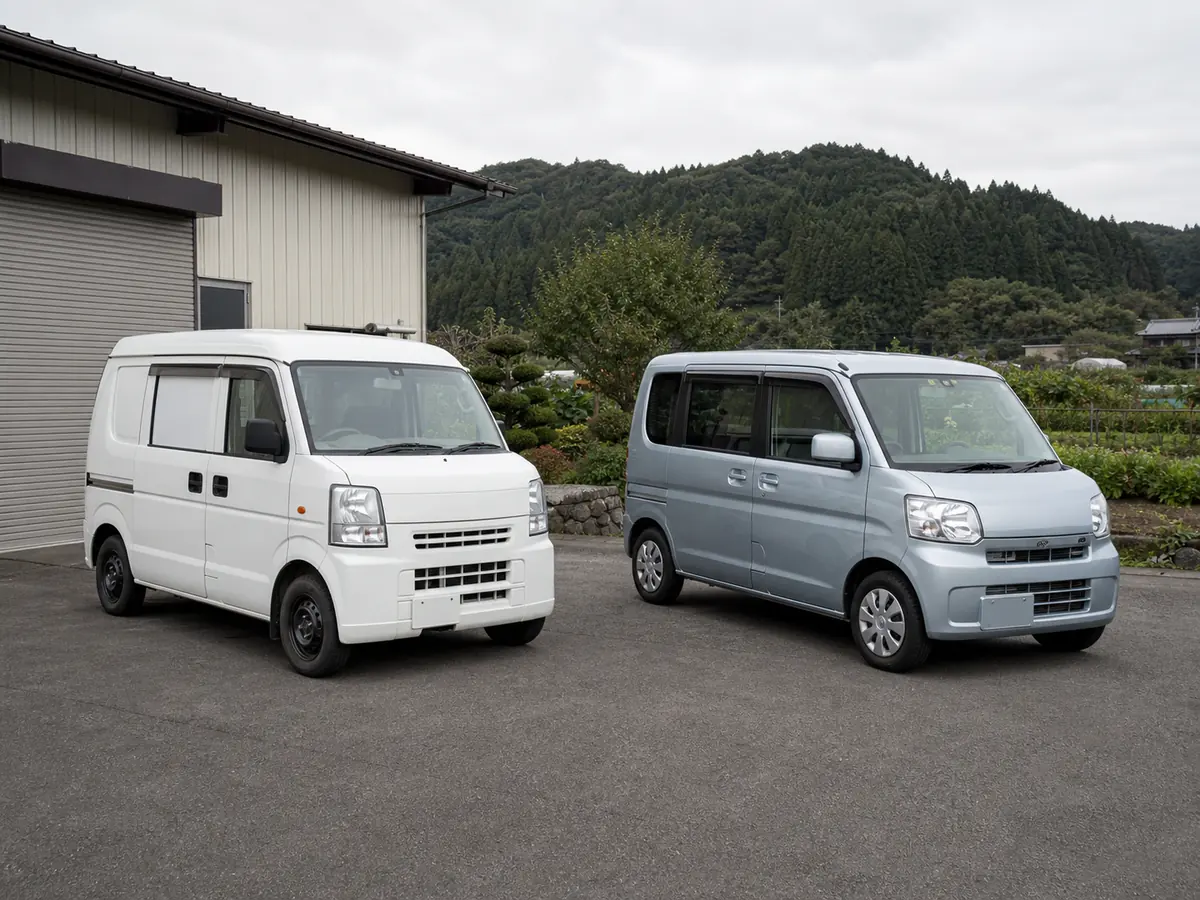
Commercial cargo and passenger-oriented Japanese kei vans parked side by side

Choose the body before choosing the color

A cargo van prioritizes floor space, simple trim and work durability. A passenger-oriented van normally adds finished interior panels, rear-seat comfort, glazing and convenience features.

  • Count the seats shown on the export certificate
  • Inspect seat anchors and belts—do not rely on a loose rear bench
  • Confirm payload changes with seating occupied
  • Decide whether tools, parcels or people are the daily priority

Choose by Purpose Before Choosing by Badge

The best kei van is the clean chassis whose body, seats, drivetrain and equipment match the job.

Cargo

Tools and commercial work

Start with Every Van, Hijet Cargo, Minicab Van, Sambar Van or N-VAN commercial grades. Prioritize a flat load floor, door operation and real payload information.

Mixed use

People during the week, gear on weekends

Folding rear seats, full glazing and a clean interior make Every Wagon, Vamos, Dias, Atrai and Town Box useful mixed-use choices.

Urban

Compact delivery and service calls

Sliding doors and a short body suit dense neighborhoods. Check turning circle, automatic transmission behavior, A/C and cargo tie-down points.

Passenger

Four-seat comfort

Look for documented passenger versions with proper belts, head restraints and finished trim. Do not convert a cargo shell by assumption.

Weather

Snow and rough-weather access

4WD can help on loose or slippery surfaces, but it does not prove low range, locking differentials or road suitability. Tires and condition still matter.

Enthusiast

Classic styling and unusual engineering

Subaru EN07 vans, Acty Street, Sambar/Dias Classic, Atrai and turbo Every grades provide more character—but demand careful parts and rust research.

Keep ordinary cargo work ordinary

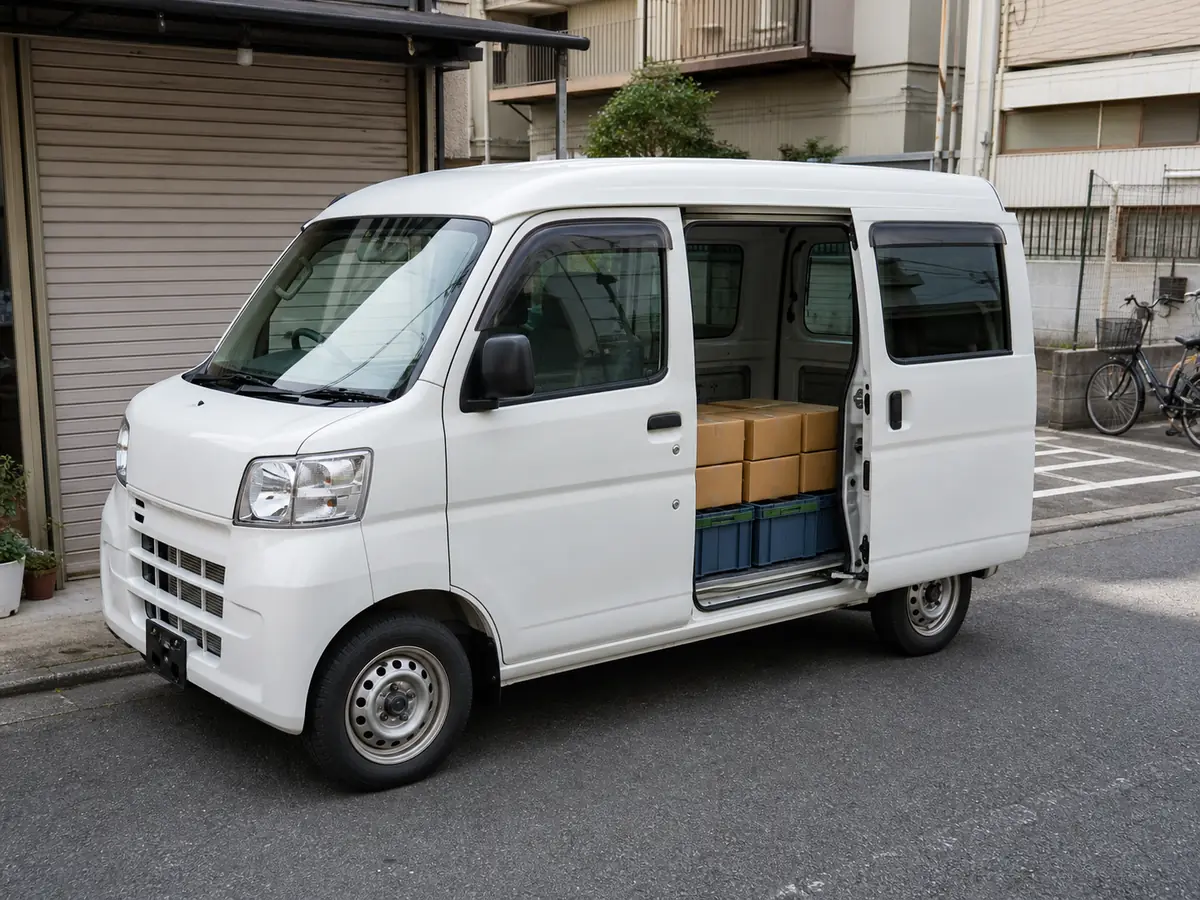
A standard cargo van is excellent for parcels, tools, service equipment and compact local jobs when the load is secured and the rear door tracks are healthy.

  • Use tied-down crates and keep sightlines clear
  • Respect the vehicle’s documented payload
  • Check sliding-door rollers and rear hatch struts
  • Do not treat generated imagery as a capacity claim
Japanese kei cargo van carrying secured parcels for a compact delivery job

OEM Twins: Different Badge, Shared Kei Van Platform

Badge-engineered vans widen the sourcing pool, but parts and specification research must begin with the full chassis code and production date.

Mazda Scrum

Suzuki Every-family commercial and passenger derivatives.

DG52V · DG62V · DG64V/W · DG17V/W

Nissan Clipper / NV100

Earlier Mitsubishi Minicab donor; later Suzuki Every donor.

U71V/U72V · DR64V/W · DR17V/W

Mitsubishi DS-series

Current Minicab Van and Town Box use Suzuki Every architecture.

DS64V/W · DS17V/W

Toyota Pixis Van

Daihatsu Hijet Cargo derivative.

S321M/S331M · S700M/S710M

Subaru Sambar from 2012

Daihatsu Hijet Cargo/Atrai architecture, not Subaru EN07.

S321B/S331B · S700B/S710B

Shared platform does not mean every part interchanges

Badges, wiring, safety equipment, glass, trim, transmission calibration and production updates can differ. Use the complete model code, frame number and build date for every parts order.

Popular Kei Van FAQs

Direct answers about model choice, chassis codes, bodies and country-specific shopping patterns.

What are the five most useful kei van families to compare?

Start with the Suzuki Every, Honda Acty/Vamos/N-VAN group, Subaru Sambar, Daihatsu Hijet Cargo/Atrai and Mitsubishi Minicab/Town Box. Together they cover the broadest cross-market footprint found in the reviewed marketplace, importer and manufacturer evidence.

Which kei van is the most popular overall?

No audited public dataset ranks private kei-van imports across all five markets. The Suzuki Every has the broadest current cross-market visibility in this review, while Acty, Sambar and Hijet families are especially strong in classic or specialist segments.

What is the difference between a cargo kei van and a passenger kei van?

A cargo van normally prioritizes load floor, work trim and payload, while a passenger-oriented van prioritizes rear-seat comfort, glazing and interior finish. The registered body category, seat count, belts and model code must be checked on the individual vehicle.

Why are older kei vans more visible in the USA?

The 25-year federal age route strongly shapes U.S. supply. In July 2026, the newest normal age-route vans are 2001 builds that have reached 25 years from their exact manufacture month.

Why does Canada have newer kei vans than the USA?

Canada’s federal older-vehicle threshold is generally 15 years from manufacture, so 2000s chassis such as DA64V Every, HH5/HH6 Acty and later TV1/TV2 Sambar appear more often. Provincial rules remain separate.

Are current kei vans popular in Australia?

Yes, selected newer vans have a visible specialist market. As checked July 21, 2026, Australia’s ROVER register showed active entries for JJ1/JJ2 Honda N-VAN, specified 2021-on Suzuki Every variants and a narrow 2020–2021 S321/S331 Daihatsu Atrai band; an entry does not guarantee approval for an individual vehicle.

Is Suzuki Every Van the same as Every Wagon?

No. They share a model family, but the Van is commercial-oriented and the Wagon is passenger-oriented. Their exact suffix, seating, trim, transmission, turbo availability and registered category can differ.

Is a later Subaru Sambar Van still a rear-engine Subaru?

No. Subaru-built KV3/KV4, TV1/TV2 and TW1/TW2 vans use the rear-engine EN07 layout. From 2012, the Sambar van became a Daihatsu OEM model with different architecture.

Is the Honda N-VAN a newer Acty Van?

No. The N-VAN replaced Honda’s earlier kei-van role but uses a separate front-engine platform and different JJ1/JJ2 chassis codes. Acty HH-series and Vamos HM-series specifications should not be carried over to it.

Does every 4WD kei van have low range or differential lock?

No. Four-wheel drive, low-range gearing and differential lock are separate equipment decisions. Verify the model code, grade, switches, levers and actual operation on the individual van.

Does this page confirm import or road legality?

No. This is a popularity and model-selection page. Import, compliance, registration, insurance and public-road rules belong in the linked country and state or province guides.

Can Mirai source a specific kei van chassis and body?

Yes. Send Mirai the destination, cargo or passenger requirement, seat count, intended work, year range, chassis target, drivetrain, transmission, A/C requirement and turbo or supercharger preference.

Sources & Popularity Method

Manufacturer and government sources verify the chassis context; current market sources show which vans and years buyers are encountering.

  1. Suzuki Digital Library: Every/Carry Van history and current model-code documentation.
  2. Honda Acty Van archive, Acty/Vamos model-code documentation and current N-VAN specifications.
  3. Subaru’s 1999 Sambar release, TV1/TV2 EN07 documentation and current S700B/S710B specifications.
  4. Current Hijet Cargo S700V/S710V specifications and Daihatsu’s 2026 Hijet Cargo/Atrai update.
  5. Mitsubishi U61V/U62V documentation and current Minicab Van specifications.
  6. Mitsui kei-van stock and buyer evidence plus a current U.S. CBP ruling discussing Sambar Van and Suzuki Every.
  7. Canadian kei-van stock/parts evidence and current Canadian importer inventory.
  8. Auto Trader UK Every Wagon evidence and a current UK importer market review.
  9. Trade Me Suzuki Every listings, Sambar model data and a current 2026 New Zealand Hijet Cargo offer.
  10. Australian active register entries checked July 21, 2026: Honda N-VAN JJ1/JJ2, specified Suzuki Every variants and Daihatsu Atrai S321/S331.
  11. National pathway context: U.S. NHTSA, Transport Canada, NZTA and UK vehicle-approval exemptions.

Method and limitation

Market evidence was captured on July 21, 2026. Listings, stock and government-register entries change. Mirai uses them to identify high-visibility van families and shopping-year patterns; they are not represented as audited national sales totals. Chassis facts were cross-checked against manufacturer archives, official recall/model documents and current catalogs.

Tell Mirai Which Kei Van Fits Your Market

Send the destination, cargo or passenger body, required seats, intended use, year band, chassis family, 2WD/4WD, transmission and comfort requirements. Mirai can search Japanese auction and dealer supply against that specification.