
Cargo Kei Vans for Sale: Buy & Import from Japan to the USA
Looking for cargo kei vans for sale in the USA? Mirai sources them from Japanese auctions, inspects them and ships them to U.S. buyers with export and 25-year import handling. Compare Japan-market commercial kei vans by cargo layout, drivetrain, transmission and chassis family. This page keeps true cargo vans separate from passenger wagons—and from enclosed box-body kei trucks that are often listed under the same name.
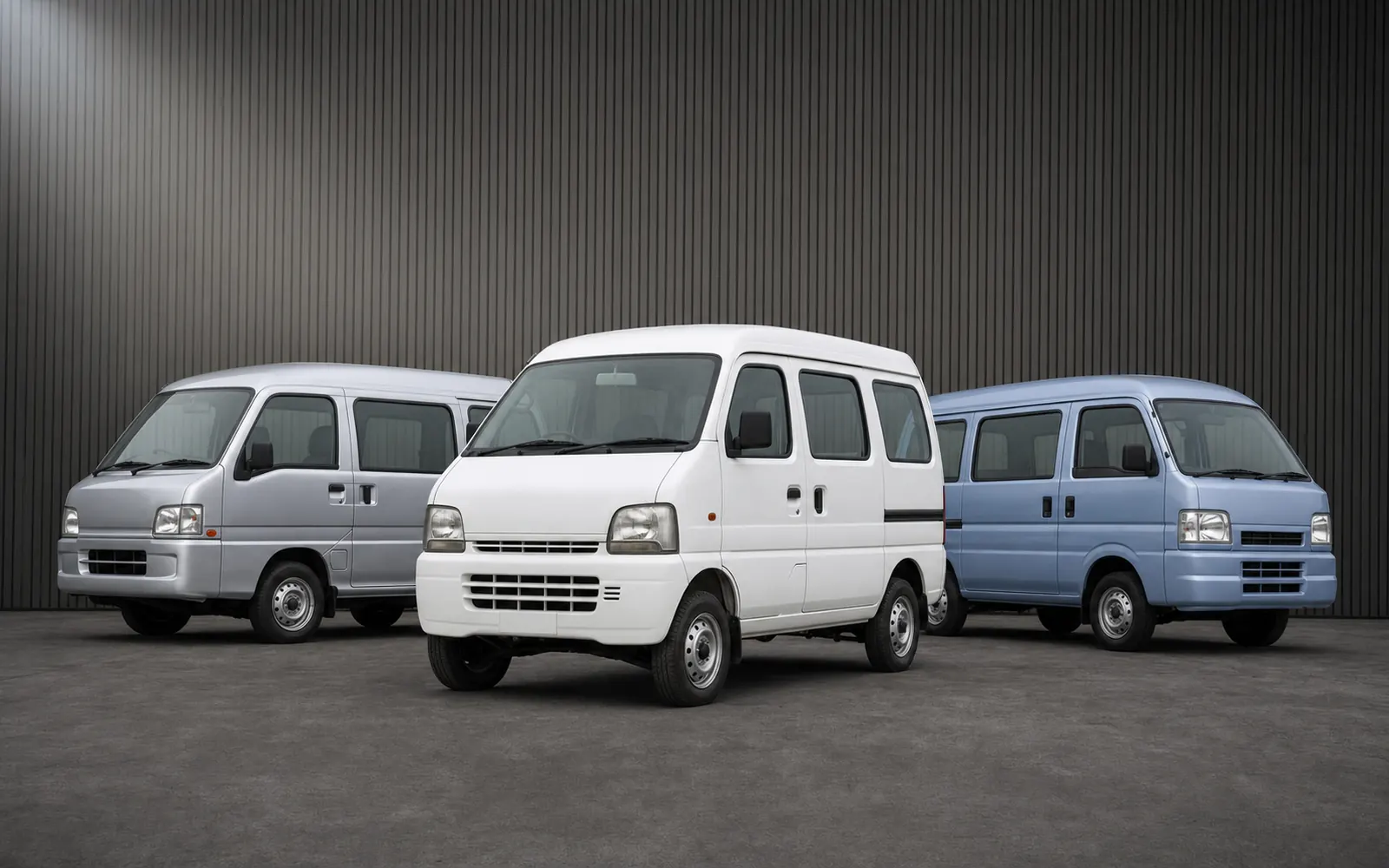
Original Mirai Trading editorial image of a cargo kei van body style. Confirm the individual chassis plate, build month and fitted equipment on the actual unit.
“Cargo kei van” can describe three different vehicles
Search listings often mix commercial vans, passenger wagons and truck-based cargo boxes. The distinction affects load access, seating, chassis codes, payload documentation and the date used in an import assessment. See Mirai’s kei vans guide for the full family before narrowing to a cargo-specific shortlist.
Commercial cargo kei van
A one-box or semi-cab van with an integrated steel body, rear hatch and sliding side door. Commercial grades usually prioritize a flat load floor, durable trim and payload over passenger comfort.
Examples: Suzuki Every Van, Honda Acty Van, Subaru Sambar Van, Daihatsu Hijet Cargo and Mitsubishi Minicab Van.
Passenger kei wagon
The same basic family may have a passenger-focused sibling with upholstered rear seats, extra glass, power equipment and a different model code. It can carry goods, but it is not automatically the commercial van version.
Examples: Every Wagon, Sambar Dias Wagon and Minicab Town Box.
Enclosed box-body kei truck
A separate cargo box is mounted behind a kei-truck cab. It offers vertical volume and a square compartment, but bodybuilder identity, completion date, axle loads and door dimensions become part of the due-diligence file.
Typical listing terms: panel van, box van, dry van, insulated box or van-body kei truck.
Cargo kei vans for sale: build a practical shortlist
Choose your job. The result identifies a useful vehicle family and research band; it is a sourcing screen, not legal approval or a substitute for the chassis plate, production month and inspection.
Cargo configuration matcher
Prioritizes body suitability, access, drivetrain, transmission and market-age timing.
A broad first search for delivery and general cargo work, with common 2WD/4WD and manual/automatic combinations across multiple eras.
Research first: DA52V / DB52V, then confirm the stamped code, drive layout and grade.
Verify before purchase: cargo/passenger classification, maximum load on the Japanese plate, seat and belt configuration, rust, rear-floor condition and U.S. requirements.
Browse cargo kei vans for sale at Japanese auctions
Mirai customers get exclusive access to the Mirai Auction Portal after an inquiry. It covers cargo kei vans from major auctions across Japan, with filters for model code, year, roof height, drive and condition, so your shortlist starts with vans that suit a U.S. import. Portal listings are auction candidates, not Mirai-owned stock.
Request Auction Portal accessCargo-van chassis code map
A familiar model name can cover several generations, body classes and OEM relationships. Treat these as research families; the stamped frame number and export certificate control the identity of a specific vehicle.
| Family | Important commercial-van codes | Broad period | What the code helps separate |
|---|---|---|---|
| Suzuki Every Van | DA51V / DB51V, DE51V / DF51V, DA52V / DB52V, DA62V, DA64V, DA17V | 1990s to current | Generation and drive-layout family; do not substitute Every Wagon codes. |
| Honda Acty Van | HH3 / HH4, HH5 / HH6; related Hobio Pro HJ1 / HJ2 | 1990–July 2018 | 2WD/4WD generation families. N-VAN JJ1 / JJ2 is a separate model launched in 2018. |
| Subaru Sambar Van | KV3 / KV4, TV1 / TV2; later OEM S321B / S331B, S700B / S710B | 1990s to current | Subaru-built rear-engine vans versus later Daihatsu-built OEM models; TW1 / TW2 identifies Dias Wagon passenger variants. |
| Daihatsu Hijet Cargo | S100V / S110V, S200V / S210V, S320V / S330V, S321V / S331V, S700V / S710V | 1990s to current | Generation and 2WD/4WD families within the integrated cargo-van line. |
| Mitsubishi Minicab Van | U41V / U42V, U61V / U62V, then Suzuki OEM DS64V, DS17V | 1990s to current | Mitsubishi-built vans versus Suzuki-supplied later models. EV codes require a separate battery-health workflow. |
Popular cargo kei vans and what each does best
The most useful choice is usually driven by cargo access, engine layout, parts familiarity and the exact era that fits U.S. import—not by a universal “best van” ranking.
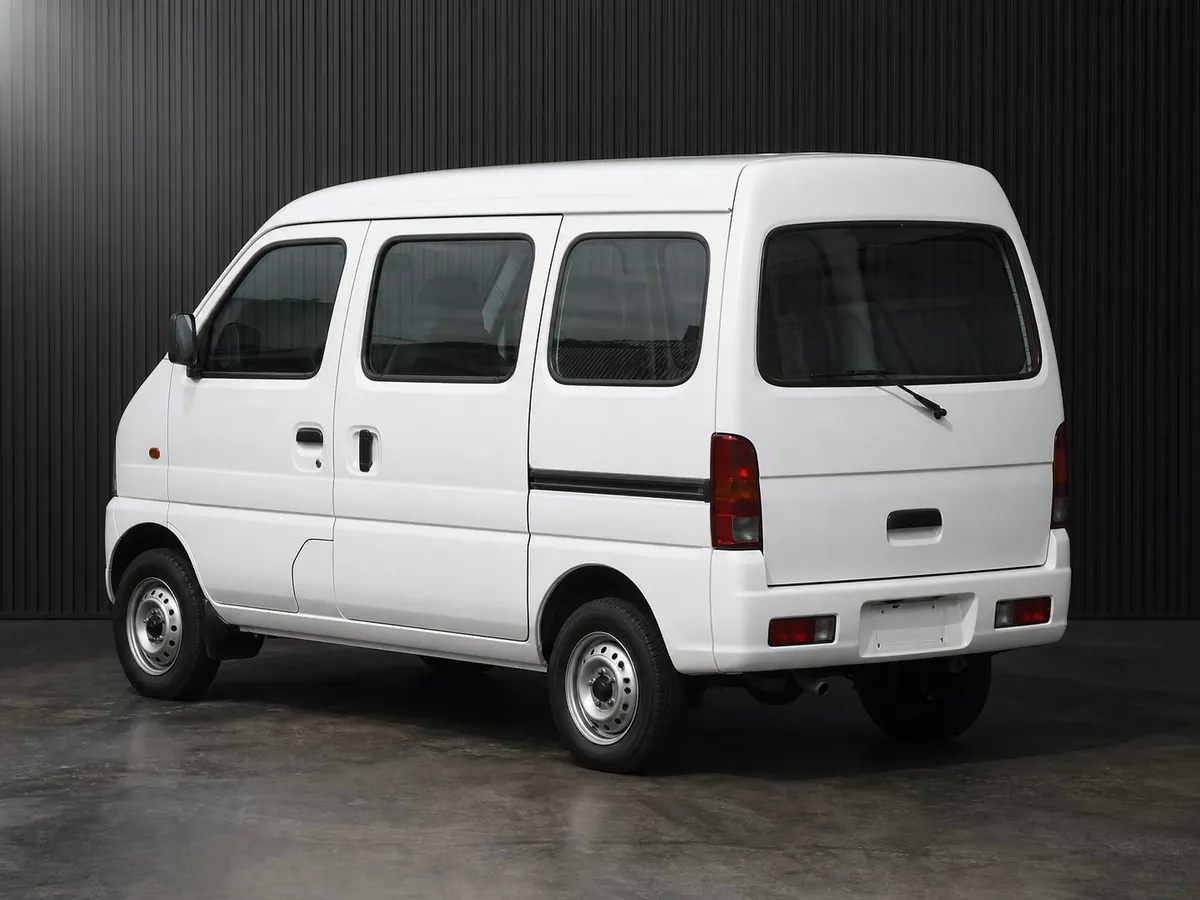
Suzuki Every Van
The Every Van is a strong first search for courier work, tools, retail stock and property use. Commercial grades pair a tall integrated body with a rear hatch and sliding side access, while a long production history gives buyers several age bands and OEM-related alternatives.
DE51V / DF51V and related commercial codes; useful classic-market candidates.DA52V / DB52V, K6A 657 cc era; attractive for US timing as exact months mature.DA62V, then DA64V and DA17V; relevant to U.S. import research.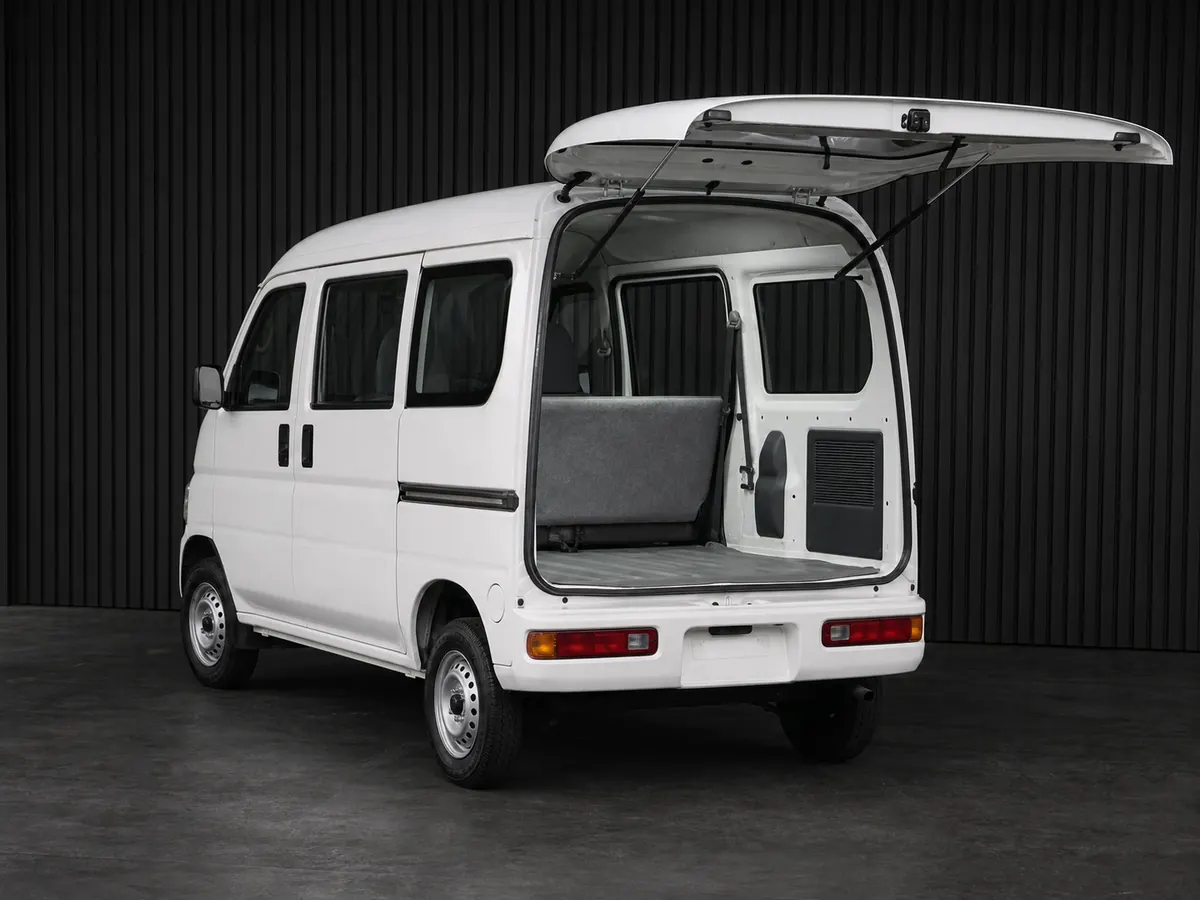
Honda Acty Van
The Acty Van’s mid/rear powertrain layout leaves the front of the vehicle focused on steering and cabin packaging. The HH5/HH6 generation ran from 1999 to July 2018; it did not share the truck’s 2009 chassis-code change or its 2021 end date.
Honda’s final 2018 specification table lists a maximum 350 kg in certain two-seat versions, with lower ratings when four people are carried and in some 4WD/automatic combinations. Use the plate for the actual van.
Subaru Sambar Van
Pre-2012 Subaru-built Sambar Vans use a rear-engine layout valued by some owners for cabin packaging and mechanical character. Commercial TV1 / TV2 vans must be distinguished from TW1 / TW2 Dias Wagon passenger versions.
For modern Sambar research, compare the equivalent Hijet Cargo because the badge no longer implies the old Subaru rear-engine architecture.
Daihatsu Hijet Cargo
The Hijet Cargo is a foundational commercial kei van with a square load area, sliding-door access and long-running 2WD/4WD availability. Its later generations also underpin OEM models, making chassis-code literacy more useful than grille recognition.
Current Daihatsu material publishes a 350 kg maximum for specific cargo arrangements, but that figure must not be copied onto a used 1999 van without checking its own plate and documentation.
Mitsubishi Minicab Van
Earlier Minicab Vans are Mitsubishi-built commercial vehicles, including the 1999–2014 U61V / U62V family. Later DS64V and DS17V vans are Suzuki-supplied OEM models related to the Every.
This family is valuable when a buyer wants commercial simplicity or a Suzuki-derived later van under a different badge. Parts planning must follow the actual build origin and code.
OEM twins worth adding to searches
Mazda Scrum Van can mirror Suzuki Every generations. Nissan Clipper / NV100 Clipper can correspond to Mitsubishi or Suzuki base vehicles depending on year. Toyota Pixis Van and post-2012 Subaru Sambar Van relate to Daihatsu Hijet Cargo generations.
Cross-shopping twins can improve auction choice, but use the OEM-specific code, parts catalog and document identity rather than assuming every badge is interchangeable.
Read cargo dimensions and payload together
A tall empty compartment may look capable of carrying anything, but the vehicle’s permitted maximum load, axle balance, seats in use and final body weight control what it can safely carry.
| Published reference | Cargo-length reference | Maximum-load reference | Use it correctly |
|---|---|---|---|
| Current Suzuki Every Van | Configuration-dependent; verify Suzuki’s current load-space diagrams | Up to 350 kg as a two-seater; typically 250 kg with four seats, with certain variants lower | A current benchmark only—not a DA52V specification. |
| Final Honda Acty Van (2018) | 1,725 mm two-seat internal length in Honda’s table | Up to 350 kg; reduced with four occupants and in specified configurations | Useful for final HH5/HH6; still check the actual plate. |
| Current Subaru Sambar Van | 1,915 mm two-seat reference; 1,005 mm four-seat reference | Up to 350 kg | Describes the Daihatsu-built current OEM model, not a TV1/TV2. |
| Current Mitsubishi Minicab Van | 1,910 mm two-seat reference; 975 mm four-seat reference | Configuration-dependent | Describes a Suzuki-supplied current model, not a U61V/U62V. |
| Current Daihatsu Hijet Cargo | Promoted around a flat, square commercial load area | Up to 350 kg | Confirm model, seats and Japanese plate for the purchased unit. |
Measure the door, not only the room
Record rear-aperture width and height, side-door aperture, wheel-arch spacing and the narrowest point your cases or machinery must pass.
Four seats reduce usable cargo
With the rear seat raised, both floor length and payload allowance can fall. Ask whether the actual job needs four belted occupants or only occasional seating.
Payload includes the upfit
Shelving, refrigeration, batteries, tools and permanently fitted equipment consume available load before goods are added.
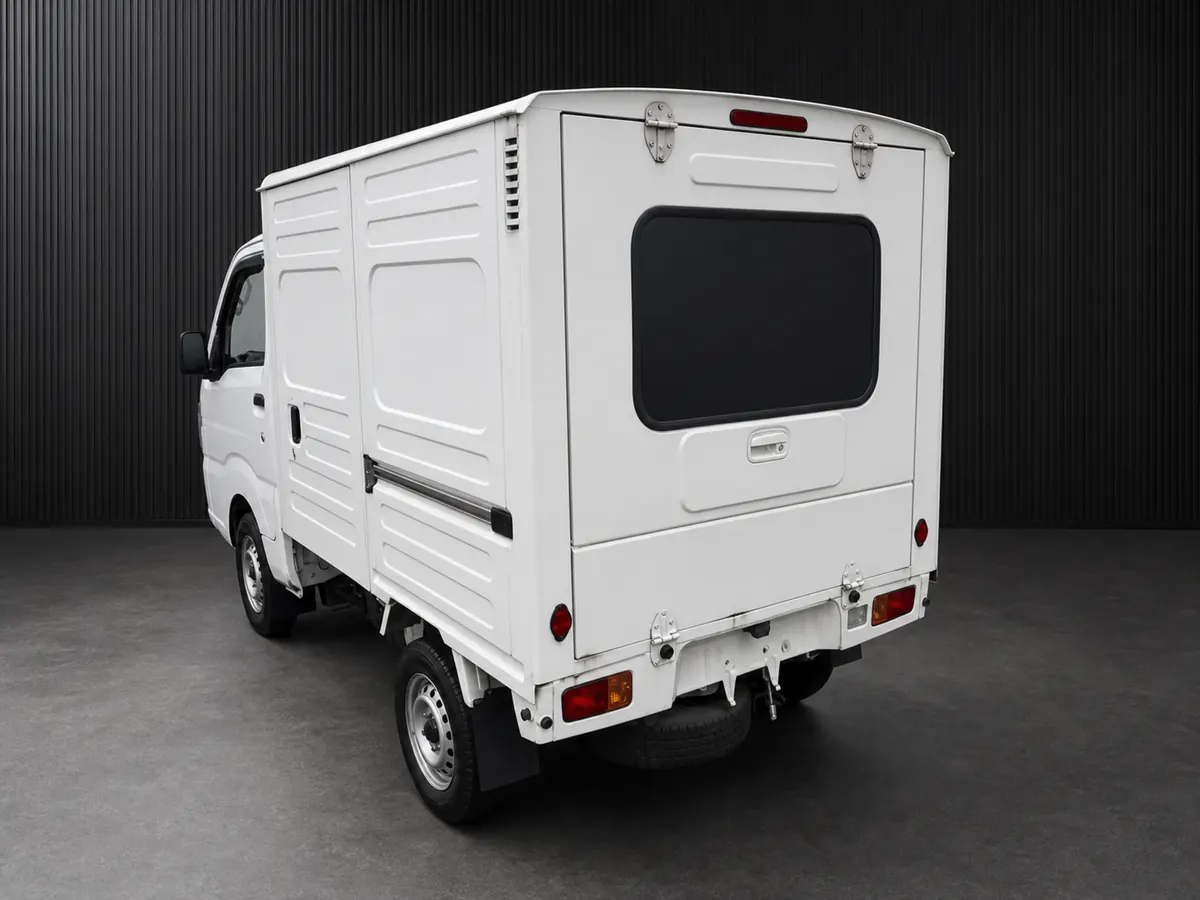
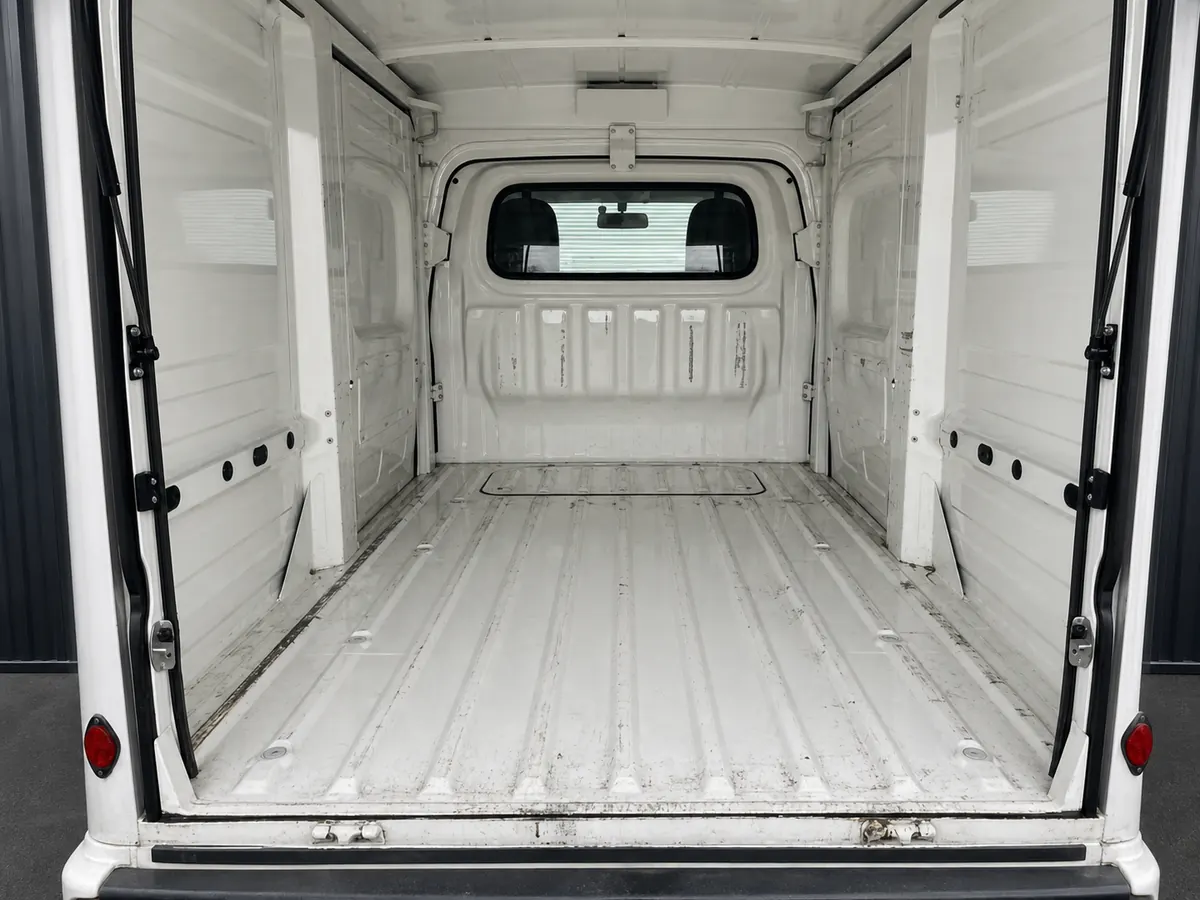
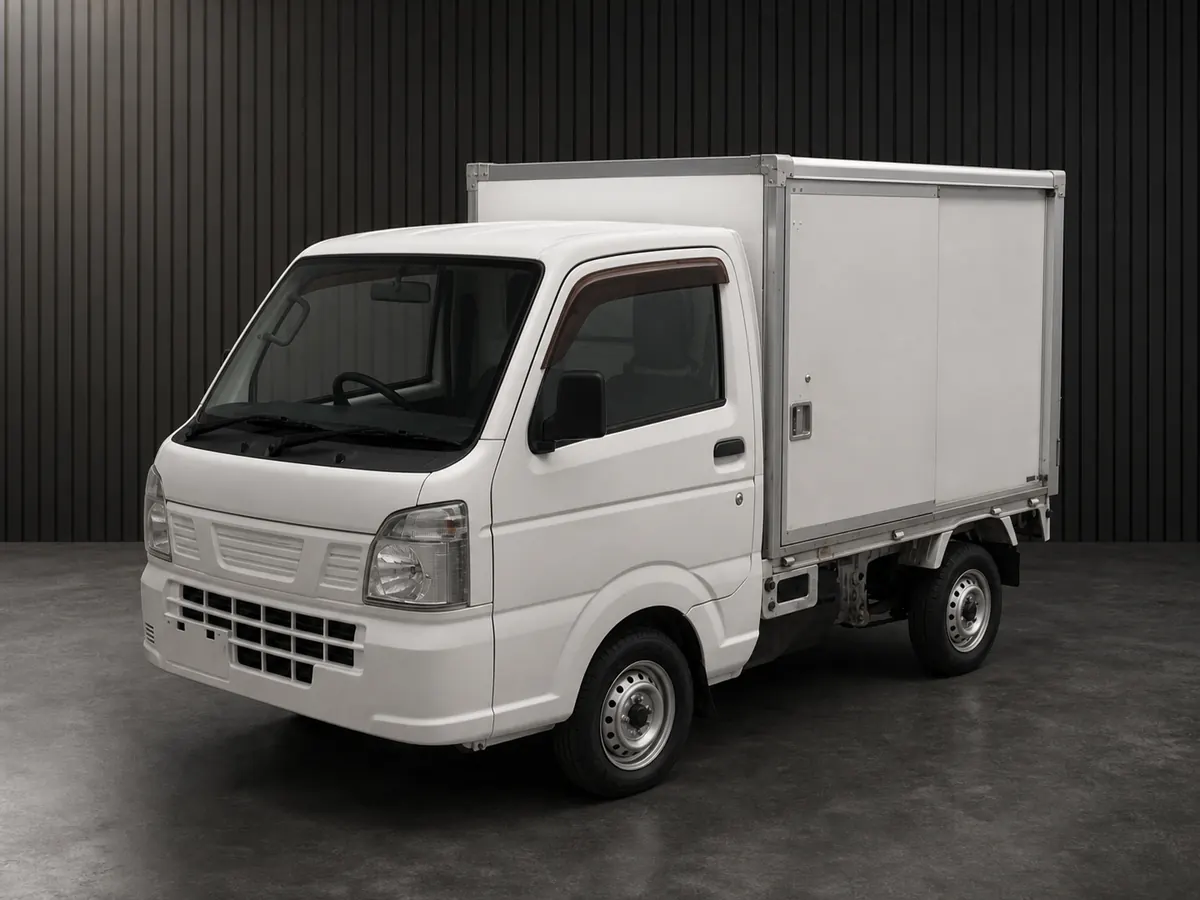
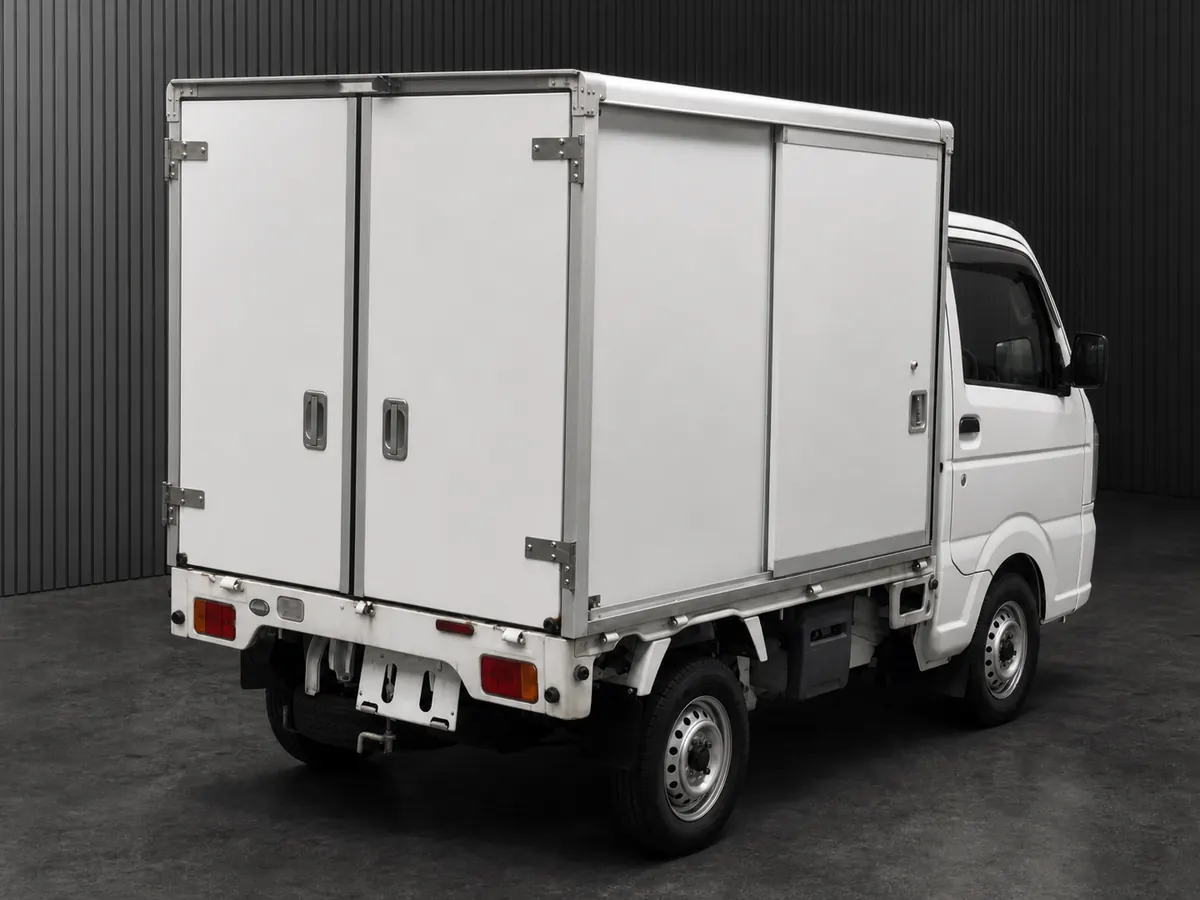
These photos show enclosed box-body kei trucks
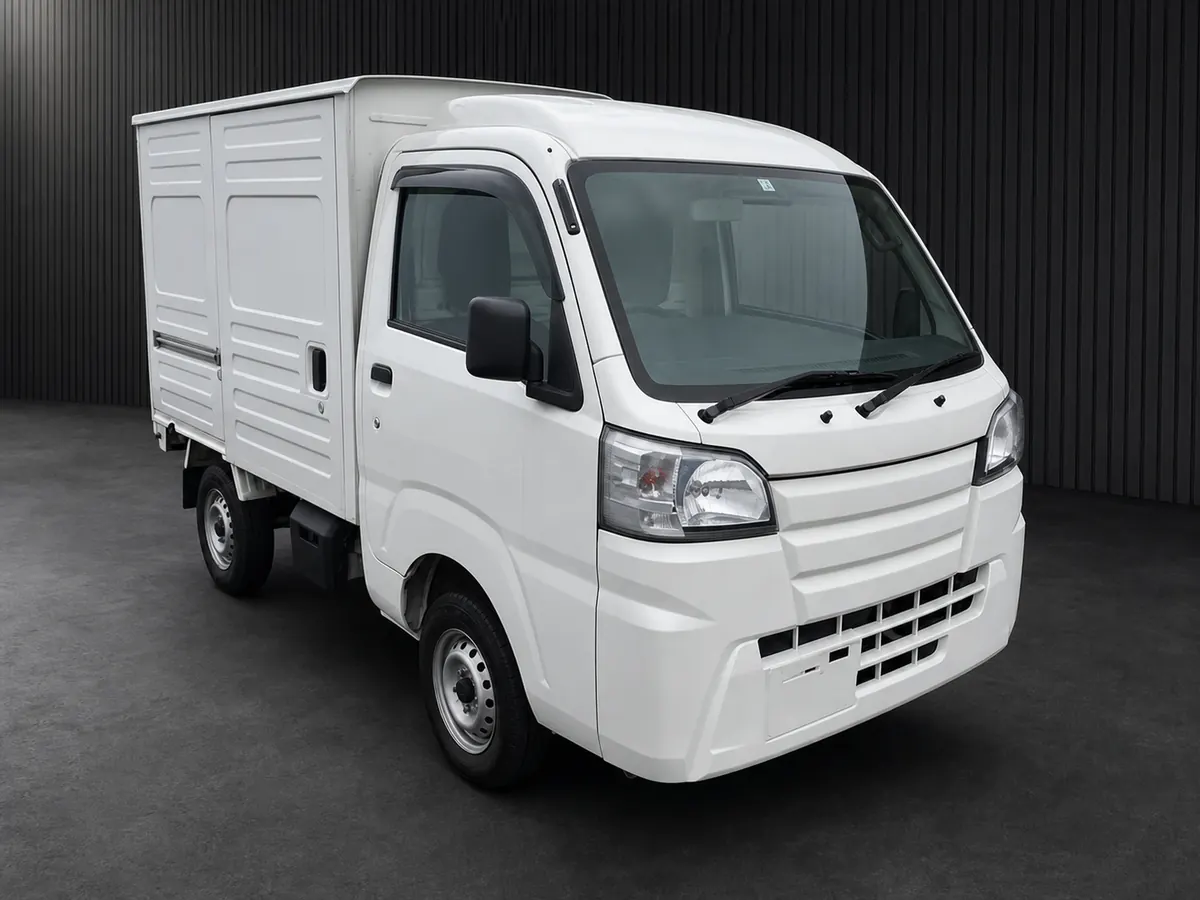
All six supplied views have been retained because they reveal details a serious buyer should inspect. These are reference photographs, not proof of a model, bodybuilder, insulation rating or payload — confirm every specification against the individual unit’s documents.
Ribbed steel cargo box 3 views
A modern Daihatsu-badged kei-truck cab with a tall corrugated enclosure. Exact chassis, bodybuilder and rating remain unconfirmed without the plates.
Smooth-panel cargo box 3 views
An older Nissan-badged kei-truck cab with a smooth enclosure. The panels may look insulated, but temperature-control capability cannot be claimed without construction records and functional equipment.
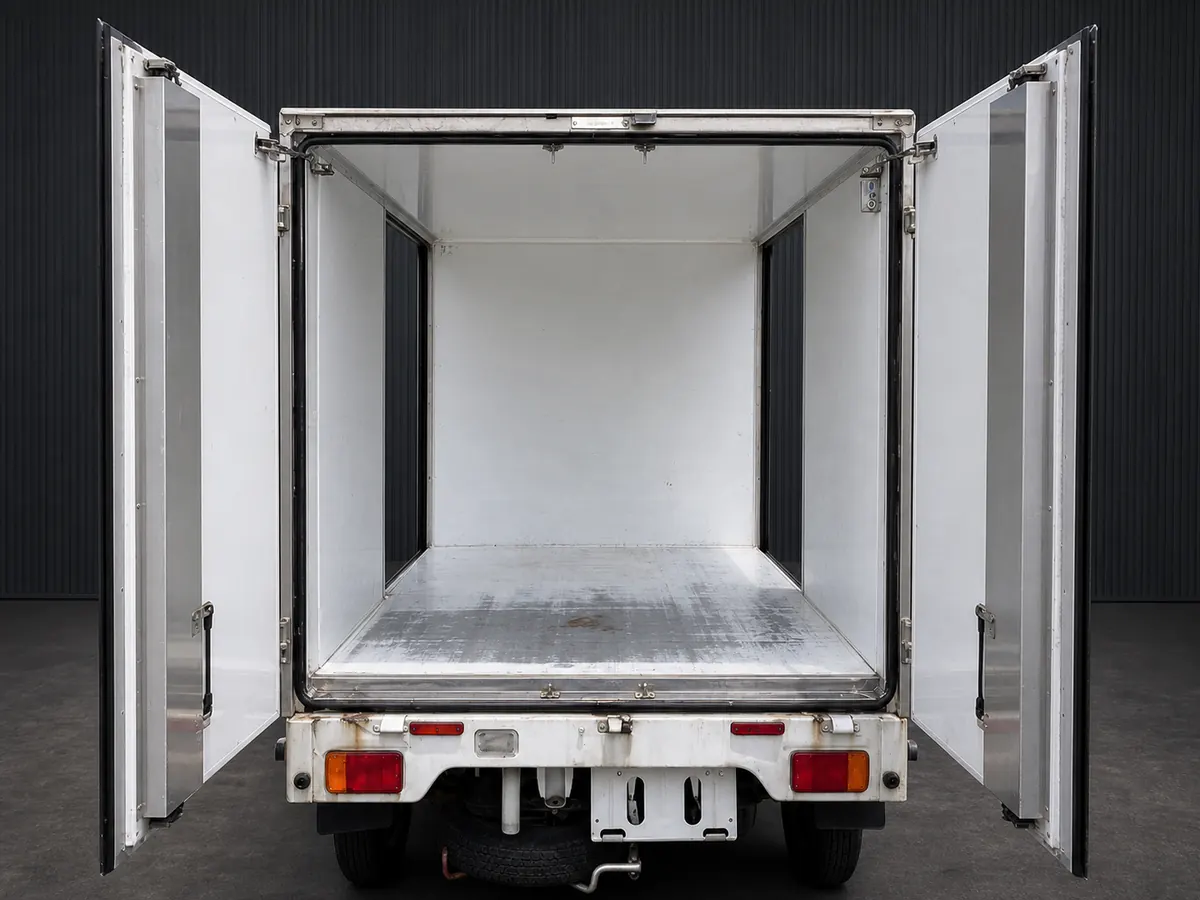
Integrated van or box-body truck?
| Decision point | Integrated cargo kei van | Enclosed box-body kei truck |
|---|---|---|
| Access | Rear hatch plus one or two sliding side doors. | Usually rear doors; side door depends on body construction. |
| Load floor | Low, interrupted by wheel housings and folded-seat geometry. | Square and often higher above the road. |
| Vertical volume | Limited by integrated roof and door aperture. | Potentially much taller and squarer, within axle and stability limits. |
| Weather sealing | Factory-engineered body seals; age still matters. | Depends heavily on bodybuilder, door seals, roof joints and repairs. |
| Identification | Manufacturer model code and plate normally describe the complete van. | Truck chassis plus separate bodybuilder/final-stage information may be needed. |
| Best fit | Multi-stop delivery, tools, retail stock and mixed access. | Light bulky items needing a square, protected compartment. |
Which year bands deserve attention for U.S. buyers?
These cards help define an auction search. Detailed compliance, titling, registration and local-use questions belong in the linked U.S. import guide and must be rechecked for the actual vehicle.
United States 25-year federal screen
For a conventional federal-age route, use the exact manufacture month—not only model year. In July 2026, a July 2001 vehicle may qualify while a later 2001 build may still be too new.
Good research band: 1990s through month-eligible 2001 Every, Acty, Sambar, Hijet Cargo and Minicab.
Open USA import guideLocal use still matters
National import eligibility is not the same as title, registration, inspection, licensing or permission to use every road. This is especially important across US states.
Mirai sourcing rule: identify the U.S. import route before bidding and keep the frame number, manufacture month and body-class evidence together.
Ask Mirai about importing oneInspect the cargo system, not only the engine
Commercial vehicles often look tidy above the floor while hiding loading wear, water intrusion or improvised upfits. Ask for evidence that matches how the van will be used.
Answers buyers usually need before bidding
What is a cargo kei van?
A cargo kei van is a Japan-market kei-class commercial van with an integrated body, rear cargo access and usually one or two sliding side doors. It is different from a passenger kei wagon and from a separate cargo box mounted on a kei-truck chassis.
Are the supplied box vehicles cargo kei vans?
No. The supplied photographs show enclosed box bodies mounted behind kei-truck cabs. They can serve similar delivery work, but their construction, load height, identification and final-stage documentation differ from an integrated cargo kei van.
Which cargo kei van is best?
There is no universal best model. The Suzuki Every is a broad all-round search, the Honda Acty and Subaru-built Sambar offer distinctive powertrain layouts, and the Hijet Cargo and Minicab provide strong commercial alternatives. The correct choice depends on cargo dimensions, drivetrain, transmission and parts support.
Can a cargo kei van carry 350 kg?
Yes, some configurations are rated up to 350 kg, especially with two seats in use, but the limit varies by model, drivetrain, transmission and seating. The Japanese load plate and documents for the actual van control; never apply a current brochure figure to an older chassis automatically.
Can four people ride in a cargo kei van?
Yes, many commercial vans have a folding rear seat and four-person capacity, while two-seat work grades also exist. Carrying four people reduces cargo-floor length and can reduce permitted payload, so verify the seating and load figures for the exact configuration.
Do cargo kei vans come with 4WD and automatic transmission?
Yes, many families offered 4WD and automatic versions, but availability changes by year, chassis code and grade. Confirm both from the model plate, transmission controls, drivetrain hardware and documents rather than relying on an auction title.
Does the chassis code reveal air conditioning or trim?
Not by itself. A chassis code identifies a model and drivetrain family, but equipment such as air conditioning, power steering, power windows and specific commercial trim must be checked on the real vehicle and in the correct year catalog.
What is the difference between Suzuki Every Van and Every Wagon?
Every Van is the commercial cargo line, generally optimized for load space and work use. Every Wagon is passenger-focused, with different equipment, seating and model codes. Listings should be checked carefully because sellers sometimes use the names loosely.
Did the Honda Acty Van continue until 2021?
No. Honda’s official archive shows the Acty Van ending in July 2018. The Acty Truck continued until April 2021. The HH5/HH6 Acty Van generation ran from 1999 to 2018 and did not adopt the truck’s HA8/HA9 codes.
How old must a cargo kei van be to import to the USA?
The usual US federal age exemption is 25 years from the exact manufacture date, so in 2026 target 2001-or-older units confirmed by production month. State and local requirements remain separate.
Can a newer cargo kei van be imported to the USA?
Not through the conventional age route. A cargo kei van must reach 25 years from its exact manufacture date before it qualifies for the normal US import route, so newer units are not yet eligible. Screen the exact code, production date and documents before bidding.
What should Mirai verify before sourcing a cargo kei van?
Mirai should verify the stamped chassis, production month, cargo or passenger classification, seats, maximum load, transmission, drivetrain, air conditioning, rust, cargo-floor condition, door operation, U.S. import pathway and any bodybuilder or upfit documentation.
Primary references used for this page
Specifications are tied to their published generation. U.S. import summaries are intentionally high-level and link out to current government guidance.
- Suzuki Digital Library — Carry Van / Every history and model codes
- Suzuki Japan — current Every cargo capacity
- Honda Japan — Acty Van archive and production periods
- Honda Japan — final Acty Van specifications
- Daihatsu Japan — current Hijet Cargo load-space reference
- Subaru Japan — current Sambar Van utility dimensions
- Mitsubishi Motors Japan — current Minicab Van specifications
- NHTSA — US vehicle importation FAQ and 25-year rule
- ROVER — active SEVS entry for specified 2021+ Suzuki Every codes
Send Mirai the cargo job—not just a model name
Tell us the required door opening, cargo dimensions, payload, seats, drivetrain, transmission and air-conditioning preference. A Mirai representative can translate that brief into chassis-code and auction filters, then verify candidate units before you bid.