
Kei Bucket Trucks: Cherry Picker & Aerial Work Platform Guide
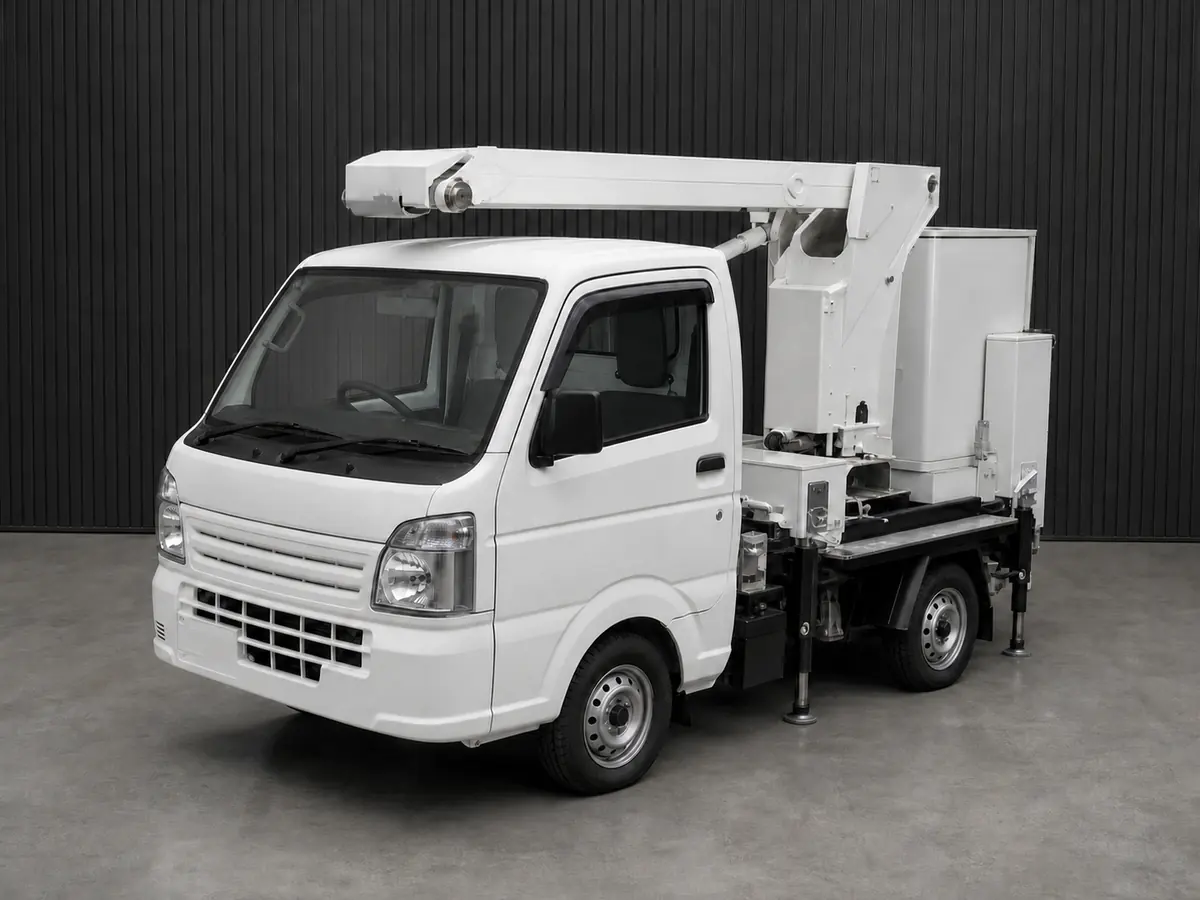
Kei bucket trucks combine a Japanese kei chassis with a compact boom, personnel basket and stabilizing outriggers. Also called cherry picker kei trucks or truck-mounted aerial work platforms, they are built for access work where a full-size lift truck is too wide or heavy.
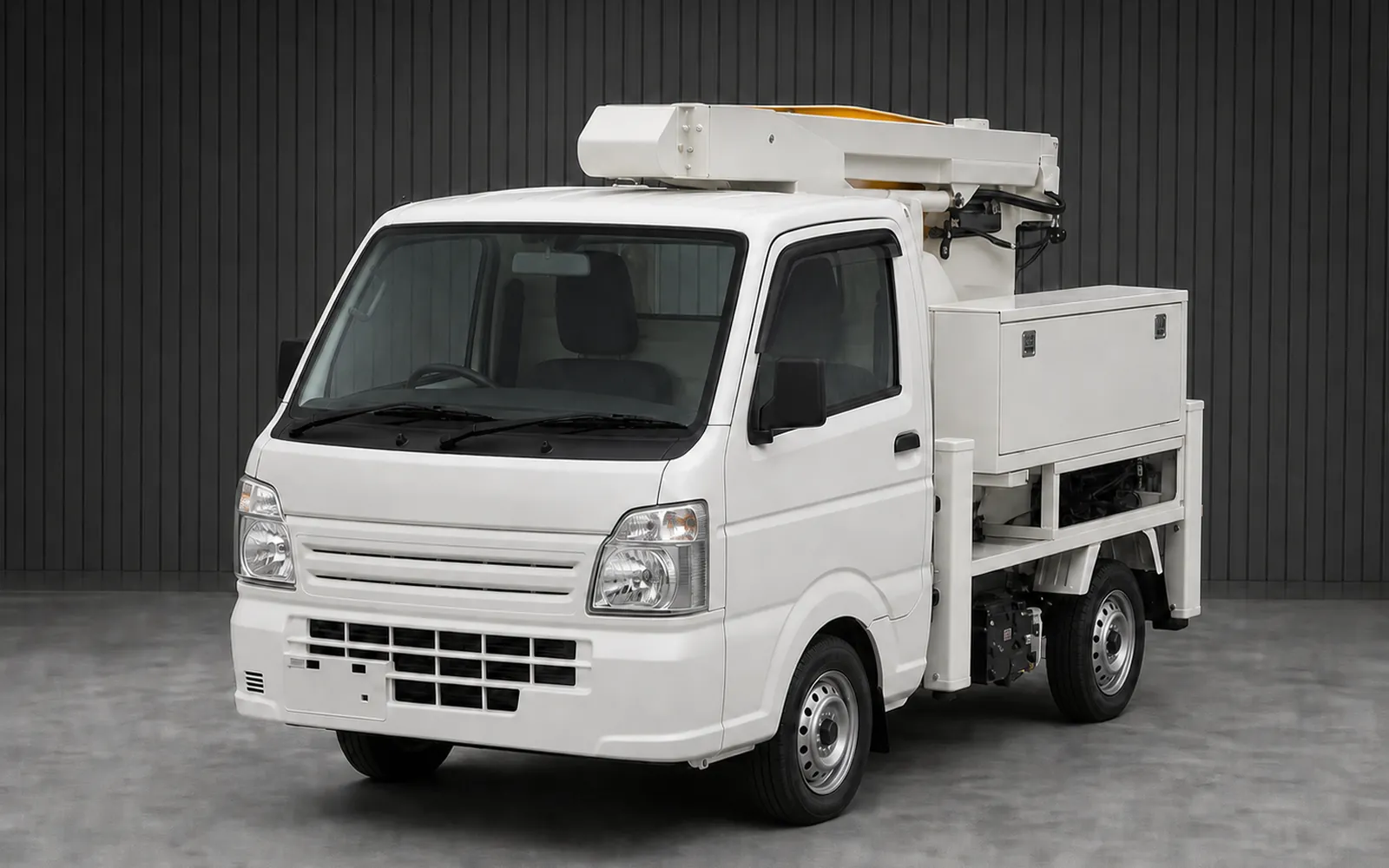
Literally a vehicle for work at height.
Not a suspended-load crane.
Condition and interlocks are purchase-critical.
A marketplace example, never a universal rating.
What Is the Right Name?
“Cherry picker” is understandable, but buyers, auction houses and regulators use different terms. Use the vocabulary your destination market and equipment paperwork expect. This model is one specialized entry in Mirai’s full kei truck range.
Destination Terminology Finder
Choose a market to see the clearest buyer-facing and technical search terms.
Do not buy from the label “cherry picker” alone
The chassis plate identifies the truck. A separate equipment plate should identify the boom or platform manufacturer, model, serial number and ratings. Those identities, plus inspection records, matter more than the seller’s generic listing title.
Anatomy of a Kei Aerial Work Platform Truck
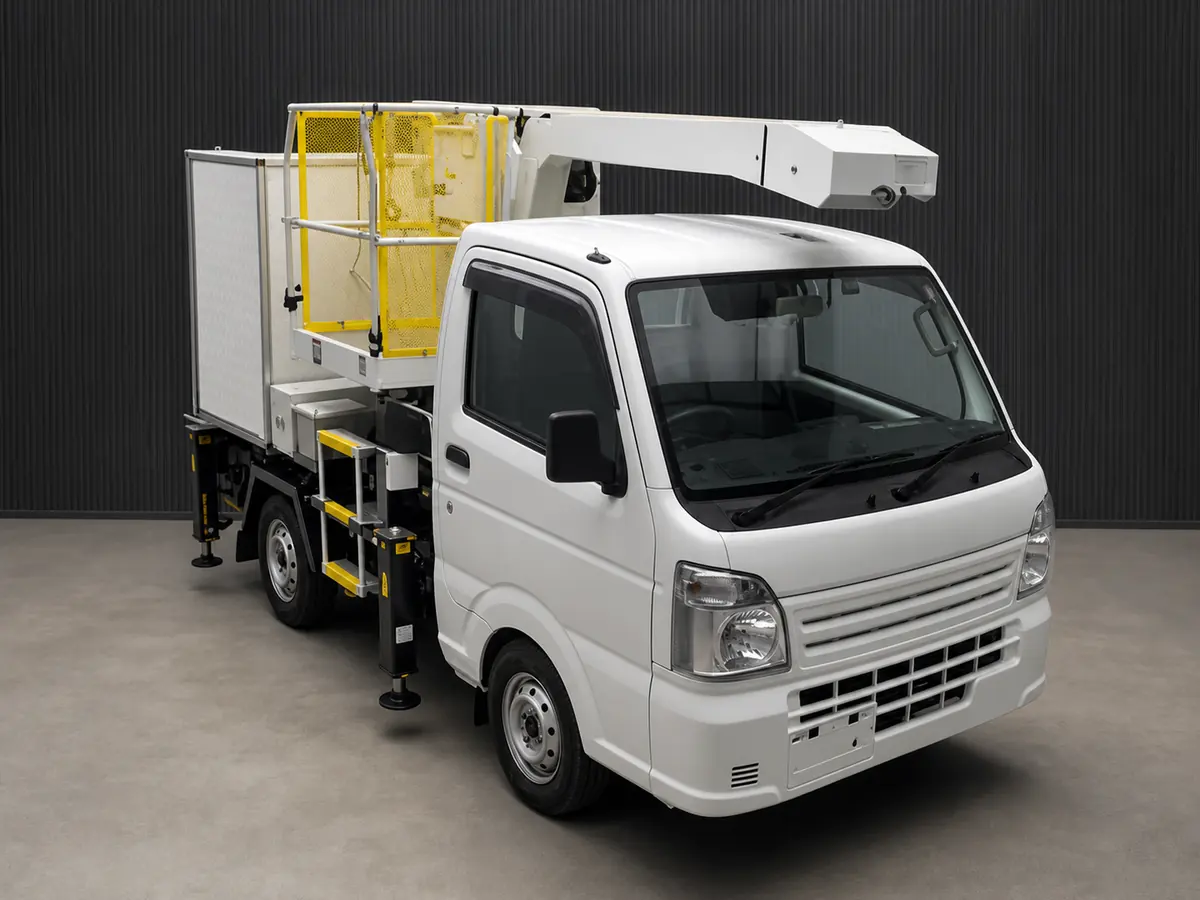
The supplied photographs show two compact Suzuki Carry-based configurations: one with an enclosed yellow basket and one with an open rail-style work platform. The exact boom maker and ratings must be read from the equipment plate.
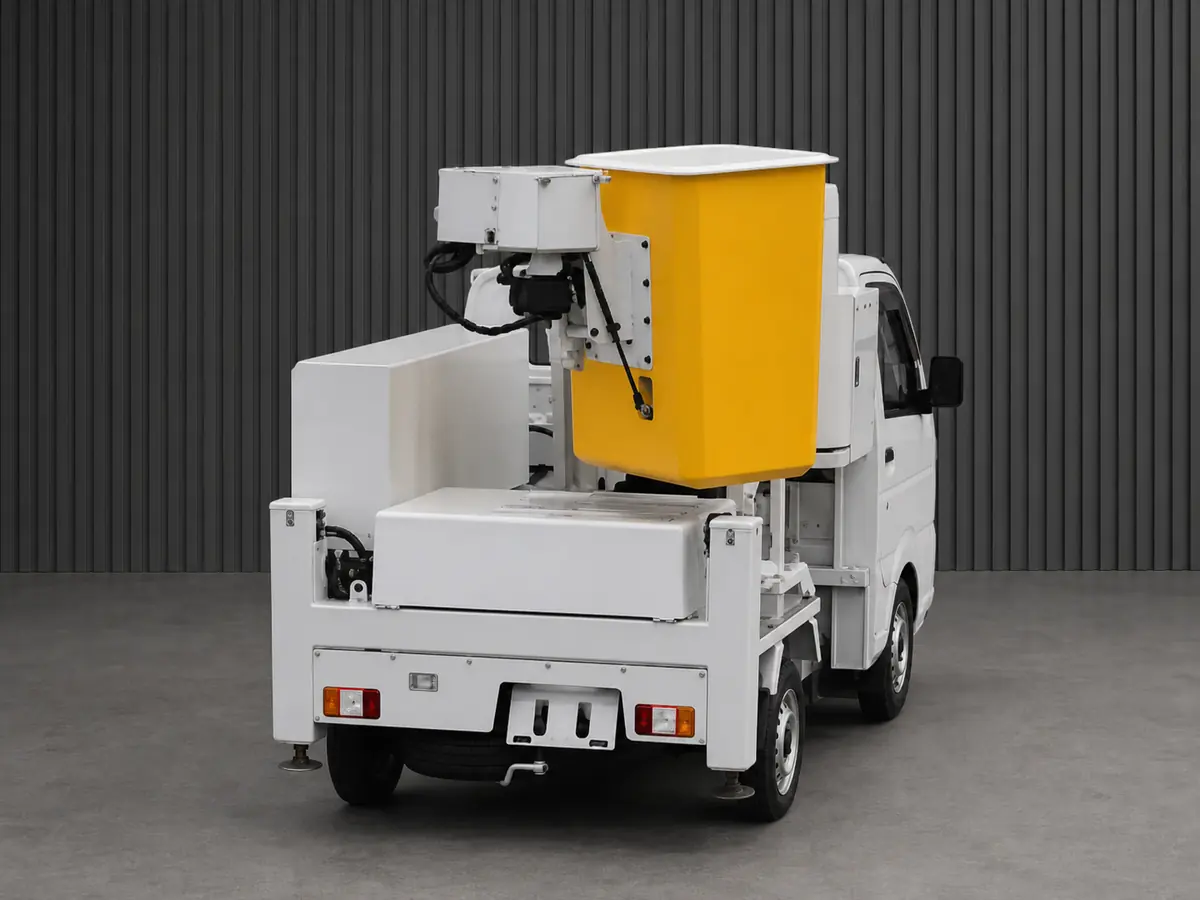
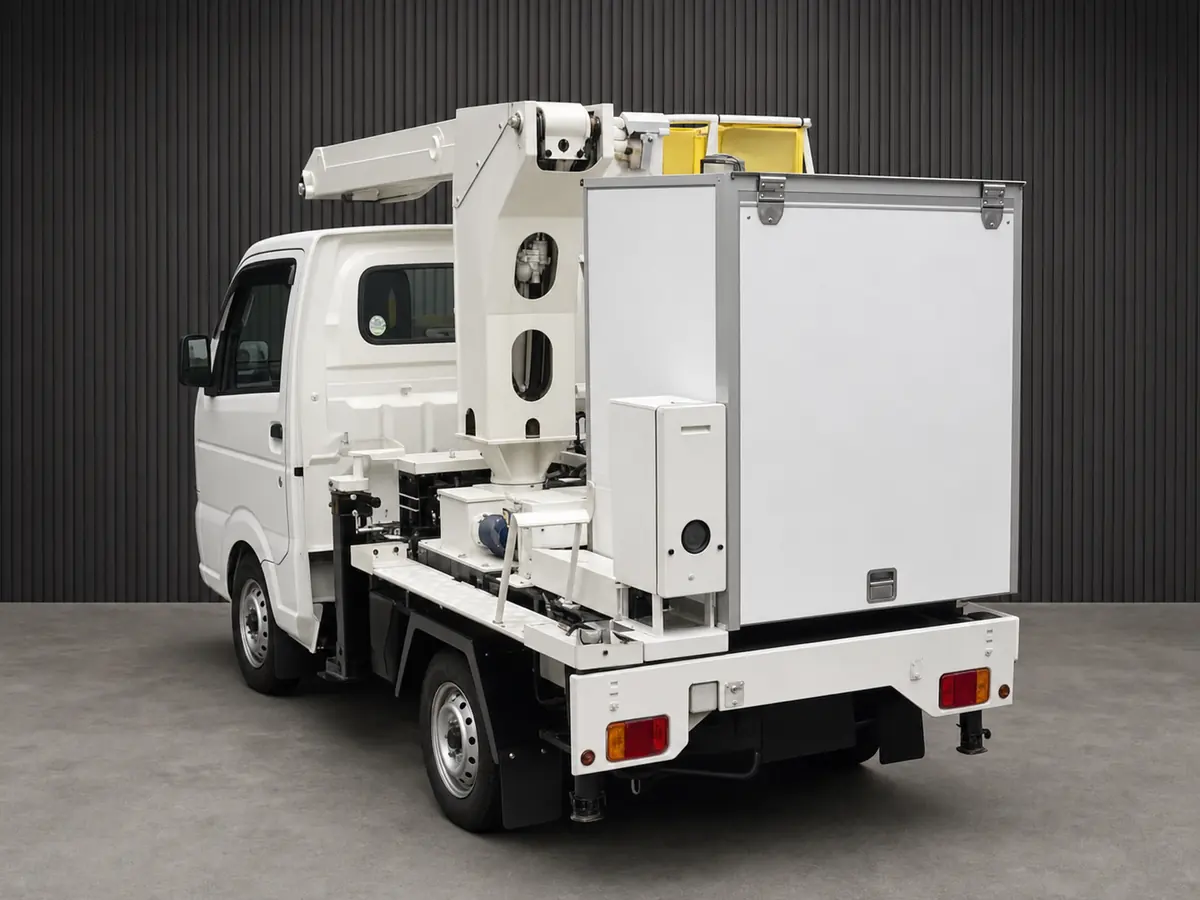
Boom and travel cradle
Inspect sections, pins, wear pads, welds and the stowed-boom lock. Confirm no movement or repair is hidden by fresh paint.
Basket or platform
Verify rated load, occupant count, gate, floor, guard structure and control condition from the maker’s plate and manual.
Rotating pedestal
The turntable, slew system and chassis mounting transfer working loads into the truck. Cracks or distortion are serious concerns.
Hydraulic system
Check pump, reservoir, cylinders, hoses and fittings through a complete function test, including smoothness under rated conditions.
Outriggers and interlocks
All jacks should deploy evenly on suitable ground. Confirm warning devices, locks and interlocks operate as designed.
Upper and lower controls
Test both stations, emergency stop, emergency lowering and any auxiliary power function. Never assume a missing function is “normal.”
Kei Bucket Truck Configuration Matcher
Turn a job description into a practical sourcing brief. The output is a procurement checklist, not an engineering approval or legal-eligibility decision.
Describe the Work
Mirai can use the resulting brief to search Japanese auction and dealer supply.
What the Supplied Auction Records Show
These are document observations from the user’s reference sheets. They demonstrate real DA16T-based conversions but are not a stock offer and do not establish the specification of every kei bucket truck.
2018 Suzuki Carry Aerial Work Platform
Verify the final-stage completion date, bodybuilder plate, boom model, serial number, ratings and service history separately from the Carry chassis.
2022 Suzuki Carry Aerial Work Platform
The supplied sheet does not justify a universal working-height or basket-load claim. Obtain the equipment data plate and current inspection documents before quoting performance.
Suzuki Carry Chassis and Engine Timeline
The reference trucks are DA16T Carry models, but earlier Carry generations can also appear under specialist bodies. This table is a chassis-family locator, not a claim that every code was factory-offered with a lift.
| Carry code family | Approx. period | Engine family | Buyer relevance | Critical verification |
|---|---|---|---|---|
| DA51T / DB51T | 1990–1991 | F6A, 657 cc | Early 1990s cab-over platform; age can suit collector/older-vehicle routes. | Exact frame number, conversion age, corrosion and parts support. |
| DC51T / DD51T | 1991–1999 | F6A, 657 cc | Common 1990s Carry family and a plausible base for older specialist conversions. | 2WD/4WD, transmission, boom maker and registered weights. |
| DA52T / DB52T | 1999–2001 | F6A, 657 cc | Late F6A generation near the turn of the millennium. | Exact manufacture month where an age-based route applies. |
| DA62T | 2001–2002 | K6A, 658 cc | Short-lived early K6A Carry family. | Completion date may differ from base-chassis date on a staged vehicle. |
| DA63T / DA65T | 2002–2013 | K6A, 658 cc | Long-running K6A work-truck era with broad parts familiarity. | Recall/service history and exact conversion documentation. |
| DA16T | 2013–present | R06A, 658 cc | Current Carry family used by both supplied aerial-platform references. | EBD/3BD prefix, final-stage completion date, registered mass and equipment plate. |
Source basis: Suzuki’s official Carry digital library, engine history, environmental report and recall documents. Code ranges are shopping references; confirm the individual vehicle from its export certificate and model plate. For a general (non-aerial-platform) buying guide to this chassis, see Mirai’s Suzuki Carry Kei Truck guide.
The flatbed’s 350 kg kei payload is not spare lift capacity
Japan’s normal Carry customized-vehicle base states a 350 kg maximum payload, but an aerial body, boom, hydraulics, stabilizers and compartments consume vehicle capacity and change the completed vehicle’s mass. Use the registered completed-vehicle weights and equipment ratings—never subtract guesses from 350 kg.
Pre-Purchase Inspection: Truck and Lift as Two Machines
A clean cab does not prove a safe platform. Ask for a chassis inspection, aerial-equipment inspection and live function-test evidence.
Identify both makers
Photograph the Carry frame/model plate and the platform maker’s model, serial, year, rated load, working height and reach plate.
Match the documents
Compare export certificate, registration description, final-stage completion evidence, inspection records, manuals and parts documentation.
Test every function
Film deployment, leveling, slew, elevation, extension, basket controls, ground controls, emergency stop and emergency descent.
Inspect structure
Check boom sections, pins, pedestal, chassis mounts, welds, basket, outriggers and jack pads for repairs, cracks or distortion.
Inspect hydraulics
Look for leaks, scored rods, cracked hoses, contaminated oil, slow drift, unusual noise and heat after a complete operating cycle.
Confirm destination support
Before buying, identify a competent local inspector, operator-training route, parts path and workshop willing to support the imported machine.
Destination Route Triage
This page helps choose equipment; it is not an import guide. A specialist body can make classification more complex than importing an ordinary flatbed kei truck. Mirai also sources other special-purpose builds, including dump bed kei trucks, firefighter and utility kei trucks and lifted kei trucks.
United States
The federal 25-year vehicle age route is measured to the month. A 2018 base reaches 25 years in 2043 and a 2022 base in 2047. State registration, work-equipment rules and any final-stage identity still require separate review.
Read the USA kei truck guideCanada
Canada’s federal older-vehicle route generally starts at 15 years. Transport Canada notes that a staged vocational truck can be assessed from the final-stage manufacturer’s completion date when labelled; province-level registration remains separate.
Ask Mirai about Canada kei truck sourcingUnited Kingdom
Expect customs notification, registration and a vehicle-approval pathway where required. Verify the completed special-purpose vehicle’s documents, lighting, dimensions, weights and workplace equipment obligations.
Ask Mirai about UK kei truck sourcingAustralia
Obtain an import approval before arrival. Older-vehicle and special-purpose pathways have different criteria; do not assume a recent DA16T qualifies without a ROVER decision and local compliance plan.
Read the Australia kei truck guideNew Zealand
No simple age cutoff replaces standards compliance. Confirm entry certification, applicable vehicle standards, completed-body documents and local mobile-elevating-work-platform requirements before shipment.
Read the New Zealand kei truck guideWhat Mirai should collect first
Destination, exact work, required working height/reach, basket load, ground conditions, chassis preference, 2WD/4WD, transmission, completion date, folded dimensions and equipment plate.
Create the sourcing briefSafety and Use Boundaries
A compact platform still exposes operators and bystanders to falls, overturning, entrapment, traffic and electrical hazards.
Use only trained and competent operators, follow the equipment maker’s manual and local law, complete pre-use checks, respect rated loads, deploy stabilizers on suitable ground and use fall protection where required. OSHA’s vehicle-mounted platform rule and UK, Australian and New Zealand guidance all emphasize inspection, stable setup, training and correct equipment selection.
Do not treat the basket as a crane hook, do not move the truck while elevated unless the specific design and rules permit it, and do not approach energized conductors unless the machine, procedures and workers are specifically qualified for that work. An ordinary metal basket is not an insulated electrical-work platform.
Kei Bucket Truck FAQs
Direct answers to the questions buyers should resolve before bidding.
Is “cherry picker kei truck” the correct name?
Yes, it is understandable buyer language, especially in the UK, Australia and New Zealand. “Kei bucket truck” is clearer in the USA and Canada, while “truck-mounted aerial work platform” or “vehicle-mounted MEWP/EWP” is the more technical description.
What is this vehicle called in Japan?
It is generally described as a 高所作業車, meaning a vehicle for work at height. Search records may also identify the truck chassis and aerial-equipment maker separately.
Is a kei bucket truck the same as a crane truck?
No. A bucket or basket positions people for access work; a crane lifts suspended loads. Do not use the platform as a crane unless the equipment is separately designed, rated and certified for that function.
Which kei truck chassis appears in the supplied records?
Both supplied auction-sheet examples are Suzuki Carry DA16T vehicles: an EBD-DA16T first registered in January 2018 and a 3BD-DA16T first registered in January 2022.
Does the DA16T code identify the boom specification?
No. DA16T identifies the Carry chassis family. The aerial platform’s maker, model, serial number, rated load, working height and reach must come from its own data plate and documents.
Can I assume the basket holds 100 kg?
No. A current Japanese marketplace example lists a 100 kg, one-person basket, but that is not a universal kei bucket-truck rating. Verify the individual equipment plate.
Does the normal 350 kg kei-truck payload still apply?
Do not treat 350 kg as spare payload. The completed aerial body, hydraulics and stabilizers add mass; use the registered completed-vehicle weights and the platform’s certified ratings.
What records should I request before buying?
Request the export certificate, chassis plate, equipment data plate, final-stage completion information, inspection and service records, manuals, function-test video, folded dimensions and completed-vehicle weights.
Can the truck drive with the basket elevated?
Assume no unless the exact equipment design, manual and local rules explicitly allow it. OSHA’s rule prohibits moving an aerial-lift truck with the boom elevated and workers in the basket except equipment specifically designed for that operation.
Can it be used near power lines?
Not by default. A metal-basket compact lift is not automatically insulated. Electrical work requires the correct certified equipment, clearances, procedures and qualified workers under local rules.
Are the 2018 and 2022 examples currently age-eligible for the USA?
No under the federal 25-year age route as of July 2026. A January 2018 example reaches 25 years in January 2043, while a January 2022 example reaches 25 years in January 2047.
Can Mirai source a specific configuration?
Yes. Send the destination, job, required height and reach, basket load, ground conditions, preferred chassis year, 2WD or 4WD, transmission and equipment-document requirements for a targeted Japan search.
Research Sources and Method
Primary manufacturer, regulator and government sources were used wherever available; marketplace records were used only to document that specific compact configurations exist.
- Suzuki Carry digital history and Suzuki engine history.
- Suzuki Carry customized-vehicle base guidance.
- Aichi truck-mounted aerial work platform category and safety/service guidance.
- OSHA 1910.67 vehicle-mounted elevating and rotating work platforms.
- UK HSE mobile elevating work platform guidance.
- Safe Work Australia EWP risk guide and WorkSafe New Zealand height-equipment guidance.
- US CBP older-vehicle import guidance, Transport Canada older-vehicle guidance, Australia vehicle import guidance, NZTA vehicle import guidance, and UK vehicle import guidance.
- Sanmax kei-truck elevated platform example, Roadtec 高所mini materials and Japanese marketplace listings.
Editorial boundary
Mirai compared supplied auction sheets and photographs with Suzuki chassis records, Japanese aerial-platform terminology, official workplace-safety guidance and destination import sources. The images are original Mirai Trading editorial images created for illustration. No unreadable boom plate, working height, reach or load figure was guessed.
Source the Right Kei Bucket Truck Configuration
Send Mirai the destination, job, required working height and reach, basket capacity, ground conditions, preferred year, 2WD or 4WD, transmission and documentation requirements. We will search for a matching Japanese unit and collect the chassis and platform identities before purchase.