
Kei Truck Dump Bed: Choose a Tipper for Your Work
A kei truck dump bed can save hours of unloading. Choose between rear-tip and lift-dump bodies, compare period specifications, and find a truck suited to your material and access.
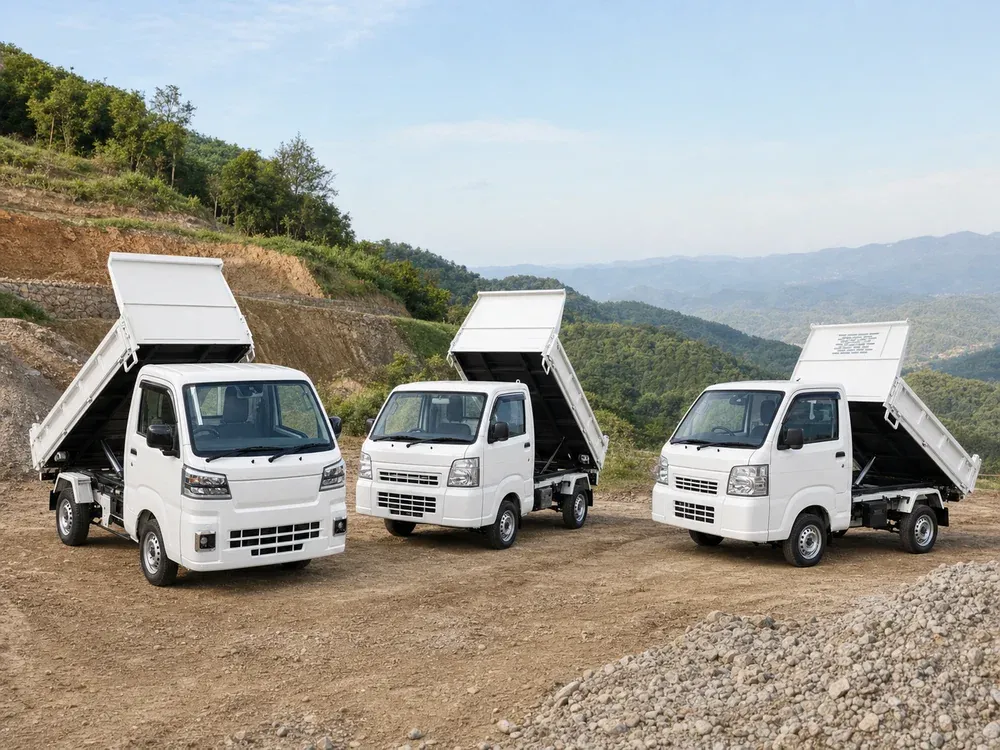
Mini dump truck for sale: match the body to the job
Factory families and an important Acty distinction
Hijet dump
Compare light-duty, heavier-body and specialized lifting arrangements by the actual chassis and body label. A seller’s “heavy duty” description does not increase the documented payload. Older eligible trucks must be checked against their own era’s specification.
Carry Kintaro and lift dump
Kintaro, general-purpose and lift-dump variants differ in body dimensions and weight. A lift dump raises the discharge point; it is not an aerial platform or a license to carry people on an elevated bed.
Acty dump and ATTACK
Honda’s May 27, 1999 release names Acty dump variants separately. Most special bodies use SDX; the large-guard version uses ATTACK as its base. ATTACK alone does not mean dump equipment is fitted.
Honda’s May 27, 1999 special-vehicle release describes electric-hydraulic dump operation and a maximum 55° bed inclination, with 50° for Dump Junior. These are period specifications, not a promised angle for every used or modified truck.
Period payload and bed dimensions
| January 1999 Carry variant | Bed inside L × W × H | Catalog maximum payload |
|---|---|---|
| Kintaro dump | 1,785 × 1,410 × 290 mm | 350 kg |
| General-purpose dump | 1,800 × 1,380 × 300 mm | 350 kg |
| Lift dump | 1,770 × 1,380 × 250 mm | 350 kg |
| Kintaro lift dump | 1,785 × 1,410 × 290 mm | 350 kg |
Source: Suzuki’s January 1999 archived specification sheet. This is an intentionally period-matched manufacturer record, not a newer brochure applied retrospectively. The actual vehicle’s body, registered carrying capacity, equipment and modifications govern your candidate. 350 kg is about 772 lb; it is not a tow rating.
Weigh dense materials instead of filling the box by eye. Wet soil or aggregate can reach the load limit with substantial bed space remaining. Some dump variants prohibit soil/aggregate use; obtain the body’s material restriction and registered classification rather than assume every dump is suited to gravel.
PTO, electric pumps and tipping direction
| Mechanism or feature | What it means | What to verify |
|---|---|---|
| PTO hydraulic | Mechanical power take-off drives the hydraulic pump | Correct engagement, operating procedure, pump noise and leaks |
| Electric hydraulic | Battery-powered motor drives the pump | Motor current behavior, wiring condition, battery and hydraulic seals |
| Rear tip | Bed pivots to discharge behind the vehicle | Tailgate linkage, hinge pins, cylinder and rear clearance |
| Three opening gates | Side gates and tailgate can open | This does not mean the bed tips in three directions |
| Three-way tip | Special body pivots to discharge in different directions | Documented original system, pivot locking and actual demonstrations |
| Lift/scissor dump | Bed elevates the unloading point in a specialized arrangement | Body plate, linkage wear, stable operation and safety supports |
Daihatsu’s current operation guide, checked October 11, 2026 distinguishes transfer-driven PTO and battery-powered pumps. Its three-opening-gate description concerns access to the bed. Use the proper manual and rated support when inspecting a raised body; never rely on hydraulic pressure alone or stand under an unsupported bed.
Inspection points that determine working condition
Cylinder and plumbing
Look for wet seals, scored cylinder rods, cracked hoses and improvised fittings. Request a full raise, pause and lower cycle, noting drift and uneven movement.
Pump and power
PTO engagement should follow the specified procedure without abnormal noise. An electric system needs sound cables, connections and a suitable battery; slow lifting is a symptom to investigate, not a diagnosis.
Bed pivots and chassis
Inspect hinge-pin play, cracked mounts, scissor pins and weld repairs. Photograph chassis rails, crossmembers and mounting points beneath the dump assembly.
Bed and tailgate
Check floor thinning, corrosion at seams, hinges, latches and tailgate linkage. Repainting a bed does not establish sound metal or correct opening action.
Controls and supports
Identify the correct switches, interlocks and mechanical prop. Obtain the body manual and check that supplied equipment corresponds to the fitted mechanism.
Work-use history
Request service records and an unloaded demonstration; any loaded test must follow the manufacturer’s safe method. Confirm brakes, tires, clutch and 4WD operation for the planned terrain. Work can also be done in Japan before shipping, like the bed mat we fitted to a Carry dump truck on a recent dealer order.
Compare other kei utility bodies
If you need fixed cargo space rather than tipping, start with standard kei trucks. Compare bucket trucks, retired pump trucks, refrigerated bodies and lifted truck inspections for different tasks.
Plan the tipper’s U.S. document file
Obtain the chassis identity, manufacture date, body description and export paperwork as one matching record. NHTSA’s import FAQ measures the 25-year route from manufacture, while EPA guidance, updated September 1, 2026 specifies the same original engine model and configuration for its over-21 provision.
Use the U.S. import checklist to prepare the documents and the state guide to plan the truck’s intended road use.
What drives dump-truck value
This comparison uses no fixed price; hoist condition, bed repairs and the cost of returning the body to dependable work drive the buying decision.
Body specification and factory grade
A rear-tip body and a lift-dump mechanism solve different unloading problems. Compare the recorded payload and exact body type with the material you intend to move.
Originality of the installation
Check matching chassis identity, hoist plates and mounting details. A documented factory installation gives you a clearer parts and load-rating trail than an unidentified conversion.
Mileage versus working cycles
A low odometer reading can accompany heavy loading and repeated tipping. Bed-floor wear, pivot play and cylinder condition help explain the truck’s working life.
Documented history of the hydraulics
Invoices for hoses, seals, pump repairs and body work establish where money has already been spent. A demonstrated full tip cycle helps assess what still needs attention.
Condition tier and repair reserve
A straight, complete working tipper differs from a rusty bed on a sound chassis. Compare preserved trucks, repaired drivers and hydraulic projects with an allowance for the body as well as the engine.
Send my tipper requirements
Candidate configuration matcher
Match the material, unloading method and terrain to the body you need.
Your planning brief
Match the material, unloading method and terrain to the body you need.
Find the dump body you need in Japan’s auctions
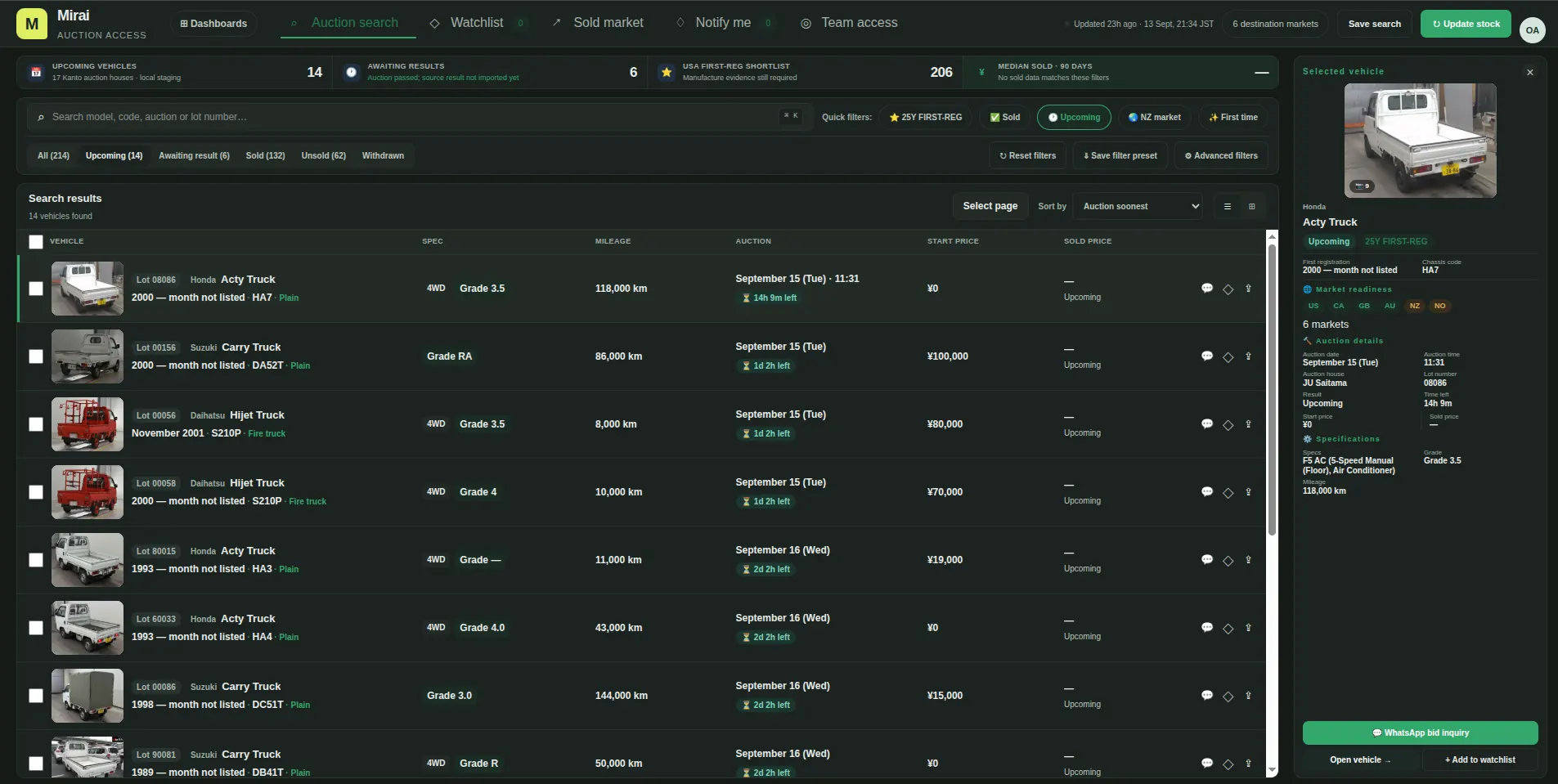
Mirai Auction Portal gives customers exclusive access after inquiry to dump-truck candidates from major Japanese auctions. Narrow the search by chassis, age, drivetrain and body description, then compare rear-tip and raised-discharge layouts. Mirai helps interpret the body photographs, auction notes and test requests so your shortlist fits the material and site access. An auction listing does not establish title or road-use permission in your destination state.
Questions about mini tippers
Do kei trucks come with factory dump beds?
Yes. Daihatsu, Suzuki and Honda all built factory dump versions of their kei trucks: Hijet dumps, the Carry Kintaro and lift-dump variants, and the Acty dump variants listed in Honda’s 1999 special-vehicle release. A factory dump body is different from an aftermarket kit fitted to a standard flat bed, so confirm the body label and tip operation on the individual truck.
Does a bigger bed mean a higher payload?
No. The documented chassis and body carrying limits govern the load. Dense material can reach the limit well before the bed is full.
Is every Acty ATTACK a dump truck?
No. ATTACK is a base grade, not proof of dump equipment. Honda’s 1999 special-vehicle release identifies distinct dump variants, including a large-guard ATTACK-based version.
Does three-way opening mean three-way tipping?
No. Three opening gates describe side and rear access. Three-way tipping needs a body designed and documented for different discharge directions.
What is the January 1999 Carry dump payload?
Suzuki’s archived specification lists a 350 kg maximum for the covered variants. Confirm the actual truck’s documents, body and modifications rather than apply that figure to every Carry.
Can I haul gravel in every dump variant?
No. Material restrictions and body classification vary, and some variants prohibit soil or aggregate. Ask for the exact body label and carrying limits.
Is PTO always better than an electric pump?
No. A suitable, well-maintained system matters more than the label. Compare operating procedure, parts support, battery or driveline condition and inspection evidence.
Can a lift dump carry people on its raised bed?
No. Treat it as a material-handling body unless a separate certified system expressly permits another use. Follow the body manufacturer’s instructions and safety supports.
Can Mirai source a factory dump candidate?
Yes. Mirai can screen body identity, chassis age, operating evidence and condition for a U.S. brief. Availability and specification are established for the individual lot.
Can I register a mini tipper for local road use?
Generally yes. The destination state must permit that vehicle and its intended use. Federal import, state registration and insurance must be addressed together.
Does an engine conversion change a dump truck’s EPA route?
Generally no. EPA calls for the same engine model and configuration as originally installed. A modified vehicle needs its own route review.
What should the tip test show?
It should show the fitted mechanism raising, holding and lowering, with clear views of cylinders, pivots and controls. Any load test must follow the manufacturer’s safe procedure.
How do I request an auction shortlist?
Send your state, material, unloading need, terrain and condition budget on WhatsApp. Mirai can explain portal access, inspection and the purchase terms.
Buy around the unloading job
Describe your material, load size and access. We can compare suitable body layouts and discuss the truck’s hydraulic inspection.