
Kei Fire Truck: Find the Right Retired Japanese Pump Truck
Find a kei fire truck for property work, collecting or display. Choose the chassis and equipment together, then ask Mirai to find and inspect a suitable unit.
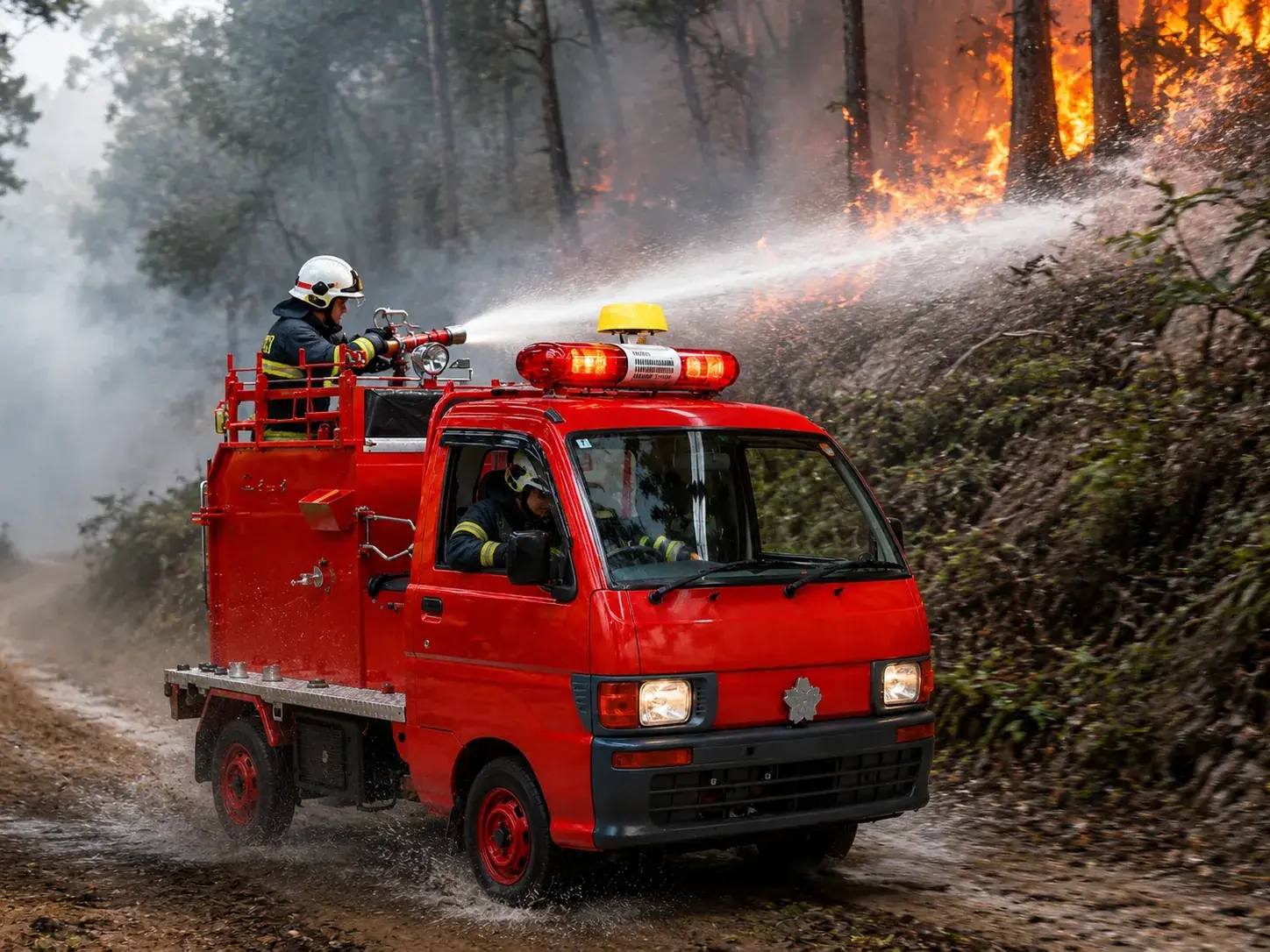
Kei fire truck for sale: choose the chassis and equipment
A retired Japanese kei fire pump truck, often listed in the U.S. as a Japanese fire truck or kei firetruck, combines a compact commercial chassis with a service body: hose racks, lockers, portable or mounted pump equipment and crew equipment storage. It is a sourcing category, not one standardized factory specification. The Hijet and Minicab guides explain the base vehicles; the body builder and pump plate identify the additional machinery.
Retired equipment can be missing even when the red truck looks complete. Request an itemized inventory of pump, suction hose, strainer, discharge hose, couplings, nozzles, ladders, extinguishers, keys and manuals. A hose reel does not establish a water-tank capacity, and a portable pump may have its own engine and service needs.
| Candidate | Buyer relevance | Evidence to request |
|---|---|---|
| Hijet-based pump truck | Compact chassis with several body layouts | Chassis code, actual build date, 2WD/4WD hardware and body-builder plate |
| Minicab-based pump truck | Alternative base and pump/cabinet arrangement | Pump identity, parts availability, controls and itemized fittings |
| Other retired compact service body | May suit display or utility work | Vehicle classification, documented body changes and dimensions |
Do not infer low-range gearing from a 4WD label. Some chassis offer a separate low range; others have a different gearing arrangement or no low range. Obtain the transmission/transfer specification and an engagement demonstration on the individual vehicle.
Practical uses and emergency-equipment limits
A collector may prioritize original lockers and period fittings; a property buyer may care more about a reliable chassis and a tested water-transfer setup. Parade use needs local road permission, insurance and a plan for warning lights and sirens. Ranch or brush-water support should be designed around available water, pump performance, operator training and a stable load.
Mirai sells used fire equipment as-is and does not represent these vehicles as U.S.-certified emergency fire apparatus. Have a qualified local equipment specialist assess any proposed firefighting use, warning-device legality and pump installation. A water tank adds weight and changes handling; its capacity must fit the verified chassis and body limits.
Inspect the pump system and the aging chassis
Pump test
Ask for a dated cold start, priming sequence, suction test and sustained water discharge through the fitted hoses. Note leaks, irregular running, controls and whether the test used the actual equipment included in the sale.
Hoses and couplings
Check cracking, abrasion, internal deterioration, damaged threads and compatibility with your intended hoses. Photograph coupling sizes; a pressure-holding demonstration is more useful than a rack full of old hoses.
Storage corrosion
Request close photographs of cabinet floors, hose racks, chassis rails, spring mounts and areas where wet equipment was stored. Fresh paint can hide corrosion; ask for underside views and repair history.
Low mileage versus age
A lightly driven service chassis may still have aged tires, seals and fuel-system deterioration. Stationary pump hours and storage conditions tell a different story from road mileage.
Beacons and sirens
Record what is fitted and working, then agree how warning devices will be disabled or handled for the destination. Historic appearance does not authorize emergency signaling.
Roadworthiness
Have brakes, steering, cooling, clutch and 4WD operation inspected. Confirm fluid leaks and maintenance needs in the report while the vehicle remains in Japan.
Other compact working trucks
If your main task is material handling, compare mini dump trucks. For a working platform, see bucket trucks; for temperature control, refrigerated trucks. The lifted truck guide covers suspension and tire changes, which do not independently create off-road import eligibility.
Documents for your kei fire truck purchase
Match the chassis plate and Japanese export record to the actual manufacture date. The NHTSA age route starts at the vehicle’s 25th anniversary; EPA’s September 1, 2026 guidance requires the original engine model and configuration for its over-21 provision.
Build the arrival file with the import document checklist and check the intended roads in your state’s kei truck guide.
What drives pump-truck value
There is no fixed price for a retired pump truck: usable equipment and completeness can outweigh a small difference in chassis age.
Pump and equipment specification
Compare the pump model, controls, hose sizes and cabinet layout as a complete system. A factory grade describes the chassis; the fitted apparatus needs its own inventory.
Originality and matching identity
Body-builder and pump plates connect period equipment with its records. Collectors may value original lockers and fittings that a property buyer plans to replace.
Mileage and operating hours
Road mileage measures travel, while pump hours reflect stationary work. Inspect seals, tires and fuel systems on low-mileage vehicles that spent long periods stored.
Documented service history
Pump-test records, maintenance invoices and hose-replacement dates make a working claim more useful. Request footage of the supplied equipment operating together.
Condition tiers for retired apparatus
Preserved display trucks, tested working candidates and incomplete projects serve different buyers. Cabinet corrosion, missing couplings and unavailable pump parts change the cost of putting a truck to work.
Send my pump-truck requirements
Candidate configuration matcher
Choose the intended work and pump priorities to prepare a useful equipment inquiry.
Your planning brief
Choose the intended work and pump priorities to prepare a useful equipment inquiry.
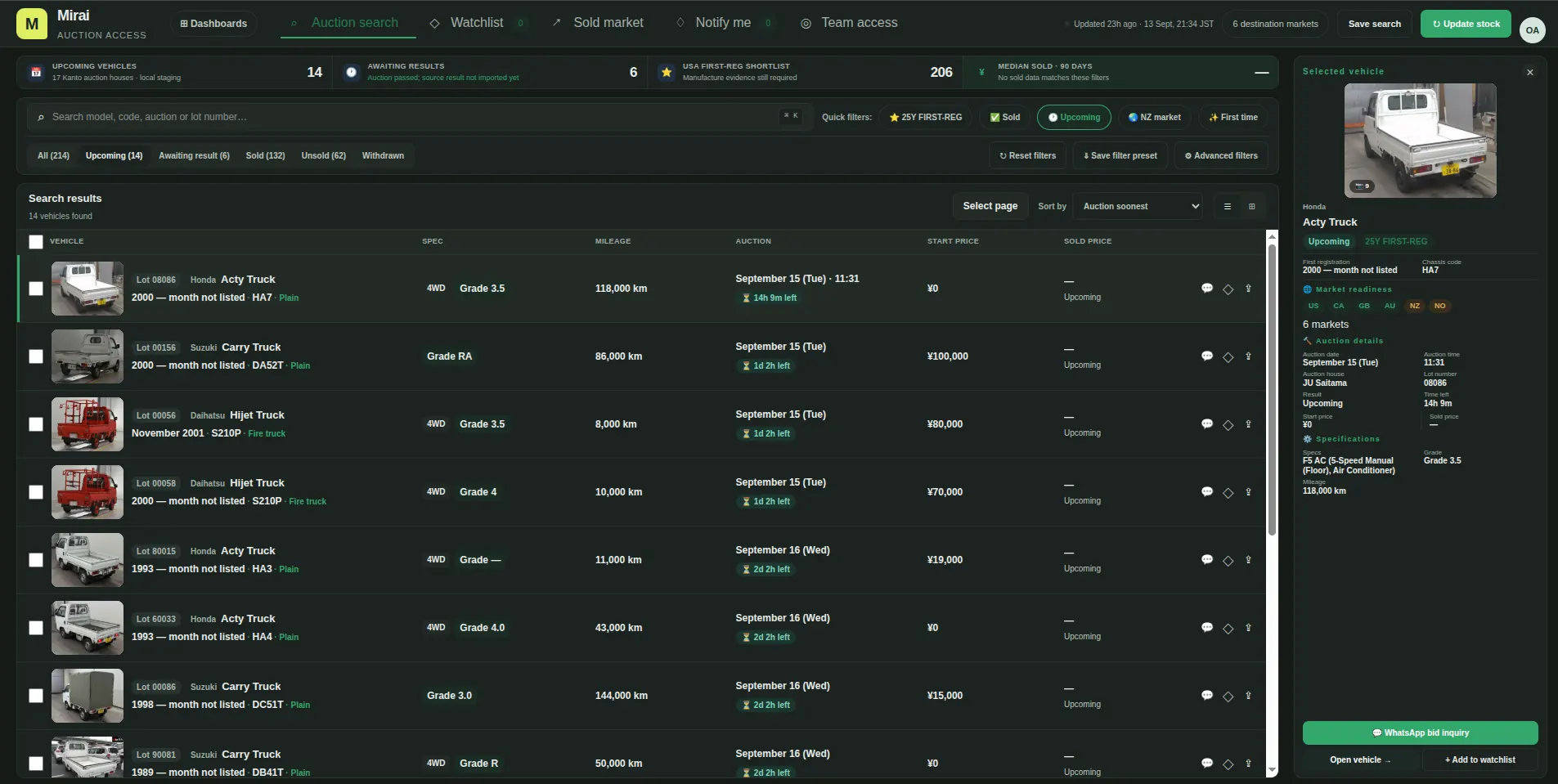
Search retired service trucks through Mirai Auction Portal
Use Mirai Auction Portal to compare retired pump trucks from major auctions across Japan. Access is reserved for Mirai customers after inquiry, with filters for chassis age, drive system, equipment layout and condition. Save candidates with the pump, reels and cabinets you want, then ask us to translate the sheet and arrange targeted checks. A portal match does not establish title or permitted road use in your destination state.
Questions about retired fire trucks
Is a Japanese mini fire truck the same as a kei fire truck?
Usually, yes. U.S. listings call them Japanese fire trucks, mini fire trucks or kei firetrucks; most are Daihatsu Hijet or Mitsubishi Minicab pump trucks retired from Japanese volunteer fire corps and town fire services. Full-size Japanese fire engines also come up for export, but they are not kei vehicles and fall outside this guide.
What is included with a retired pump truck?
Only the equipment listed for the individual vehicle is included. Ask for a photographed inventory and a pump test rather than infer completeness from the body layout.
Can Mirai find a kei fire truck for U.S. buyers?
Yes. Mirai can screen auction candidates by chassis, equipment, documented condition and destination brief. Current availability is established through a candidate search.
Are these U.S.-certified fire apparatus?
No. Mirai does not represent retired Japanese units as U.S.-certified emergency apparatus. Used fire equipment is sold as-is and needs a specialist assessment for any working fire-service use.
Does low mileage prove good condition?
No. Storage, wet cabinets, pump hours and aging components can matter more than the road odometer. Request underbody photographs and an independent inspection.
Do all 4WD versions have low range?
No. The transmission and transfer specification depends on the chassis and variant. Ask for plate evidence and an operating demonstration.
Can I drive one on public roads?
Generally yes. The destination state must permit the specific vehicle and its intended use. Federal entry, title, insurance and road restrictions must all be addressed.
Can I use the beacon and siren?
Generally no. Appropriate local authorization is required. Discuss disabling or retaining historic equipment with the destination authority and insurer.
Can an engine-swapped truck use the EPA over-21 provision?
Generally no. EPA’s guidance calls for the same engine model and configuration as originally installed. A swap needs a vehicle-specific import review.
What should a pump video show?
A dated test should show starting, priming, water supply and sustained discharge using the included hoses. It should also document controls, leaks and the pump identity.
Does a water tank increase the payload limit?
No. The tank, water and fittings consume available payload and affect balance. Use the chassis and body limits for the exact vehicle.
Is the Auction Portal public inventory?
No. Access is exclusive to Mirai customers after inquiry. Candidates come from major auctions across Japan and are filtered for a U.S. brief; a listing is not an approval.
How do I start a search?
Send your state, intended use, terrain, equipment needs and condition budget on WhatsApp. Mirai can then prepare a candidate brief and explain the purchase process.
Choose the truck and its working equipment
Send the pump layout you want, your terrain and the fittings that matter to you. We can build an equipment-specific shortlist.