
Daihatsu Hijet Kei Truck: Buy & Import from Japan
Ready to import a Daihatsu Hijet kei truck from Japan to the USA? Mirai sources, inspects and ships them to U.S. buyers with export and 25-year import handling. Trace Japan’s longest-running current Daihatsu nameplate from the 356cc first-generation truck to today’s S500P/S510P range. Compare chassis pairs, EB/EF/KF engines, Climber, Jumbo, Farm Special, 4WD and special bodies—then build a destination-specific sourcing request.
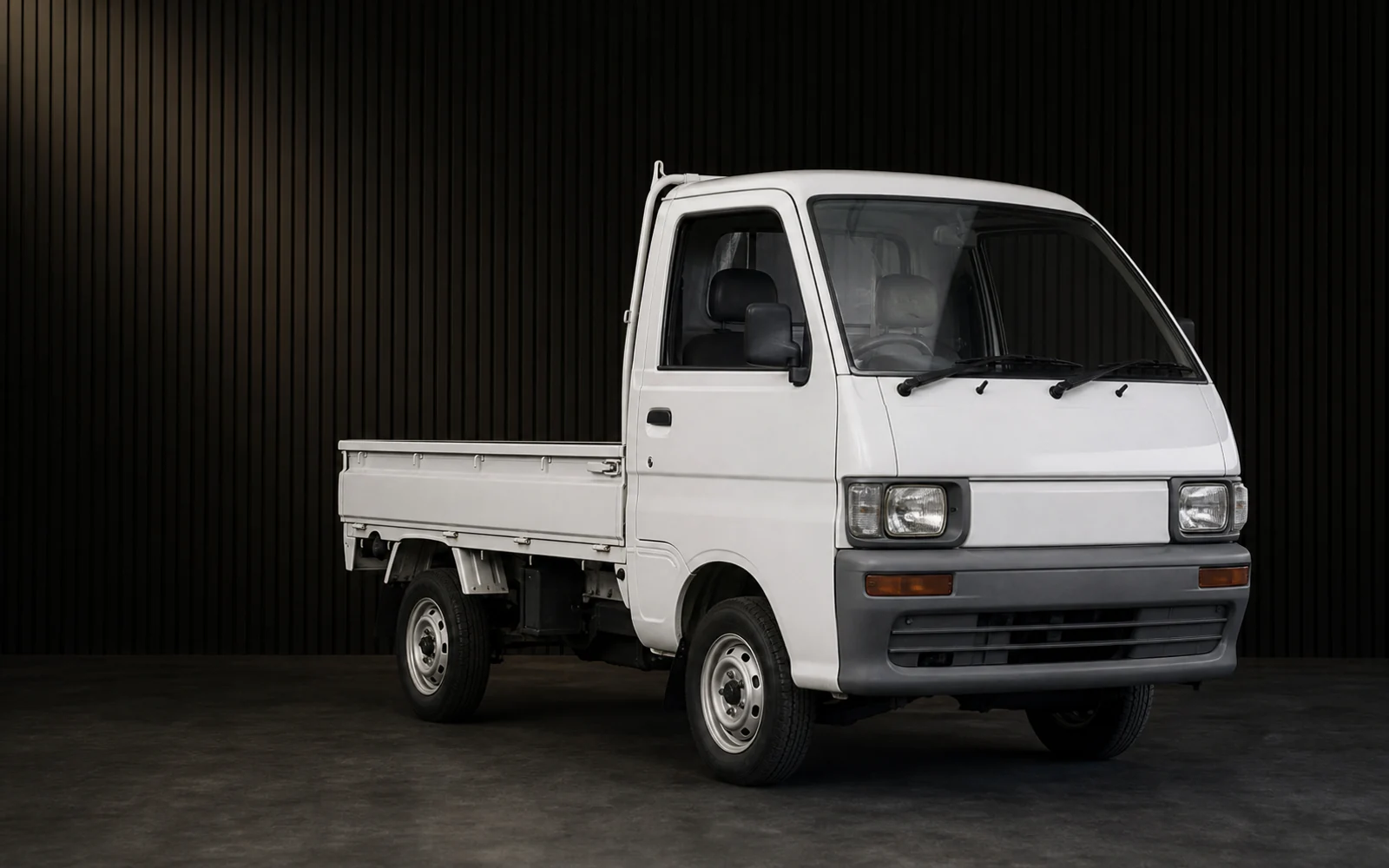
Daihatsu’s first kei four-wheeled vehicle launched in November.
The current generation arrived in September 2014.
S80P/S81P through S500P/S510P map drive families.
Published across the normal current Japanese truck range.
Daihatsu Hijet Kei Truck: One Name, Radically Different Eras
The buyer’s first job is to separate generation, chassis pair and engine family before comparing trim equipment.
Daihatsu launched the first Hijet in November 1960 as its first kei four-wheeled vehicle. The bonnet-style 356cc original gave way to cab-over trucks, larger 550cc four-strokes, three-cylinder engines, part-time 4WD and the Super Differential Lock introduced during the seventh generation.
For export buyers, the clearest map begins with S80P/S81P in the late-550cc era, S82P/S83P after the 1990 move to 660cc, S100P/S110P in 1994, and the long ninth-generation S200/S210 then S201/S211 family. September 2014 introduced today’s S500P/S510P tenth generation.
This guide covers Japanese-market Hijet trucks only. Hijet Cargo vans, Atrai passenger vehicles and Deck Vans are outside scope. Standard three-way beds, Jumbo extended cabs, dumps, lifts, panel bodies and documented specialty trucks remain in scope.
Climber and Jumbo describe different things
Climber is a legacy traction-focused 4WD grade. Jumbo is an extended-cab body with more seat travel and behind-seat space. A Jumbo badge does not prove Super Differential Lock, while a chassis code alone does not prove any trim’s remaining equipment.
Interactive Daihatsu Hijet Truck production timeline
Filter ten truck generations by displacement era, then select a period for its architecture, engine and buyer context.
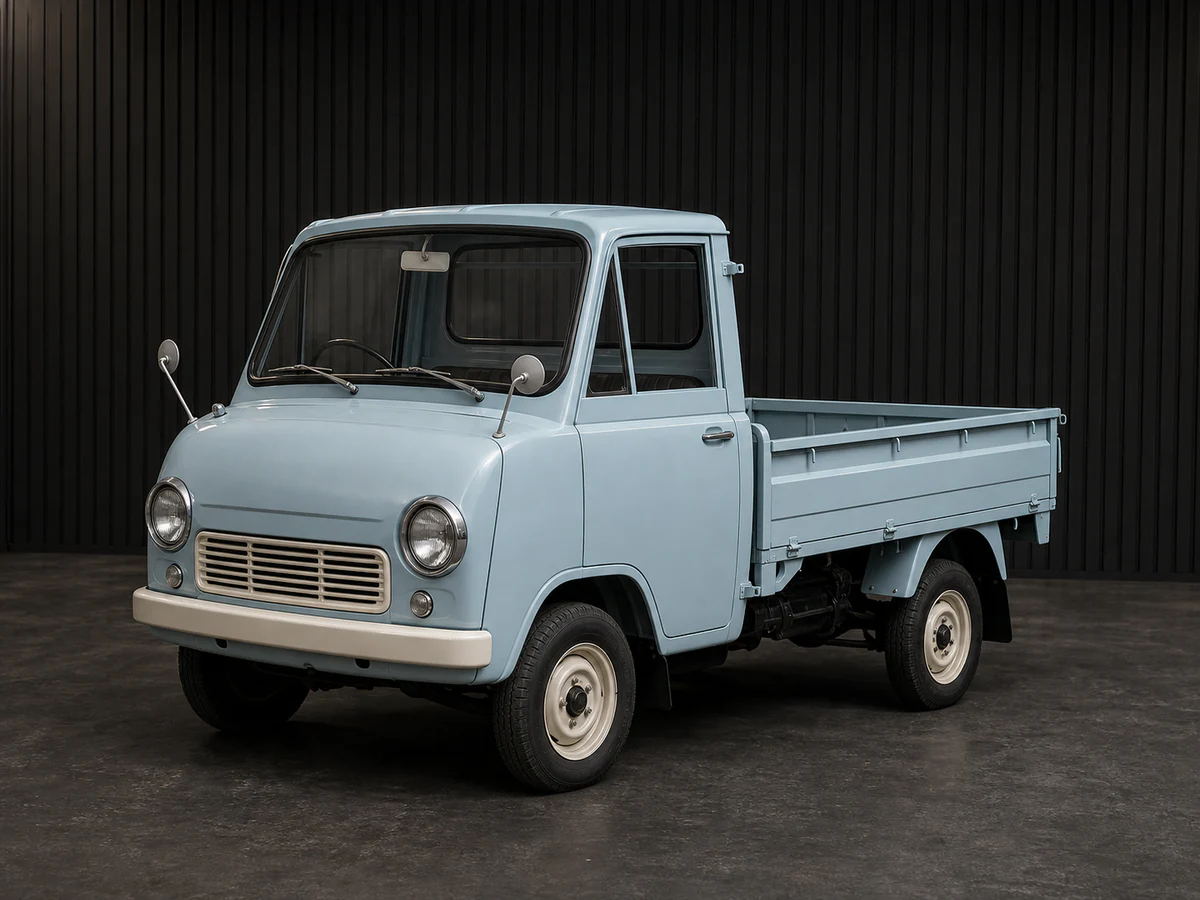
The 1960 Hijet began as a bonnet truck
Daihatsu’s first kei four-wheeler used a 356cc forced-air-cooled two-stroke twin and a compact bonnet body. The second generation then answered demand for full use of the bed with a front-engine cab-over truck.
- November 1960 launch
- 356cc two-stroke inline-two
- Early identity should be verified from period documents and the stamped vehicle
Hijet Truck chassis-code finder
Enter a code such as S83P, S110P, S210P, S211P or S510P. Japanese approval prefixes may appear before the base code and do not replace it.
Truck families covered: S80P/S81P, S82P/S83P, S100P/S110P, S200P/S210P, S201P/S211P and S500P/S510P.
| Truck code | Approx. period | Engine family | Typical drive | Important distinction |
|---|---|---|---|---|
| S80P / S81P | Late 1980s–1990 | EB 547cc inline-three | S80P 2WD / S81P 4WD | Seventh-generation 550cc family |
| S82P / S83P | 1990–1994 | EF-family 659cc inline-three | S82P 2WD / S83P 4WD | Same headline generation after the 660cc rule change |
| S100P / S110P | 1994–1999 | EF-family 659cc inline-three | S100P 2WD / S110P 4WD | Eighth generation; Climber and ordinary grades coexist |
| S200P / S210P | 1999–roughly 2007 | EF-SE / EF-VE 659cc inline-three | S200P 2WD / S210P 4WD | Early ninth generation; approval-prefix and grade overlap exists |
| S201P / S211P | 2007–2014 | KF-VE 658cc inline-three | S201P 2WD / S211P 4WD | Later ninth generation after the KF engine change |
| S500P / S510P | 2014–present | KF 658cc inline-three | S500P 2WD / S510P 4WD | Tenth generation; 2021 update added CVT |
The table uses representative base codes, not every approval prefix, emissions revision or body-builder derivative. The stamped chassis and Japanese record control.
Hijet Truck engine lineage
Five broad engine eras explain most of the service and parts differences buyers encounter.
356cc two-stroke twins
The first Hijet used a forced-air-cooled inline-two; later 360cc generations moved to water cooling. Exact historic engine identity needs period records.
AB · 547cc four-stroke twin
Daihatsu developed the AB 550cc SOHC inline-two for stricter emissions requirements and the enlarged kei rules.
EB · 547cc inline-three
The seventh generation introduced a new water-cooled SOHC three-cylinder, alongside major 4WD traction development.
EF · 659cc inline-three
Used across S82/S83, S100/S110 and early S200/S210 trucks. Carbureted and fuel-injected SOHC/DOHC variants exist by year and grade.
KF · 658cc inline-three
Later S201/S211 and all S500/S510 trucks use KF-family DOHC engines. Current March 2026 output is 46 PS.
S83P bridges the 550cc and later 660cc eras
The seventh-generation body began with S80P/S81P 550cc trucks, then became the S82P/S83P 660cc pair in 1990. Equipment still varies, so do not infer A/C, power steering, low range or differential hardware from S83P alone.
- Confirm EF engine variant and fuel system
- Inspect front cab floor, frame rails and bed mounts
- Operate 4WD, low gearing and lock controls only as actually fitted
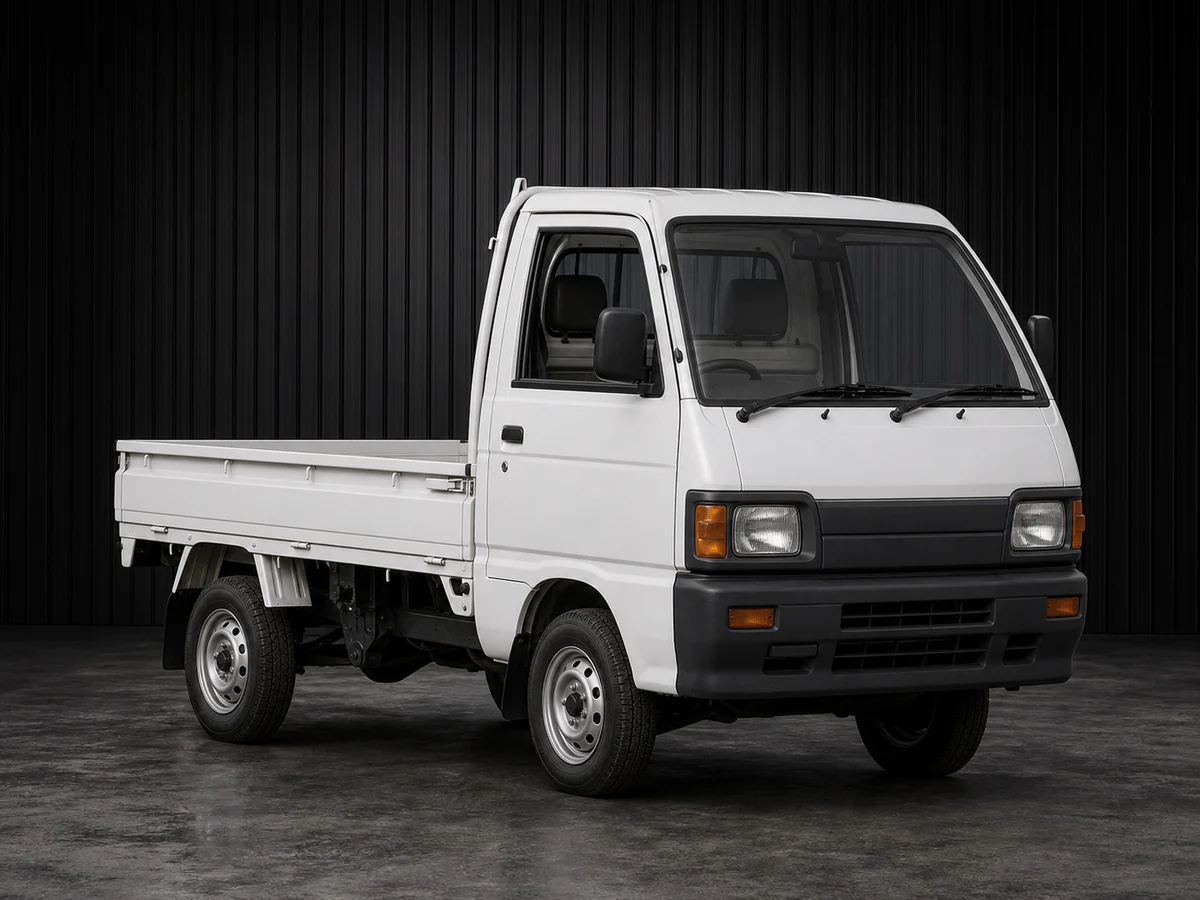
Standard, Extra, Climber, Jumbo & Farm Special
Chassis codes identify broad platform and drive families. Grade names and physical controls establish comfort and traction equipment.
| Grade / era | A/C | Drive | Differential lock | Low gearing | Transmission |
|---|---|---|---|---|---|
| Legacy Standard / Deluxe | Year and grade dependent | 2WD or 4WD by chassis | Not implied | Version dependent | Mostly manual; selected automatic |
| S110P Climber | Verify fitted system | Part-time 4WD | Traction-focused; verify control | Verify selector and operation | 5MT |
| 1999–2014 Special / Extra | Base versions can be sparse | S200/S201 2WD; S210/S211 4WD | Not a default | Specified rugged 4WD only | 5MT / 3AT / 4AT by year |
| 1999–2014 Jumbo | More comfort equipment; verify | 2WD or 4WD | Not implied by Jumbo | Drivetrain dependent | 5MT or automatic |
| 2026 Standard / High Roof | Manual A/C | 2WD or 4WD | Not standard equipment | Normal 5MT; CVT available | 5MT or CVT |
| 2026 Farm Special | Manual A/C | 4WD only | Super Differential Lock | Hi-Lo on 5MT | 5MT or CVT |
| 2026 Extra / Jumbo Extra | Manual A/C | 2WD or 4WD | Selected 4WD specification | Hi-Lo only where specified on 4WD 5MT | 5MT or CVT |
Daihatsu’s March 2026 documents list manual A/C across the current range. Current CVT 4WD uses electronic 2WD/4WD AUTO/4WD LOCK modes; current 4WD 5MT uses a mechanical system. Hi-Lo and Super Differential Lock are configuration-specific.
Standard
The normal long-bed work truck. Older examples can be non-A/C or low-equipment; the current version includes manual A/C and power steering.
Extra
The comfort-focused normal-cab grade. Current equipment includes power windows, key-free entry and upgraded lighting.
Climber
A real 1990s rugged 4WD grade, not an extended cab. Prove its specific low-range and differential hardware from controls and operation.
Jumbo
More cabin length, seat slide/recline and rear storage space. The current body retains a 1,650 mm bed instead of the normal 1,940 mm bed.
Farm Special
The current 4WD-only agricultural grade, with rear four-leaf springs, Super Differential Lock and Hi-Lo on the 5MT configuration.
Photograph every control
Request the model plate, 4WD selector, Extra Low or Hi-Lo control, differential-lock switch, A/C panel and engine compartment.
Standard, Jumbo, dump, lift & specialty Hijet bodies
Daihatsu has supported a broad special-purpose program, but the base chassis code does not identify conversion maker, rating or remaining payload.
Three-way drop-side bed
The standard general-purpose body. Current Daihatsu data lists a 1,940 × 1,410 × 285 mm bed and 350 kg maximum payload for the normal cab.
Tipper & scissor-lift dump
Shallow, earth and lift-dump variants exist. Verify subframe, cylinder, safety prop, gate arrangement, lift geometry and completed weight.
Compact & vertical tail lift
Daihatsu’s special-vehicle range includes powered tail lifts. Record maker, platform rating, controls, interlocks and inspection history.
Insulated, refrigerated & freezer
Cooling equipment has a separate identity. Inspect unit model, refrigerant, power source, body plate, calibration evidence and payload.
Panel & mobile-sales bodies
Panel, vending and shop bodies need separate structural, electrical, ventilation, weight and door-seal checks.
High Roof & Jumbo
High Roof adds headroom. Jumbo extends the cab and shortens the standard bed, so cargo length and comfort trade places.
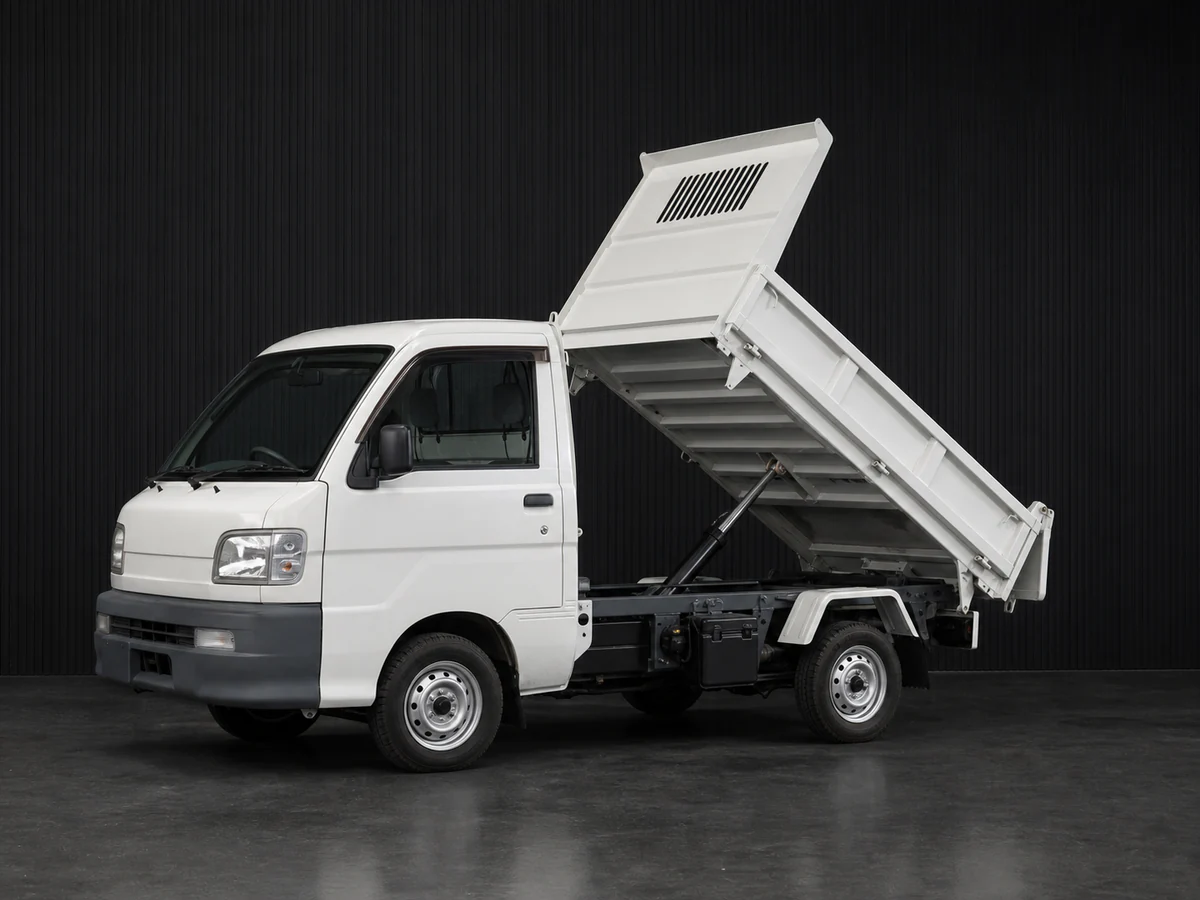
Inspect the conversion separately from the truck
Request a complete unloaded raise, hold and lower video, then confirm:
- Body-builder plate, serial and completion date
- Subframe welds, hinge pins and cylinder leakage
- Power pack, wiring, controls and safety prop
- Bed-floor corrosion, distortion and gate latches
- Finished empty weight and remaining payload
The current S500P/S510P family keeps work-truck priorities clear
The tenth generation launched in September 2014, adopted Smart Assist in 2018 and gained CVT plus updated 4WD control in December 2021.
Current S510P 4WD equipment is well documented
Daihatsu’s March 2026 publications identify 5MT and CVT, manual A/C across the range, electronic three-mode 4WD on CVT trucks and configuration-specific traction equipment.
- Standard and Extra retain the full 1,940 mm normal bed
- Jumbo trades bed length for seat travel and cabin storage
- Farm Special is the focused 4WD traction grade
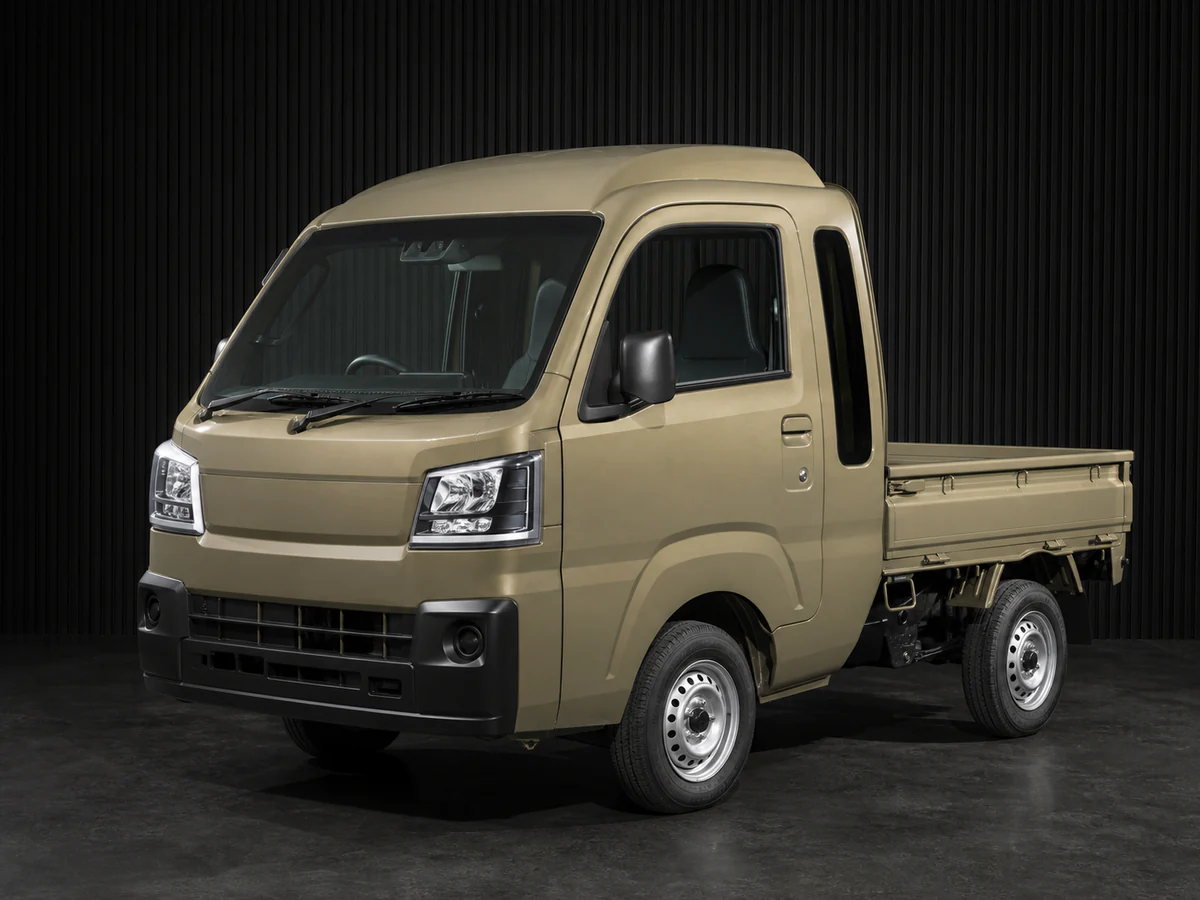
The 2021 update did not create a new chassis pair
S500P and S510P continue across the 2021 transmission update. Use exact manufacture date, transmission and control layout to distinguish earlier four-speed-automatic trucks from later CVT trucks.
Daihatsu Hijet configuration & import pathway finder
Select the truck, equipment and destination. The result separates vehicle fit from national import timing and the state or local road-use layer.
Build the Hijet you want
The result is conservative screening guidance, not customs, title, registration or insurance approval.
Your screening result
Choose a buildThe year and stamped code establish the Hijet family you are sourcing.
The main U.S. age route is calculated from the exact month and year.
How to inspect and source the right Hijet
Define the job and destination first, then verify both the mechanical family and the physical equipment.
Match every document
Stamped chassis, model plate, Japanese record, engine, manufacture month and body-builder plate should form one consistent identity chain.
Inspect the frame and cab floor
Check front frame rails, cab floor, spring hangers, bed mounts, steering joints, wheel bearings and driveline boots for corrosion, impact repairs or excess play.
Confirm maintenance by engine family
Request service evidence, cold start, hot restart, cooling-fan operation, leak inspection and running-quality evidence appropriate to the AB, EB, EF or KF engine fitted.
Operate every mode
Test selectable or full-time 4WD as fitted, Extra Low/Hi-Lo and any differential-lock switch at the correct low speed.
Verify the conversion separately
Record maker, serial, completion date, hydraulic or refrigeration operation, safety devices, empty weight and body-specific maintenance.
Prove A/C and steering function
A trim name or switch is not enough on older trucks. Request cold-vent temperature, compressor engagement and steering-operation video.
Rust checks change with the body
Inspect the cab floor, front frame, bed mounts and spring hangers on every truck. Dump, lift, refrigerated and panel bodies add subframes, hinge points, hydraulic mounts or insulated seams that need their own structural inspection. Fresh undercoat should never replace that evidence.
Frequently asked questions
Direct answers to the questions that most often change a Hijet shortlist.
When did Daihatsu begin producing the Hijet Truck?
Daihatsu launched the first Hijet in November 1960 as its first kei four-wheeled vehicle. The Truck reached its tenth generation in September 2014 and remains in production.
What is the difference between S100P and S110P?
S100P generally identifies the 1994–1999 rear-wheel-drive Hijet Truck, while S110P identifies the part-time-four-wheel-drive truck. Both use the 659cc EF inline-three family, but grade, transmission and equipment still require direct verification.
What is the difference between S200P and S210P?
S200P generally identifies a two-wheel-drive ninth-generation Hijet Truck and S210P a part-time-four-wheel-drive version. These early 1999-generation trucks use EF-series engines; later 2007-on KF-engine trucks commonly use S201P and S211P.
What is the difference between S500P and S510P?
S500P identifies the two-wheel-drive tenth-generation truck and S510P the four-wheel-drive truck. The family began in September 2014 and continues today with 5MT and, after the 2021 update, CVT choices.
Which engines are used in export-age Hijet Trucks?
S80P/S81P use a 547cc EB inline-three, S82P/S83P and S100P/S110P use 659cc EF-family inline-threes, early S200P/S210P trucks also use EF variants, and S201P/S211P plus S500P/S510P use the 658cc KF inline-three family.
Did every Daihatsu Hijet Truck have four-wheel drive?
No. Daihatsu sold rear-wheel-drive and part-time-four-wheel-drive versions. The paired export-era codes normally separate them, but the stamped code, 4WD controls and a functional test should support the seller’s description.
Is a Hijet Climber the same as a Hijet Jumbo?
No. Climber is a legacy rugged 4WD grade associated with traction-focused equipment. Jumbo identifies an extended-cab truck with more seat travel and cabin space; the name alone does not guarantee a differential lock.
Does every 4WD Hijet have a differential lock?
No. Four-wheel drive alone does not prove a rear differential lock. Daihatsu documented Super Differential Lock on selected rugged grades, including the current Farm Special, so require the correct control and a functional test.
Does the current Hijet Truck have air conditioning?
Yes. Daihatsu’s current 2026 grade and equipment information lists manual air conditioning across the Hijet Truck range. Older trucks can be air-conditioned or non-air-conditioned depending on year, grade and options.
Can a Hijet Truck have an automatic transmission and four-wheel drive?
Yes. Automatic 4WD examples exist in several generations. The current S510P offers CVT four-wheel drive, while Hi-Lo reduction is tied to specified four-wheel-drive 5MT configurations rather than the CVT.
Can a Daihatsu Hijet Truck be imported to the USA?
Potentially, but U.S. eligibility depends on the exact manufacture date and vehicle configuration. The federal 25-year rule, EPA requirements and state-level title, registration and road-use rules are separate, so screen the individual truck before purchase.
What should Mirai verify before sourcing a Hijet?
Mirai should verify the stamped chassis, manufacture month, engine, drivetrain, transmission, grade, air conditioning, fitted traction controls, body-conversion plate, condition and destination pathway before purchase or shipment.
Primary sources & verification method
Daihatsu’s own history, releases and equipment sheets establish the model facts. Government sources establish only the first national import screen.
- Daihatsu — Hijet 60th-anniversary history
- Daihatsu — ten-generation Hijet history
- Daihatsu U-CATCH — S80/S81 and S82/S83 catalog
- Daihatsu U-CATCH — S100P/S110P catalog
- Daihatsu U-CATCH — S200/S210 and S201/S211 catalog
- Daihatsu — 2014 tenth-generation launch
- Daihatsu — 2018 Smart Assist III t introduction
- Daihatsu — 2021 CVT and 4WD update
- Daihatsu — March 2026 Hijet Truck update
- Daihatsu — current Hijet Truck specifications
- Daihatsu — current grade and equipment chart
- NHTSA — vehicle importation FAQ
How Mirai should verify a candidate
Match the stamped chassis and Japanese record, establish exact manufacture month, identify the engine and grade, photograph the drivetrain and traction controls, test body equipment, document completed weight, then apply the destination’s current import and road-use rules. For real-world top speed by configuration, see Mirai’s kei truck top speed guide.
Source the Hijet generation that fits the job
Send Mirai your destination, preferred chassis, 2WD/4WD choice, transmission, body and must-have equipment. We can search Japanese stock and verify the individual configuration before you commit.