
Kei Camper Vans for Sale: Buy & Import from Japan to the USA
Looking for kei camper vans for sale in the USA? Mirai sources them from Japanese auctions, inspects them and ships them to U.S. buyers with export and 25-year import handling. Compare Japanese kei van conversions, pop-tops, coachbuilt campers and removable truck campers. Match the architecture to your travel needs, then identify the documents, weights and systems that need verification before purchase. For cargo and passenger models, see all kei vans for sale.
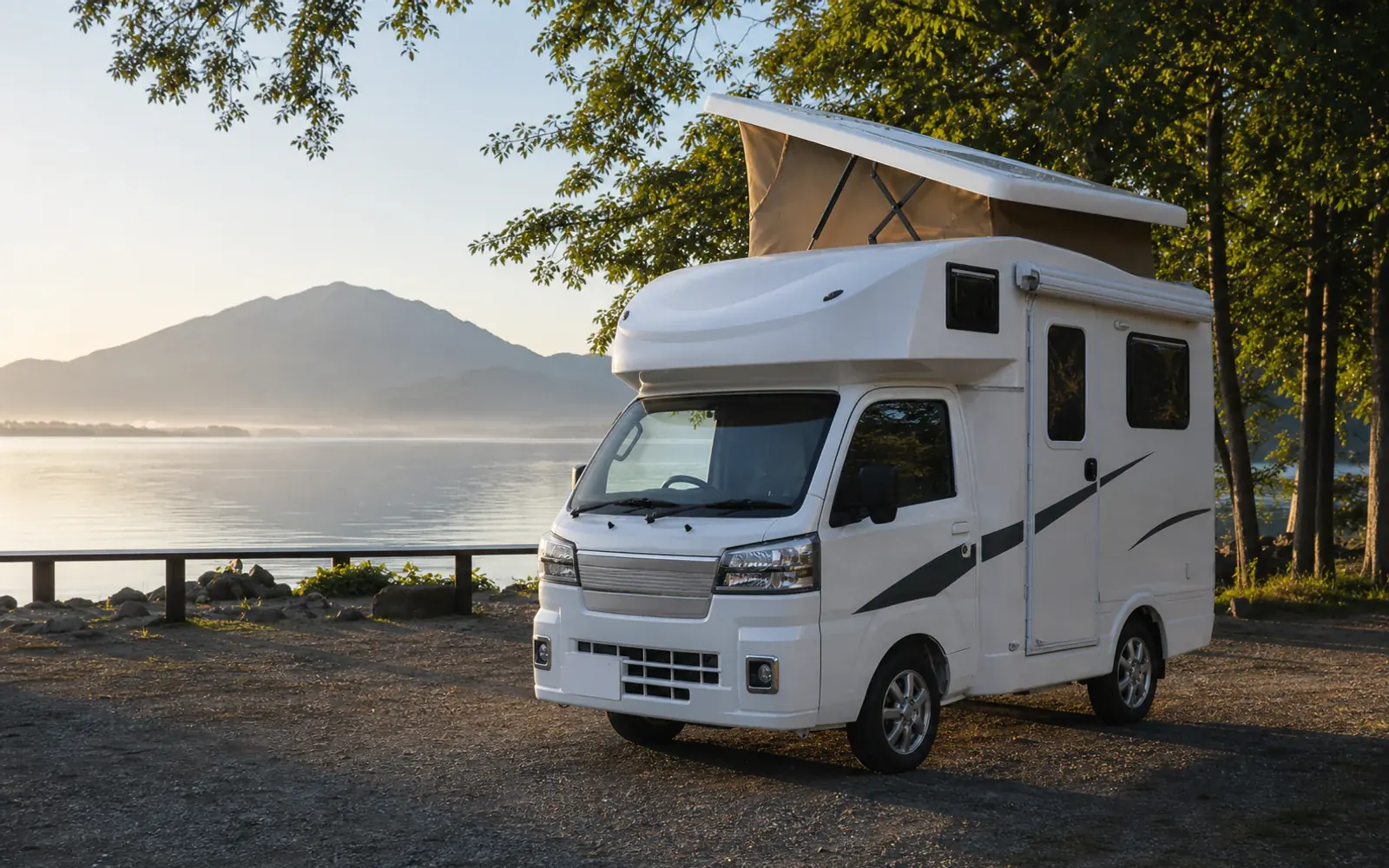
Van, pop-top, coachbuilt and removable shell.
Verify the exact base vehicle and engine code.
Counted from the base vehicle’s manufacture date.
Base manufacture and final-stage completion.
Kei Camper Van: First Identify the Architecture
“Kei camper” is an umbrella term. The completed body style changes space, road manners, inspection priorities and sometimes the regulatory evidence you need.
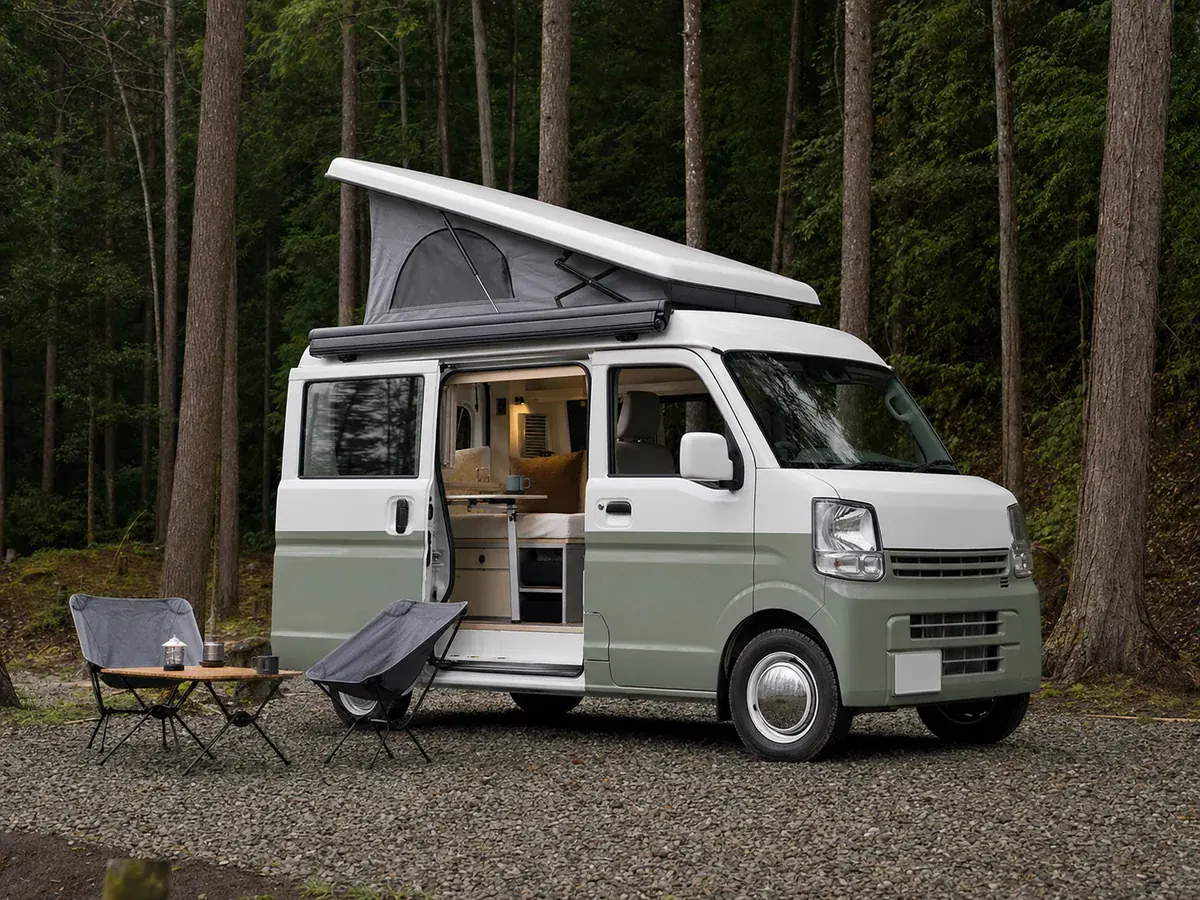
Van conversion
Keeps the production shell and places the bed, storage and galley inside. It is usually the narrowest, lowest-profile option and often the easiest to use as a daily vehicle.
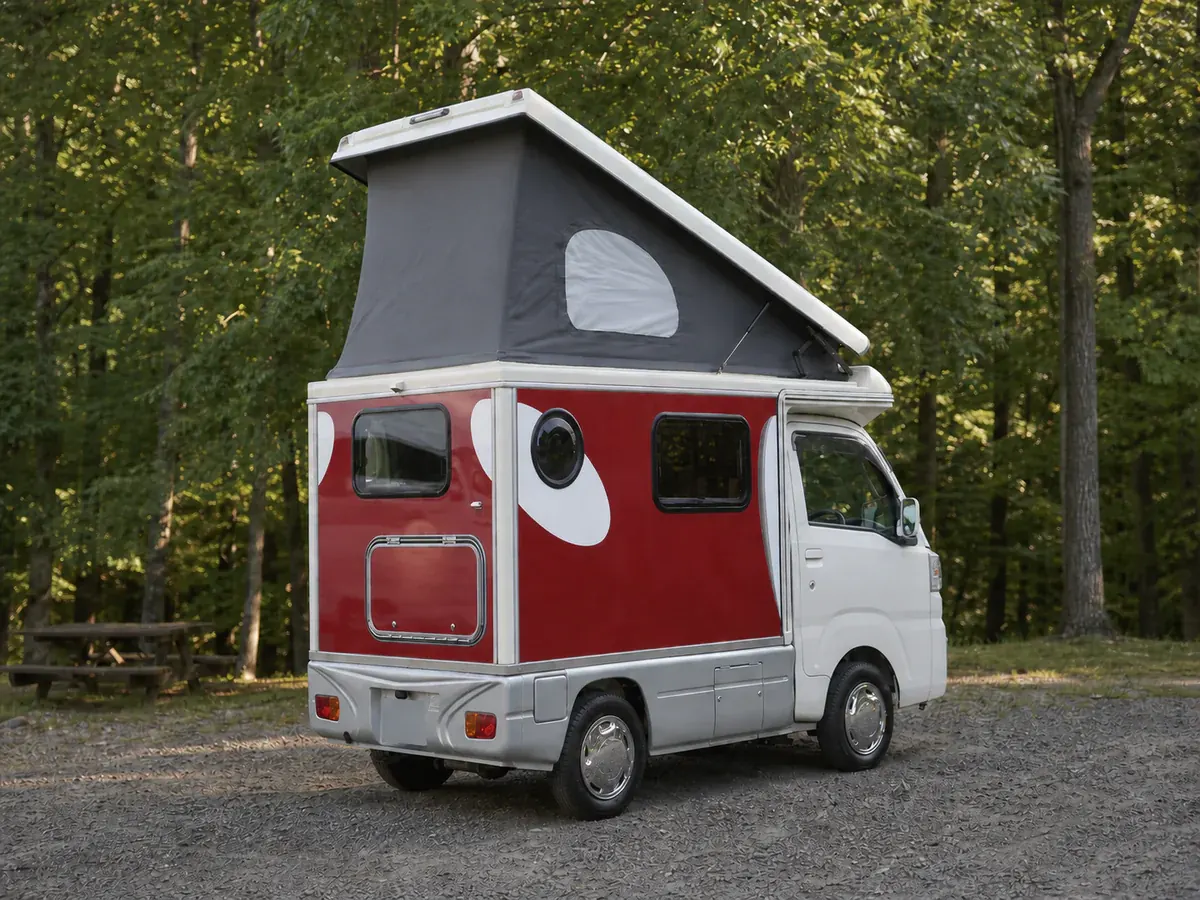
Pop-top camper
A lifting roof creates standing height or an upper berth without carrying full height all the time. Fabric, seals, latches and lifting hardware become important inspection points.
Fixed coachbuilt camper
A cabin is mounted behind the cab. It can provide a dinette, cab-over bed and more storage, but completed height, width, weight, wind sensitivity and axle loading deserve close scrutiny.
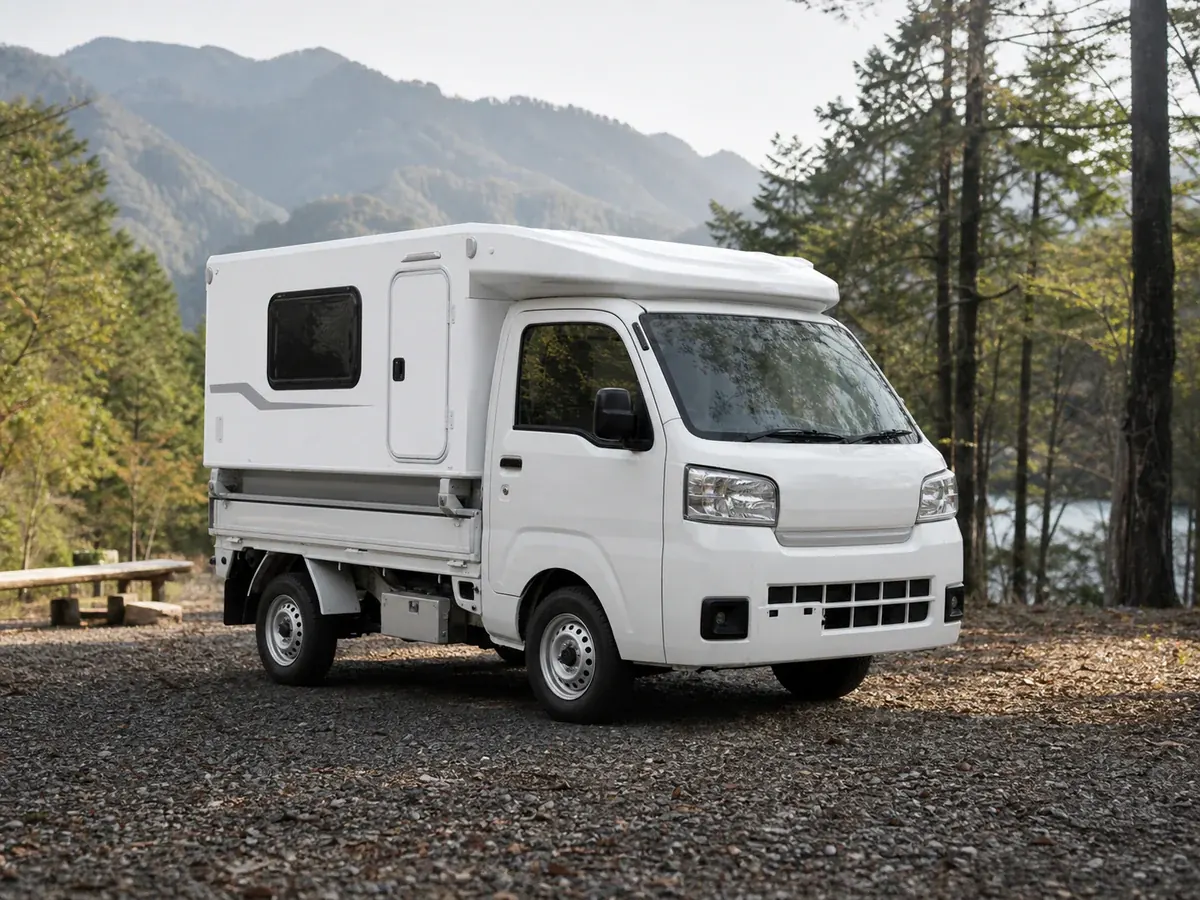
Removable truck camper
A separate shell sits in the pickup bed and may be demounted. Confirm how it is secured, whether it is documented as cargo or a conversion, and whether the loaded truck stays within its axle and gross-weight limits.
“Kei-based” does not guarantee kei-class dimensions
Japan’s kei dimensions apply to the vehicle as registered, not simply to its cab or donor model. A coachbuilt body can be wider, taller or differently classified. Ask for the completed registration record and measure the finished vehicle.
Popular Japanese base vehicles and chassis families
This is a family-level shortlisting table, not a chassis decoder. Model transitions can overlap by registration date, and a camper’s final-stage completion may occur after its base vehicle was built.
| Base vehicle | Representative chassis families | Approx. period | Common camper use | Buyer checks |
|---|---|---|---|---|
| Suzuki Every | DA64V / DA17V | 2005–2015 / 2015–present | Van conversion, pop-top | 2WD/4WD, transmission, seating, roof conversion |
| Daihatsu Hijet Cargo | S321V/S331V / S700V/S710V | 2007–2021 / 2021–present | Van conversion, pop-top | Exact code, drive layout, completed weight |
| Honda Acty Van | HH5 / HH6 | 1999–2018 | Compact van conversion | 2WD/4WD, corrosion, maintenance, seat layout |
| Subaru Sambar Van | TV1 / TV2 | 1999–2012 | Van conversion, retro camper | True Subaru vs later OEM base, rear-engine service access |
| Mitsubishi Minicab Van | U61V/U62V / DS17V | 1999–2014 / 2015–present | Van conversion | Original vs OEM-supplied generation, exact build month |
| Suzuki Carry Truck | DA16T | 2013–present | Fixed or removable truck camper | Wheelbase, cab/body mounting, axle loads, 4WD system |
| Daihatsu Hijet Truck | S500P / S510P | 2014–present | Fixed or removable truck camper | Completed dimensions, weight distribution, rear overhang |
Family periods are orientation only. Verify the stamped chassis identity, Japanese record, month of manufacture and converter completion record for the exact unit.
Small interiors demand deliberate trade-offs
Prioritize the conversion mode you will use most: seats while moving, dining at camp, a flat bed, or storage. A brochure berth count does not establish road-legal passenger capacity.
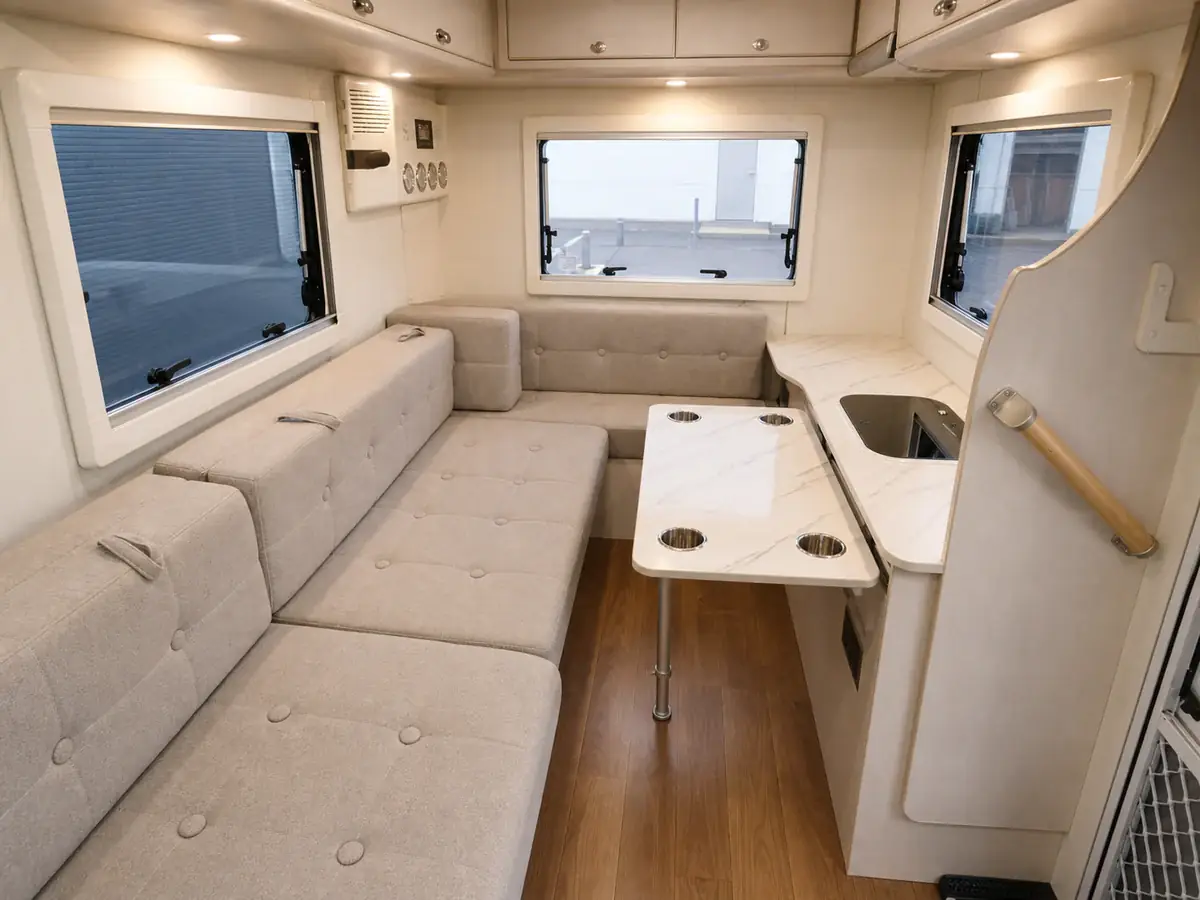
Dinette-first layout
An L-shaped lounge and removable table make a tiny cabin feel social. Check table storage, bed conversion steps, aisle clearance and whether any bench is an approved belted travel seat.
- Measure the made-up bed, not the cushions separately.
- Test the bed conversion with the table and cushions onboard.
- Confirm escape routes with the bed deployed.
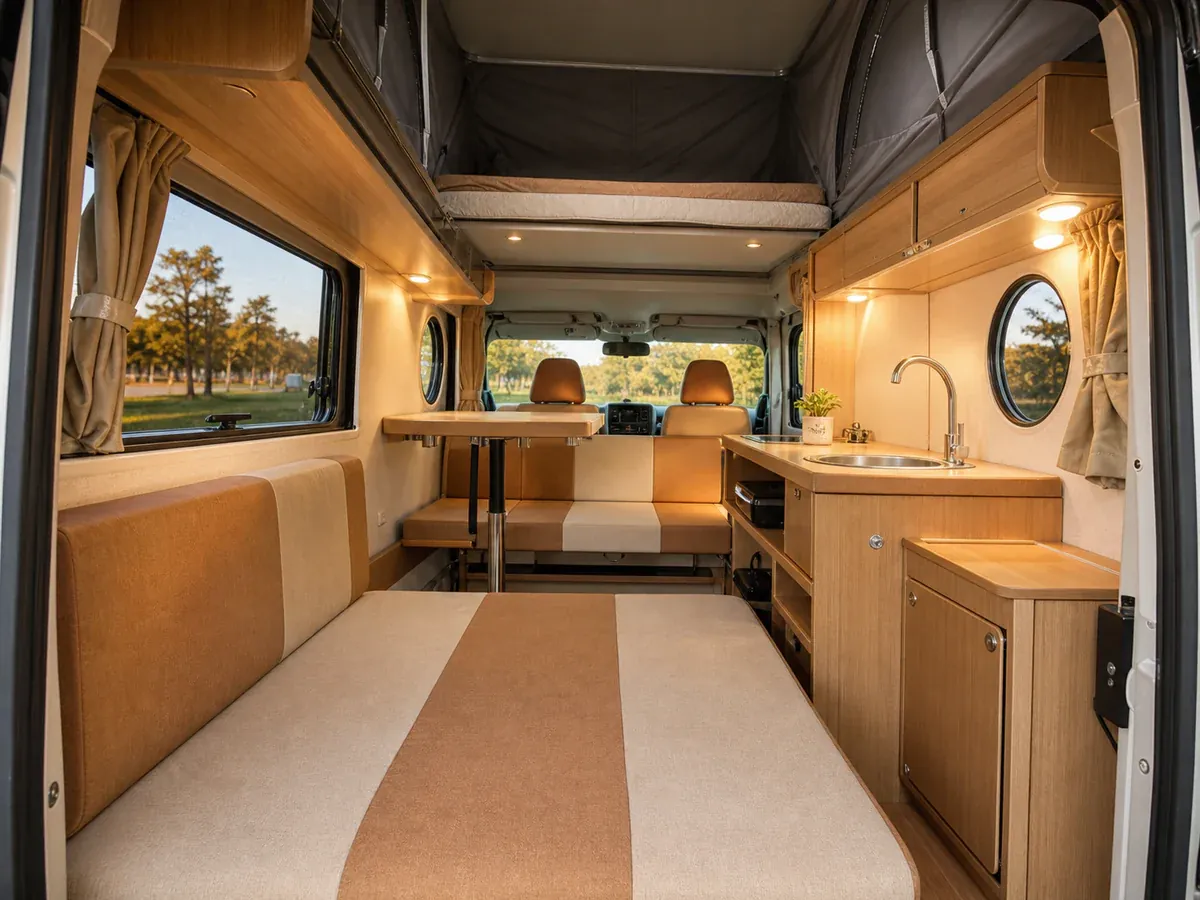
Pop-top berth plus lower bed
An upper platform can separate sleeping and living zones, but usable length, roof-tent ventilation and the ladder or access method matter more than a nominal berth count.
- Inspect fabric corners and roof perimeter for moisture.
- Operate latches, struts and the bed platform yourself.
- Check headroom and safe roof closing with bedding stored.
One real-world equipment benchmark
JP STAR’s current Happy1+ specification illustrates what a compact coachbuilt camper can offer: a 208 × 115 cm lower bed, an extendable cab-over bed, external 100V input, a 110Ah auxiliary battery, lighting, storage and a dinette table. Treat those figures as model-specific examples, not category standards.
Study the complete conversion, not just the exterior
These views show the areas that most quickly reveal whether a camper suits your use.
Kei camper vans for sale: configuration matcher
Use this short screen to identify a sensible architecture and the evidence Mirai should request. It is a shortlist tool, not an import approval decision.
Build a practical sourcing brief
Choose how you will use the camper. The result updates on screen and can be sent to a Mirai representative.
Recommended starting point: van conversion
Evidence screen requiredA factory-body van keeps the footprint manageable for daily use and two-person weekend travel.
Suzuki Every DA64V/DA17V, Daihatsu Hijet Cargo S321V/S331V or Honda Acty Van HH5/HH6.
Choose the age above to see the first import-evidence checkpoint.
Browse kei camper vans for sale at Japanese auctions
Mirai customers get exclusive access to the Mirai Auction Portal after an inquiry. It covers kei camper vans from major auctions across Japan, with filters for base vehicle, camper type, year and condition, so your shortlist starts with campers that suit a U.S. import. Portal listings are auction candidates, not Mirai-owned stock.
Request Auction Portal accessInspection: base vehicle plus habitation body
A camper is two purchases at once. The engine and chassis must be sound, and the living conversion must remain dry, safe, serviceable and within its weight limits.
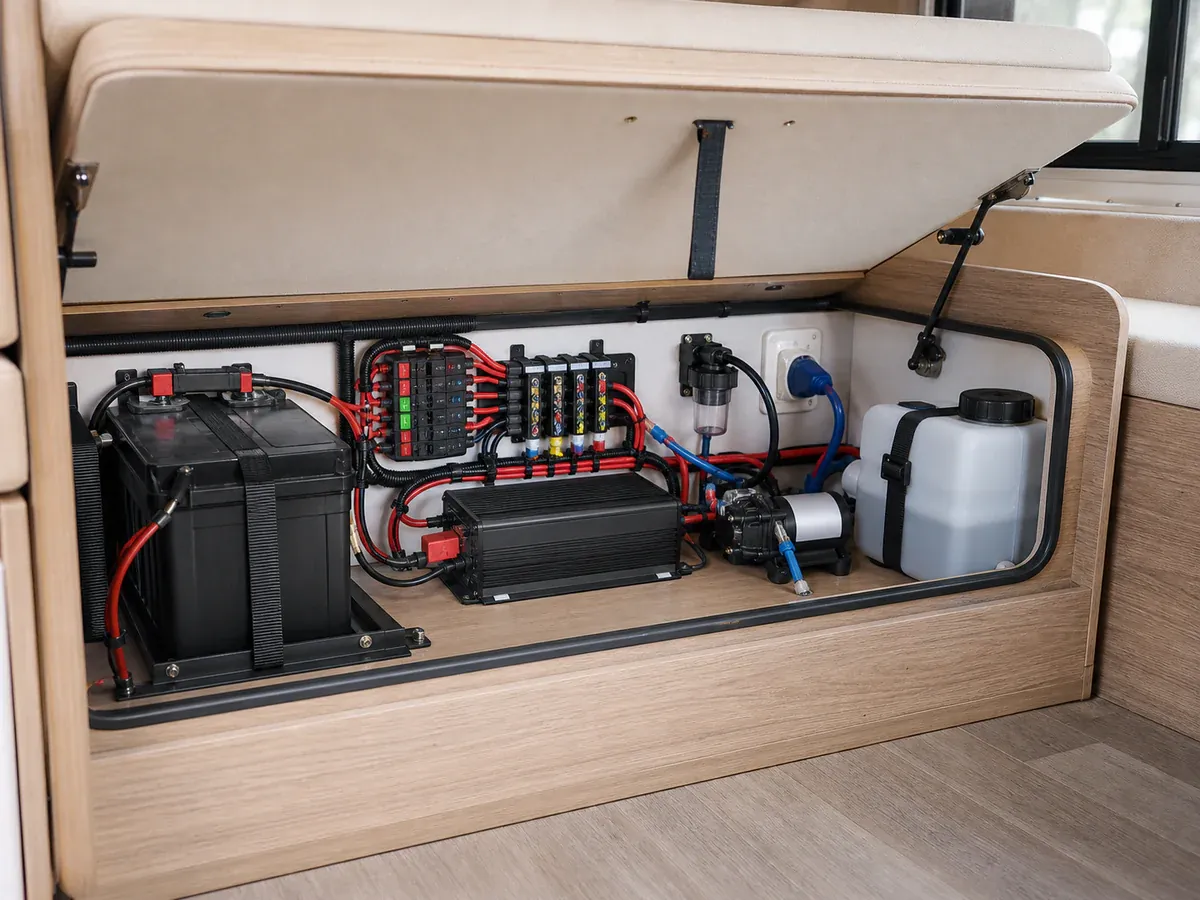
Electrical, water and appliance evidence
Record model plates and ratings for fitted equipment, even when the overall conversion has a builder badge. Confirm protection, cable routing, battery restraint, ventilation, water-tank condition and appliance compatibility with U.S. outlets and rules.
- Japanese 100V equipment needs an individual compatibility check.
- Test shore power, charging and 12V loads under operation.
- Inspect gas equipment against U.S. requirements before use.
First-pass U.S. import screening
The U.S. import pathway has one primary threshold: 25 years from the base vehicle’s manufacture date. For a kei camper USA import, count from the base vehicle’s manufacture date — US Customs uses that date, not the camper body’s completion date — and verify with NHTSA before the vehicle ships. Confirm the base-vehicle manufacture date and the conversion-body completion date separately.
This page helps choose a vehicle; the linked U.S. import guide handles import and registration in detail. Camper conversions add final-stage dates, seating evidence and completed dimensions to the usual chassis checks.
| Market | First federal/national screen | Camper-specific evidence | Next step |
|---|---|---|---|
| USA | For the common age route, NHTSA measures 25 years from the exact manufacture date. | Base manufacture identity; completed configuration; state registration/use still separate. | Open USA guide |
A positive first-pass screen is not an import, road-use or registration approval. Rules and evidence can change; verify the exact completed vehicle with the responsible authority or certifier before purchase.
Frequently asked questions
Direct answers to the questions that most often change a kei camper shortlist.
What is a kei camper van?
A kei camper van is a compact camper built from a Japanese kei van or kei-truck platform. The name covers several architectures, so verify whether the completed vehicle is a van conversion, fixed coachbuilt camper, pop-top or removable truck camper.
Is every kei-truck-based camper still registered in the kei class?
No. A kei-truck cab may remain underneath, but the completed body, dimensions, weight and registration classification can differ. Check the completed vehicle’s documents and physical measurements rather than assuming the base chassis determines the final class.
What is the difference between a van conversion and a coachbuilt kei camper?
A van conversion keeps the production van body and adds camping equipment inside. A coachbuilt camper uses a purpose-made habitation body on a cab chassis, usually giving more interior volume but also more height, width and weight to verify.
Can four people sleep and travel in the same kei camper?
Not automatically. Sleeping berths are not the same as approved travel seats, and a dining bench is not necessarily a legal belted seat. Confirm the registered seating capacity, seat construction and belt evidence for U.S. registration.
Is a pop-top kei camper better than a fixed high-roof camper?
It depends on use. A pop-top can reduce driving height and add standing or sleeping room at camp, while a fixed roof is quicker to use and can be easier to insulate. Inspect pop-top fabric, seals, latches and lifting hardware carefully.
Which base vehicles are common for kei camper conversions?
Common bases include Suzuki Every, Daihatsu Hijet Cargo, Honda Acty Van, Subaru Sambar and Mitsubishi Minicab vans, plus Suzuki Carry and Daihatsu Hijet Truck cab-chassis platforms. Exact chassis codes and build periods must be checked on the individual vehicle.
Do I need 4WD in a kei camper?
Not necessarily. 4WD is useful for snow, wet campsites and loose access roads, but it does not increase payload and it is not a substitute for suitable tires or careful route planning. Choose it for the terrain you will actually use.
Will Japanese camper appliances work in another country?
Not automatically. Japanese domestic equipment may be designed around 100V power and local gas or connector standards. Verify every appliance, charger, shore-power inlet and protective device before connecting or using it abroad.
How much payload does a kei camper have?
There is no safe category-wide figure. The completed empty weight, axle loads, registered gross weight, passengers, water, batteries and luggage all affect the remaining capacity. Obtain a weighbridge result for the finished vehicle.
Can I import a kei camper to the USA?
Potentially, but U.S. eligibility depends on the base vehicle and conversion history. The 25-year age rule, NHTSA and EPA evidence, final-stage completion dates and state registration can all matter, so screen the exact unit before purchase.
What documents should come with a kei camper?
Ask for the Japanese registration or export record, base chassis identity, build month, converter or final-stage plate where fitted, seating capacity, completed dimensions and weights, and manuals or records for installed electrical, gas and water equipment.
What should Mirai verify before I buy?
Mirai should verify the chassis identity, completed body type, documents, seating and berth arrangement, dimensions, weights, drivetrain, roof and body condition, and the fitted camper systems relevant to your intended use.
Primary sources & verification method
Official sources establish definitions, current model examples and U.S. import screening. The exact camper still needs document and physical inspection.
- Japan RV Association — camper body-type definitions
- Japan Ministry of Land, Infrastructure, Transport and Tourism — camping-car structural requirements
- JP STAR — current Happy1+ equipment example
- Mystic — Mini POP Bee kei-truck camper
- Mystic — fixed and removable truck-camper distinction
- Suzuki Digital Library — Every generation and chassis history
- NHTSA — 25-year import timing
How Mirai should verify a candidate
Match the stamped chassis to the Japanese record; establish both base manufacture and conversion dates; record completed dimensions, registered weights and seats; inspect the body and roof for moisture; test camper systems; then screen the finished vehicle against current U.S. rules.
Source a kei camper around the way you will use it
Find a Japanese kei camper for sale through a specialist importer or auction agent who filters by completed-conversion lots, not bare base vehicles; the completed documentation is what determines your import pathway.
Find a Japanese kei camper for sale through a specialist importer or auction agent who filters by completed-conversion lots, not bare base vehicles; the completed documentation is what determines your import pathway.
Send Mirai your passenger count, sleeping needs, preferred body style, drivetrain and equipment priorities. We can search Japanese stock and document the completed configuration before you commit.