
Kei Truck Parts Sourcing from Japan
Identify the truck by chassis, date, engine and drivetrain; choose the part category and condition; then send Mirai a structured request for sourcing, inspection, packing and international shipping.
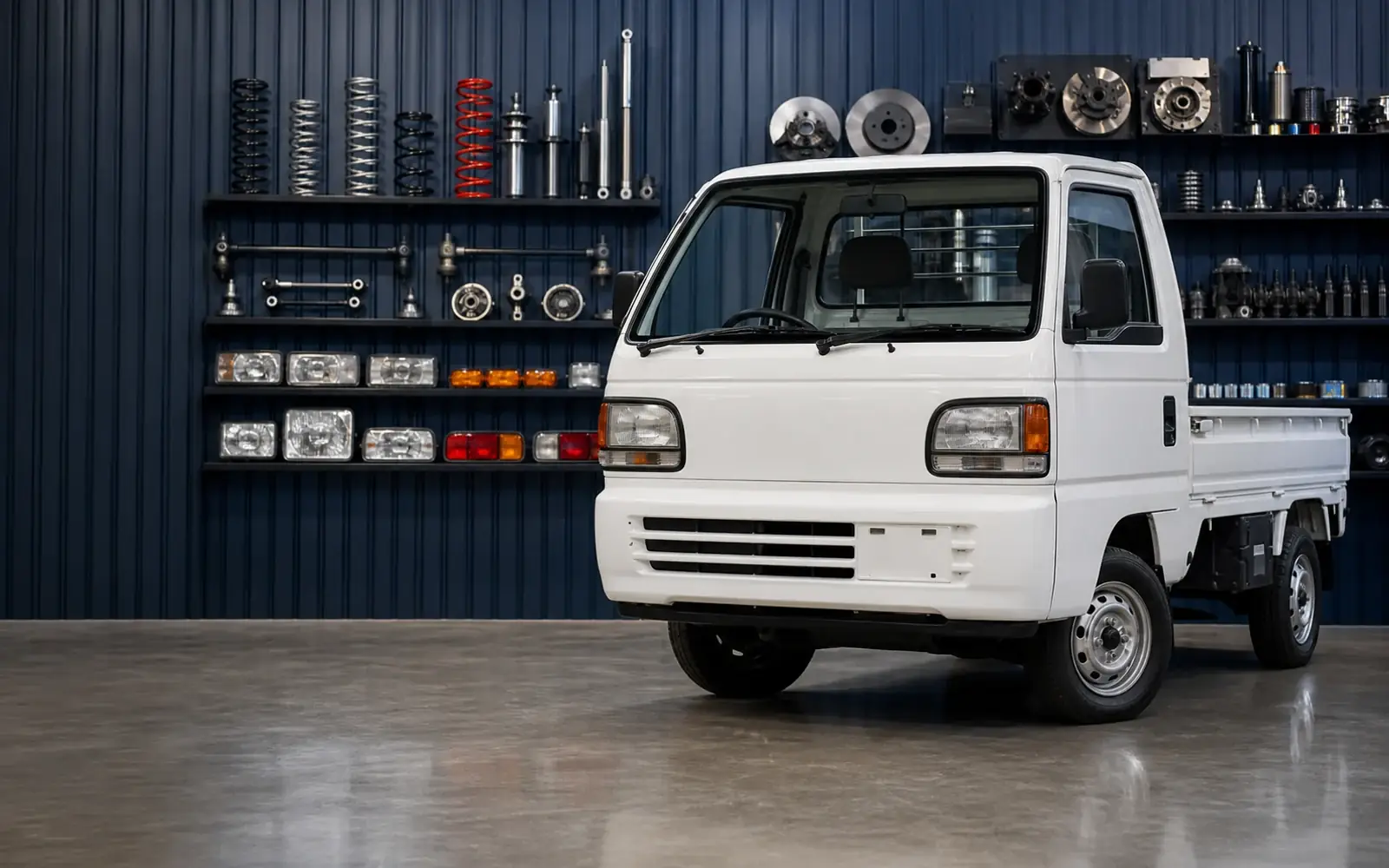
Carry, Acty, Hijet, Sambar and Minicab.
Chassis, date, engine, drivetrain and body.
Quoted by the evidence actually available.
Carrier and handling restrictions apply.
A chassis-led sourcing service, not a generic parts catalogue
Mirai searches Japanese dealer, supplier, dismantler, auction and specialist channels after the truck and requirement are defined.
Kei-truck names repeat across decades. A Honda Acty HA4 and HA9, Suzuki Carry DD51T and DA16T, or Subaru-built Sambar TT2 and later OEM Sambar are not interchangeable parts requests. Even inside one chassis family, production breakpoints, 2WD/4WD, manual/automatic, carburetion/injection and body equipment can change fitment.
The service therefore begins with evidence. Mirai can then present available OEM, new old stock, inspected used, rebuilt or aftermarket options with the condition and identification basis stated in the quote.
Never order from appearance alone
A lamp, gearbox, axle or door may look correct and still have different mounts, ratios, connectors, glass, hardware or production revisions.
The identification pack Mirai needs
Send clear, uncropped photographs plus typed text so characters can be checked twice.
Stamped chassis
Full model prefix and serial sequence from the truck, not only registration paperwork.
Production evidence
Manufacture month/year and every identification plate or Japanese record.
Engine and drivetrain
Engine code, 2WD/4WD, differential and manual/automatic details.
Part location
Front/rear, left/right, upper/lower and quantity, using driver’s position only when stated.
Old-part evidence
Wide context, connectors, mounts, dimensions and every complete number.
Destination
Country, postal code, urgency and whether consolidation is acceptable.
Common truck families—use these only to begin identification
The full stamped chassis and date still control the request.
| Make / truck | Representative chassis families | Representative engines | Common fitment splits |
|---|---|---|---|
| Suzuki Carry | DD51T/DC51T, DA52T, DA63T, DA16T | F6A, K6A, R06A | 2WD/4WD, transmission, front/rear body generation |
| Honda Acty Truck | HA1/HA2, HA3/HA4, HA6/HA7, HA8/HA9 | E05A, E07A, E07Z | 2WD/4WD, Real Time 4WD, ATTACK equipment, generation |
| Daihatsu Hijet Truck | S100P/S110P, S200P/S210P, S500P/S510P | EF family, KF family | 2WD/4WD, cab/bed, Jumbo, Climber and specialty body |
| Subaru Sambar Truck | KS3/KS4, TT1/TT2, later OEM families | EN07; later supplier-platform engines | Rear-engine vs later OEM architecture, 2WD/4WD, supercharged option |
| Mitsubishi Minicab Truck | U41T/U42T, U61T/U62T, DS16T | 3G83; R06A on DS16T | Mitsubishi-built vs Suzuki OEM, 2WD/4WD, transmission |
Representative codes are a navigation aid, not a complete interchange list. Suffixes, serial ranges and option codes may matter.
Parts Mirai can search for
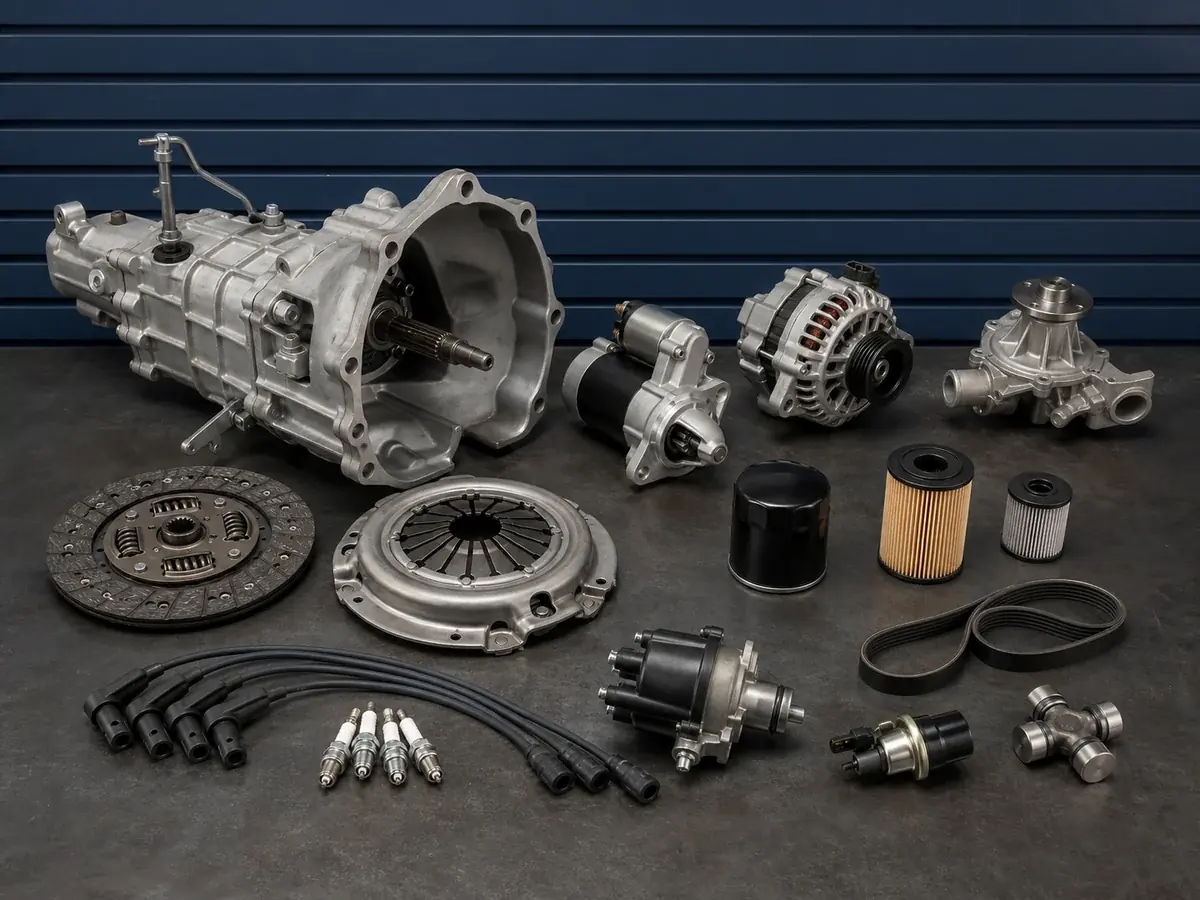
Mechanical and service
State whether the priority is exact OEM fitment, rebuildability, budget or upgrade compatibility.
- Engine accessories, sensors, ignition and cooling
- Manual/automatic transmissions and clutch parts
- Transfer, axle, differential and propeller-shaft parts
- Brakes, steering, suspension and wheel hubs
- Filters, belts, seals, mounts and service kits
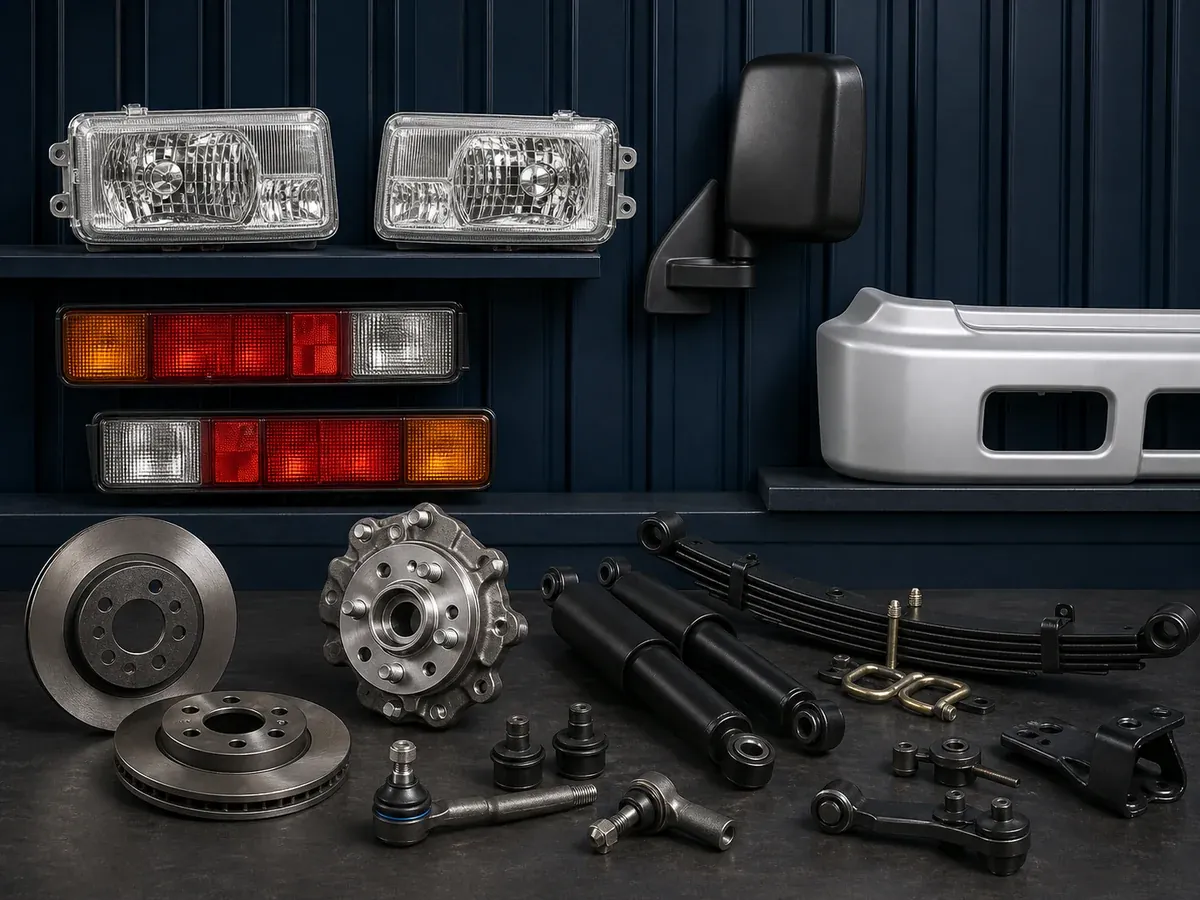
Body, cab, bed and electrical
Side, connector, lens pattern, mounting points and production revision are especially important.
- Lamps, mirrors, switches, clusters and harness sections
- Doors, glass, handles, latches and weather seals
- Bumpers, grilles, panels and bed hardware
- Seats, trim, controls and cabin hardware
- Dump, lift and specialty-body service components
Condition choices and the evidence to request
| Source type | Best use | Evidence to expect | Main caution |
|---|---|---|---|
| New OEM | Exact current or superseded service part | Full manufacturer part number and supplier confirmation | Discontinued or back-ordered |
| New old stock | Discontinued original component | Packaging/part identity and storage condition | Age-related rubber, seal or electronic deterioration |
| Inspected used | Body, trim and scarce assemblies | Donor chassis, photographs, stated test and defects | Wear and incomplete test history |
| Rebuilt | Starter, alternator, steering or drivetrain unit | Rebuilder scope, replaced components and test basis | Core return or limited warranty geography |
| Aftermarket | Service and upgrade option | Application list, dimensions and certification where relevant | Quality and regulatory suitability vary |
Build a kei-truck parts request
The result appears on screen and prepares a WhatsApp message; attach photographs in WhatsApp afterward.
Parts identification brief
Incomplete identity is flagged before the sourcing request is prepared.
Your parts request
Enter the truckChassis, date, engine and drivetrain should be provided.
Packing, consolidation and international shipping
The safest and cheapest method depends on weight, dimensions, fragility and dangerous-goods status.
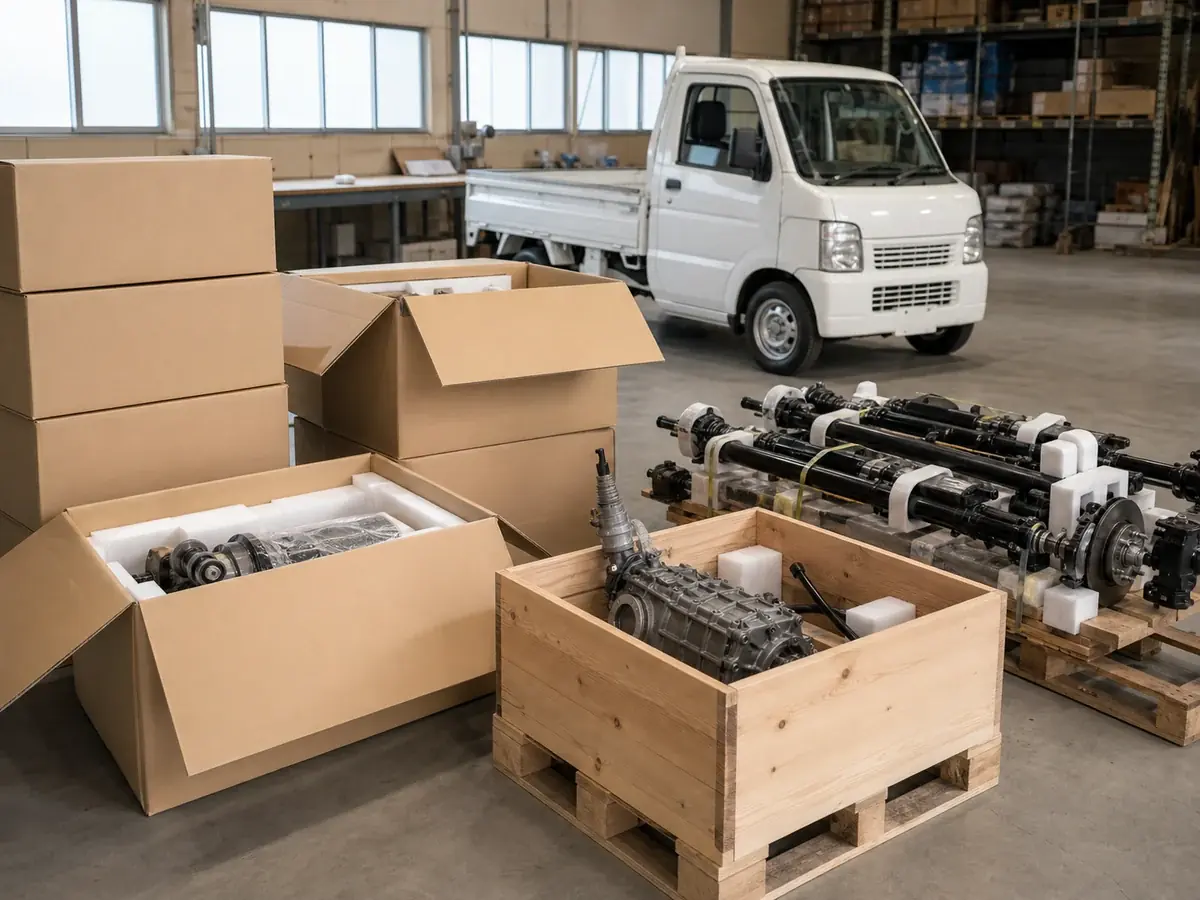
Plan the package—not just the part
Large panels and fragile glass can cost more to protect and transport than to buy.
- Courier for compact, permitted parts
- Crating for transmissions and heavy assemblies
- Pallet or sea freight for bulky combinations
- Edge, moisture and connector protection
- Carrier review for batteries, airbags, fluids and pressurized items
Kei-truck parts sourcing FAQs
Direct answers about identification, condition, fitment and shipping.
Can Mirai source parts for Japanese kei trucks?
Yes. Mirai can search Japan for suitable OEM, used and selected aftermarket kei-truck parts when the vehicle identity and part requirement are clear.
What information is needed to identify a kei-truck part?
Provide the make, model, full chassis code and serial, manufacture month, engine code, drivetrain, transmission, body type, left or right side, quantity and destination.
Is the model name alone enough to order a part?
No. A name such as Carry, Acty, Hijet, Sambar or Minicab spans multiple generations, engines and drivetrains. Chassis and date evidence are essential.
Should I send a part number?
Yes, when available. Photograph the complete number and surrounding component, but do not rely on a partial casting number as proof of service-part fitment.
Can Mirai source discontinued kei-truck parts?
Sometimes. Discontinued items may be found as new old stock, inspected used parts, rebuilt units or suitable alternatives, but availability and condition must be confirmed case by case.
Can I choose between new OEM and used parts?
Yes. The request can prioritize new OEM, new old stock, inspected used, rebuilt or aftermarket options. Mirai will describe the available condition rather than treating the categories as equivalent.
Are used engines and transmissions tested?
Testing depends on the source and listing. Request compression, running, fluid, noise, leak and identification evidence where available; no test should be assumed unless documented in the quote.
Can body panels and glass be shipped internationally?
Often yes, but size, fragility, dimensional freight and carrier limits can dominate the cost. A complete packed-size and destination quote is required.
Can batteries, airbags, fluids or refrigerant parts be shipped normally?
Not always. Dangerous-goods, pressurized, pyrotechnic and fluid-containing items can require special handling or may be refused by a carrier or destination.
Does a photograph guarantee fitment?
No. Appearance is not enough. Final fitment depends on chassis, production date, engine, drivetrain, transmission, body, side, connectors and supersession data.
Can Mirai consolidate several parts in one shipment?
Yes, when the parts are compatible with the chosen shipping method and packing plan. Consolidation can reduce handling, but waiting for rare items can extend lead time.
What happens after I submit a parts request?
Mirai reviews identity and scope, asks for any missing evidence, searches suitable sources, confirms condition and fitment basis, quotes part and shipping options, then proceeds only after approval.
Fitment verification method
- Physical stamped chassis and identification plates
- Japanese registration/export or parts-catalogue evidence
- Complete OEM part number and supersession where available
- Donor vehicle chassis/date/engine evidence for used assemblies
- Dimensions, connector, mount, side and body comparison
- Carrier and destination restrictions before payment
Order of work
Identify truck → define part and condition → search Japan → verify source evidence → quote part and packing → confirm carrier/destination → proceed after buyer approval.
Send the chassis once. Get a parts search built around the actual truck.
Prepare the request, then attach plate, old-part, connector and mounting photographs in WhatsApp.