
Land Cruiser 70 Series for Sale: Buy & Import a Diesel 4×4
Looking for a Land Cruiser 70 Series for sale to import from Japan to the USA? Mirai sources, inspects and ships them to U.S. buyers with export and 25-year import handling. This Land Cruiser 70 Series guide helps U.S. buyers separate body and engine codes, screen a vehicle against the federal age rules, and plan the state title handoff before purchase.
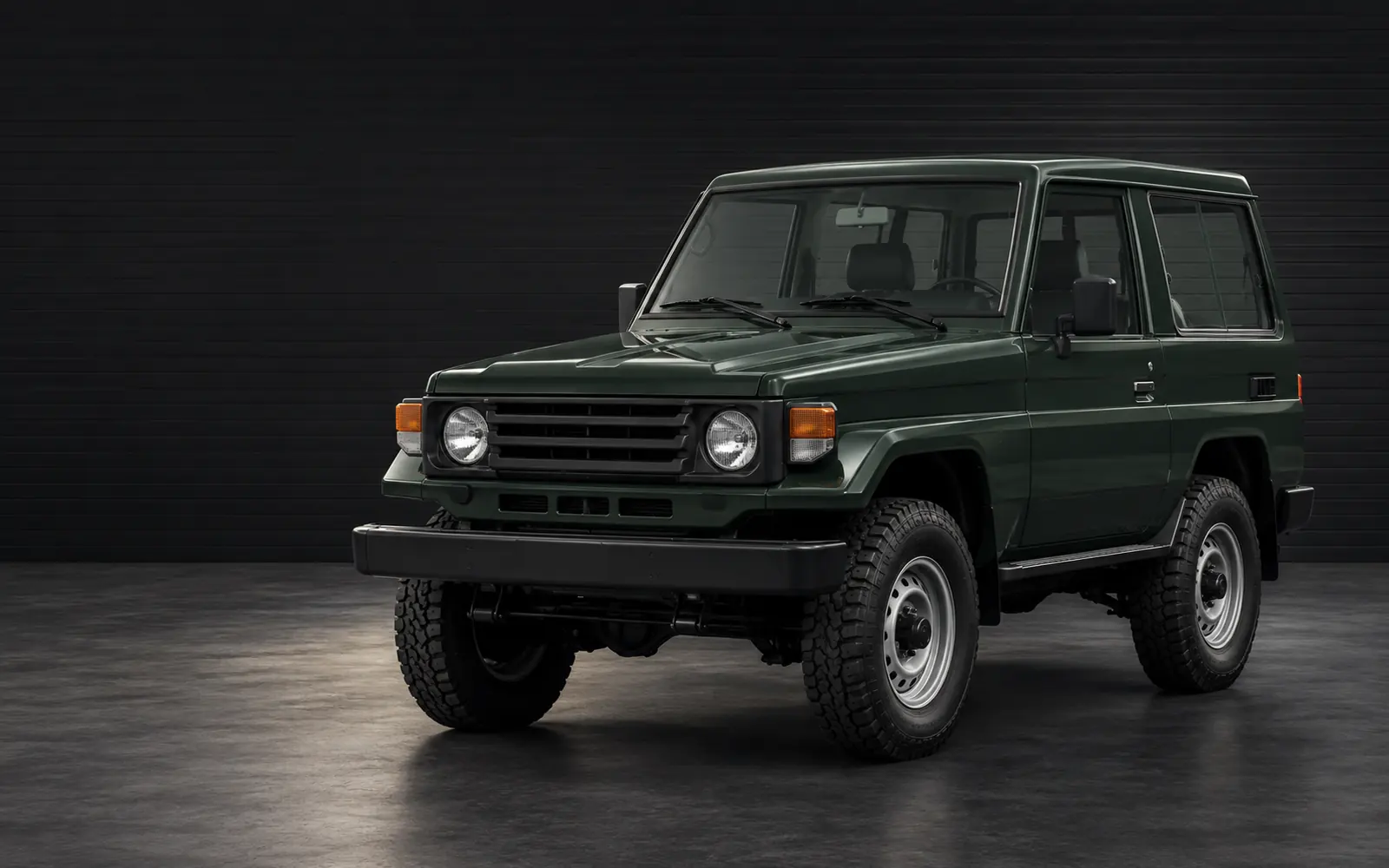
Toyota introduced the 70 as the 40 Series successor.
Runs from the vehicle’s actual manufacture date.
Original engine configuration is a critical condition.
Title, registration and road use remain state decisions.
Land Cruiser 70 Series: what U.S. buyers need to verify
The badge identifies a family, not one fixed specification. Market, date, body, engine and prior modifications can all change the purchase and import decision.
Toyota classifies the 70 as its heavy-duty Land Cruiser branch. It began in November 1984, used a separate ladder-frame utility mission from the Prado/light-duty branch, and continued in overseas markets after regular Japanese sales ended in 2004. That long production span is why a 1990 diesel wagon and a current 2.8-liter automatic can share the same family name while having very different U.S. eligibility.
For a U.S. purchase, identify the complete model code and actual manufacture date before comparing listings. Then confirm the installed engine against the original configuration, read the export certificate and auction sheet, and ask the destination state how it will title that exact body type. Mirai can help source and inspect candidates in Japan, but NHTSA, EPA, CBP and the state authority make the final decisions.
Do not shop by “70 Series” alone
A short two-door, a 76 wagon, a 78 Troop Carrier and a 79 pickup solve different jobs. Engine prefixes such as HZJ, HDJ, VDJ, GRJ and GDJ point to different powertrain families, but a prefix never replaces the stamped plate and vehicle records.
Heavy-duty 70 history and U.S. eligibility eras
Select an era for the change that matters most. Family dates are context; the exact vehicle’s manufacture plate controls federal age screening.
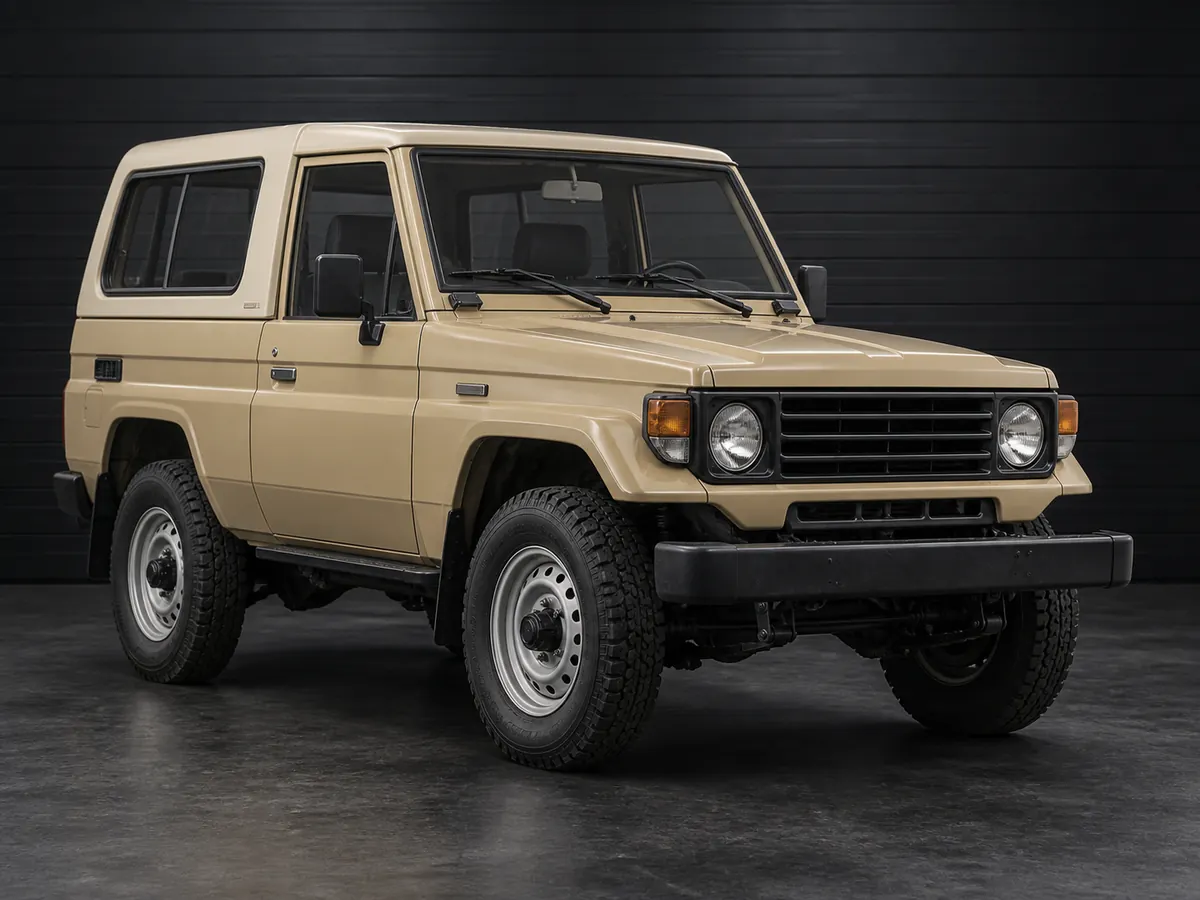
Short, medium and long work bodies
Toyota’s launch family offered multiple wheelbases, soft-top and van bodies, an FRP top and chassis for custom coachwork. That breadth is the origin of today’s shorthand.
- Use body numbers as a starting point, not a complete identity.
- Expect trim and engine differences by market.
- Verify repairs and conversions against the original records.
Model-code decoder: body, engine and era
Enter a common code from the identification plate or listing. The result is a screening aid; the complete plate and export certificate remain authoritative.
Try BJ70, HZJ75, HZJ76, HZJ78, HZJ79, HDJ79, VDJ76, GRJ79 or GDJ76. Codes outside the heavy-duty family are flagged.
Common reading pattern
HZJ78 combines the 1HZ diesel family prefix with the 78 long enclosed body. VDJ79 combines the 1VD diesel family with the 79 pickup/cab-chassis body. A fitted engine can differ after decades of repairs or conversions, so compare plate, engine and paperwork.
Land Cruiser 70 diesel engines: a buyer’s comparison
These are the major families U.S. shoppers encounter. Output and emissions equipment vary by year and market, so one regional specification should not be treated as universal.
4.2L naturally aspirated I6
Simple, low-stress diesel associated with HZJ codes. Toyota documented 4,163 cc and 135 PS in a 1990 Japan application.
- No factory turbo
- Inspect cooling and injection health
- Disclose aftermarket turbo work
4.2L turbo-diesel I6
Listings and conversions may identify 1HD-T, 1HD-FT or 1HD-FTE variants. Confirm the exact suffix, installation and supporting documents.
- More performance than 1HZ
- Confirm exact suffix
- Check conversion provenance
4.5L turbo-diesel V8
Toyota widened and lengthened the front structure for the 2007 export update. These vehicles are still below the normal 25-year age route in 2026.
- VDJ model prefix
- Newer electronics and emissions systems
- Do not assume age exemption
2.8L turbo-diesel I4
The current Japan 76 reference produces 150 kW and 500 Nm with a six-speed automatic. Current vehicles are comparison references, not ordinary age-exempt U.S. imports.
- Common-rail modern diesel
- Current Japan reference
- Too new for normal age route
1FZ and 1GR families
Petrol examples exist in several markets. Toyota’s 2014 Japan re-release used the 4.0-liter 1GR-FE V6 with a five-speed manual.
- Not every 70 is diesel
- Fuel type affects state inspection
- Verify installed engine code
Original configuration matters
EPA’s age exclusion is not merely a calendar test. The agency says the engine must be identical to the engine originally installed.
- Photograph engine number and bay
- Document swaps and turbo conversions
- Ask EPA when equivalency is unclear
76 vs 78 vs 79 and earlier body numbers
Body shorthand narrows the search, but complete model codes and market documentation decide the actual specification.
| Body | Typical form | Buyer use | U.S. planning issue |
|---|---|---|---|
| 70 / 71 | Short two-door | Trail and collector use | Early examples clear age gates; verify roof/body conversion. |
| 73 / 74 | Medium two-door | More cargo than short body | Toyota discontinued the 73 in the 2007 overhaul. |
| 75 | Earlier long pickup or Troop Carrier | Work bed or enclosed utility | Likely age candidate by date; classification varies by body. |
| 76 | Four-door semi-long wagon | Passenger and overland use | Early versions may qualify by date; current versions do not. |
| 78 | Long enclosed Troop Carrier | Cargo or camper conversion | Seat and camper changes need state review. |
| 79 | Pickup or cab chassis | Commercial and utility work | Body affects tariff classification, weight and registration. |
Common usage only. Ask a customs broker to classify the exact wagon, van, pickup or cab-chassis under the current tariff schedule.
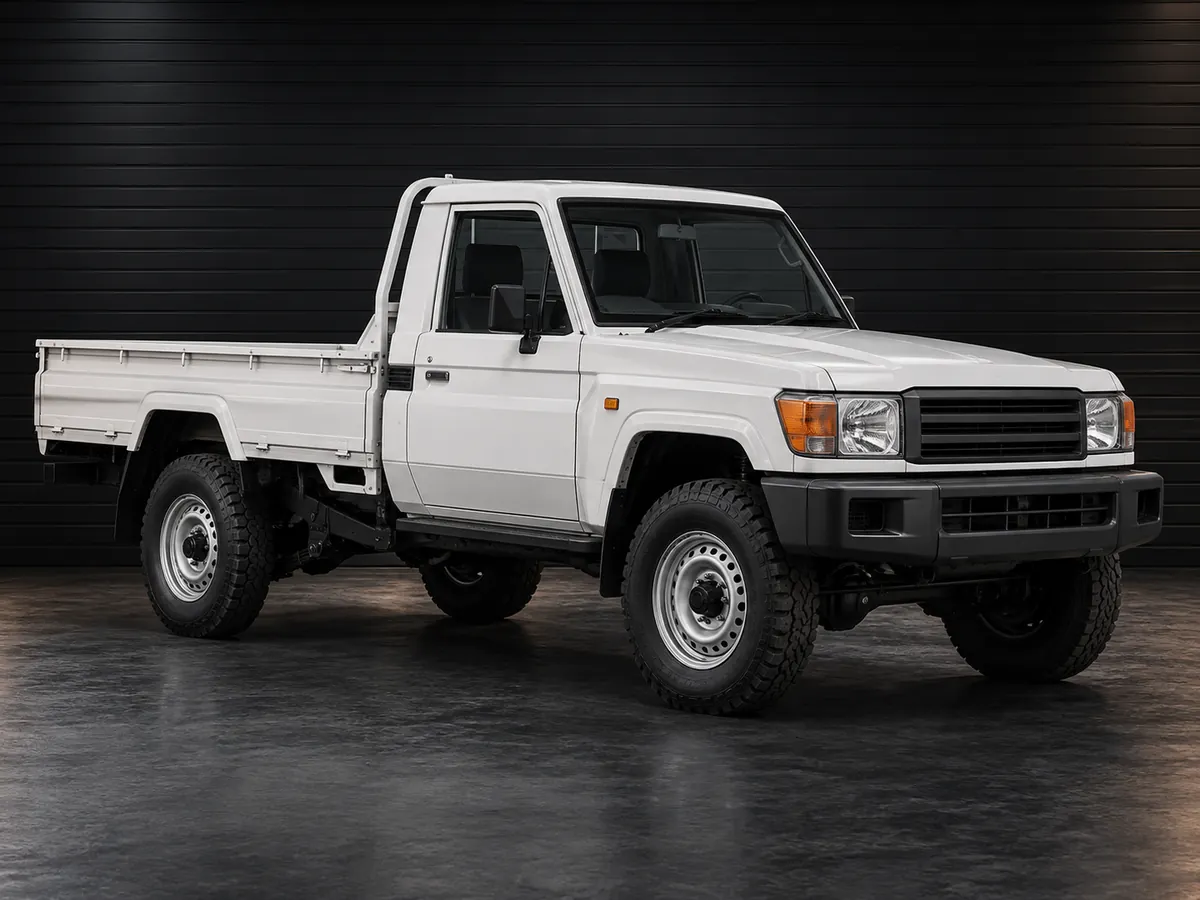
Pickup and cab-chassis
Bed type, cab count, gross weight and final use affect freight, tariff classification, inspection and registration. Confirm the actual bed and aftermarket coachwork before quoting landed cost.
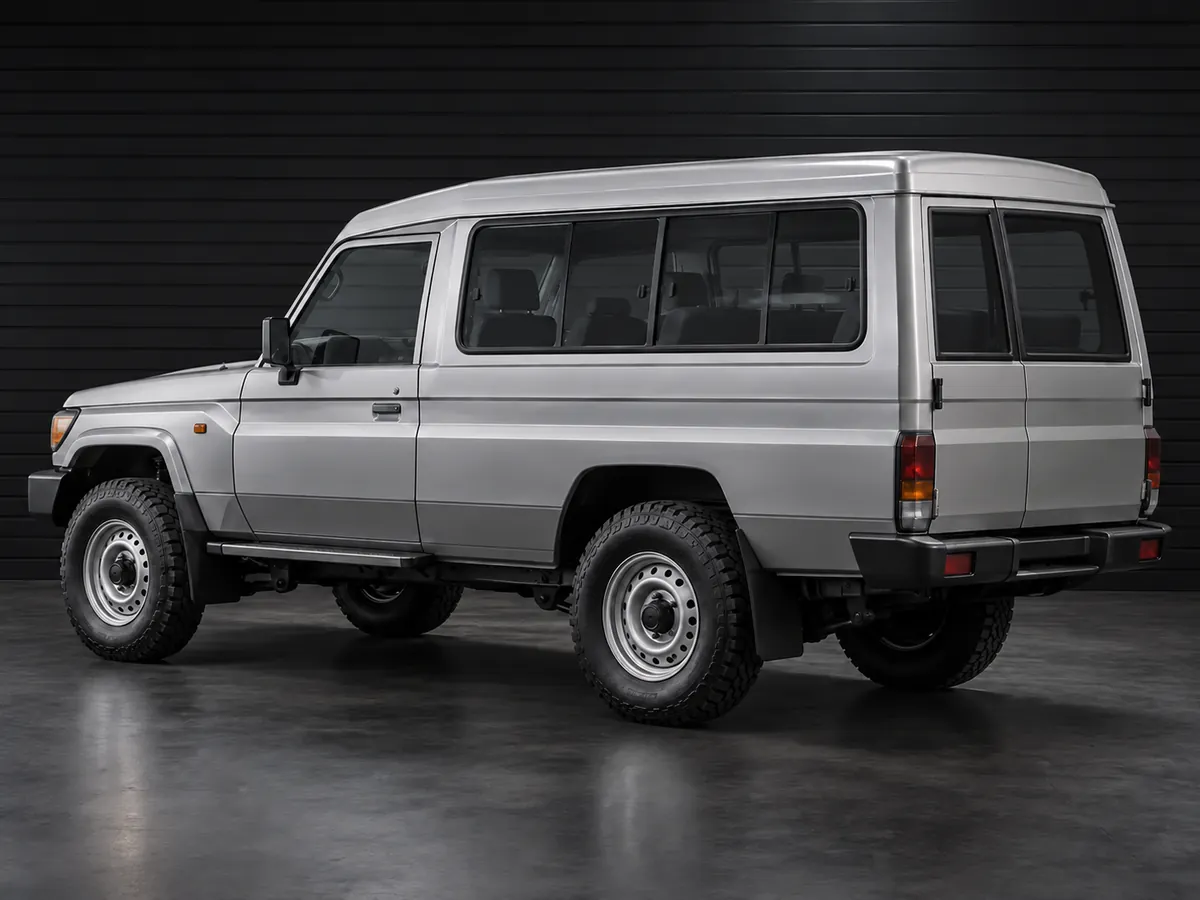
Troop Carrier and camper candidates
The long enclosed body attracts camper conversions. Verify seats, belts, roof work, interior fuel or gas systems, window changes and the state’s reconstructed or motorhome rules.
U.S. import route: four separate gates
Passing one gate does not decide the next. Keep the safety, emissions, customs and state files together from the first vehicle review.
Safety eligibility
A vehicle at least 25 years old from manufacture can enter without meeting the FMVSS that apply to newer vehicles. HS-7 Box 1 is the usual age declaration.
Emissions eligibility
EPA’s age exclusion begins at 21 years from original production and requires the original engine configuration. EPA Form 3520-1 records the declaration.
Entry and classification
CBP clears the entry and forms. Current duties depend on body, value, origin and trade measures, so obtain a broker calculation.
Title and registration
Your state decides title evidence, VIN inspection, emissions or safety inspection, plates, insurance and use. Federal entry does not promise a state title.
The 2001 boundary moves by manufacture date
On September 13, 2026, a vehicle manufactured more than 25 years earlier can fit the NHTSA age route. A September 2001 unit near the anniversary needs exact date evidence or a conservative wait; “2001 model” alone is not enough.
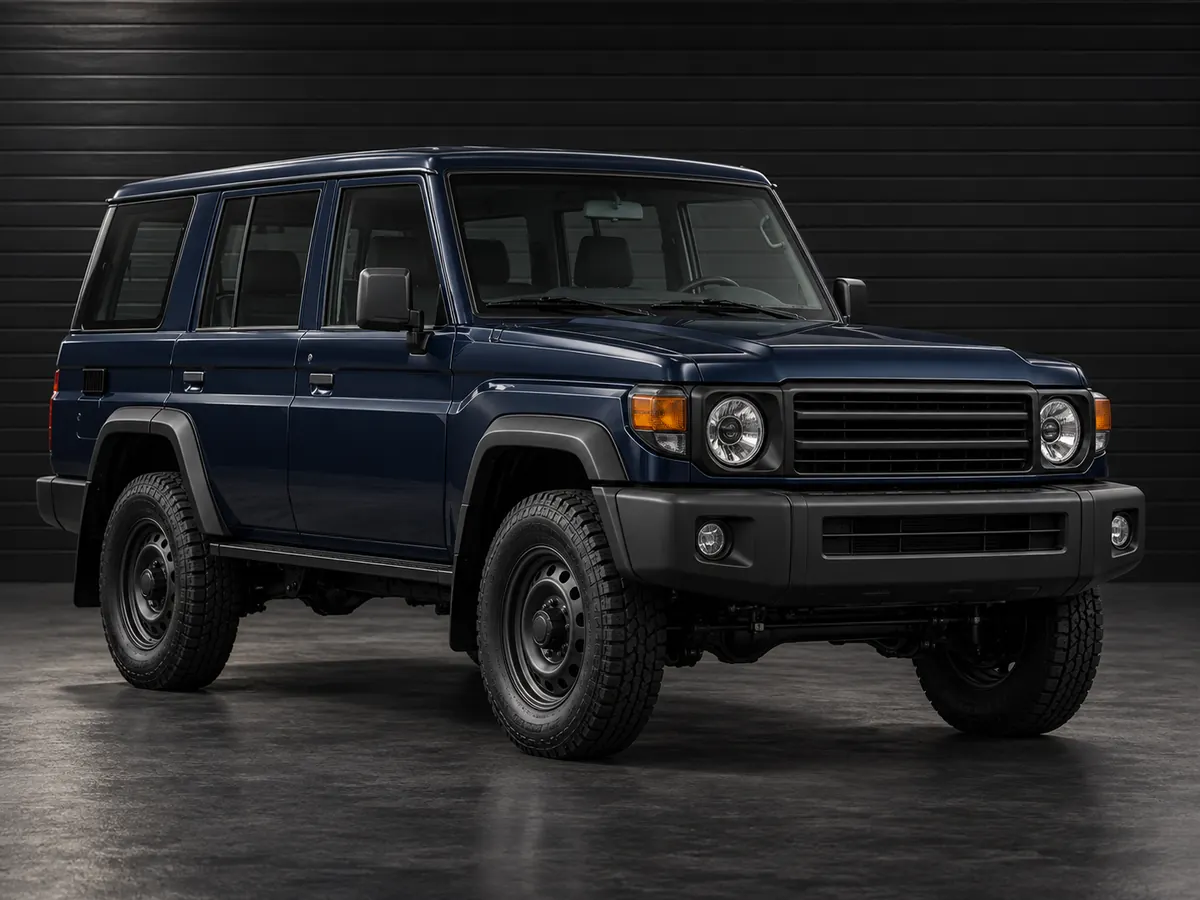
Why new-production specs are not an import shortcut
Toyota’s current Japan reference uses a 2.8-liter 1GD-FTV, six-speed automatic, part-time 4WD, five seats and a 130-liter tank. Those modern specifications do not make the vehicle eligible for the ordinary U.S. 25-year exemption.
See Mirai’s specialty-vehicle sourcing scope, learn how to read a Japanese auction sheet, and review Mirai’s licensing and company background.
U.S. age and state registration planner
Use the exact manufacture month when known. The result is a planning screen for discussion with Mirai and official agencies; it is not an import, title or registration approval.
Check a candidate before bidding
Choose the vehicle and destination. Every change refreshes the result and all three WhatsApp drafts.
Your planning result
Federal age gates likely open; state review requiredA January 2000 vehicle is more than 25 years old in September 2026.
The vehicle is over 21 years old, but the original engine configuration must be proved.
Alabama title, VIN inspection, registration and insurance requirements must be confirmed before shipment.
Collect the manufacture plate, export certificate and translation, engine evidence, auction sheet and underbody photos.
Official starting point: USAGov state motor vehicle services. California buyers should also read the California DMV direct-import page.
WhatsApp opens a draft for review and sending. This page does not submit data or issue approval.
Inspection and document checklist before purchase
A 25-year-old truck can clear a calendar test and still be the wrong vehicle. Ask for evidence that answers condition and import questions.
Model code, frame number, manufacture plate, export certificate, translation and auction records.
Engine code/number, bay photos, fuel system, turbo status, emissions equipment and replacements.
Rails, crossmembers, spring mounts, body mounts, floor, bed supports and prior welding.
Cold start, blow-by, smoke, fluids, radiator, hoses, temperature behavior and injection leaks.
Transfer case, hubs, differential locks, axle seals, steering play, prop shafts and shifting.
Camper roof, seats, belts, bed, winch, suspension, wheels, bumpers and lighting.
Broker plan, HS-7, EPA 3520-1, CBP evidence, value documents and current classification.
Foreign VIN, title evidence, inspection, emissions, weight, plates, insurance and intended use.
Frequently asked questions
Direct answers for U.S. buyers comparing diesel bodies and the import pathway.
What is the 70 Series?
It is Toyota’s heavy-duty Land Cruiser line introduced in November 1984 as the successor to the 40 Series. It is separate from the comfort-oriented Prado/light-duty line and the larger station-wagon line.
Can I import one to the United States?
Generally yes when the exact vehicle is at least 25 years old from its manufacture date, or when it qualifies through another NHTSA route. EPA emissions eligibility and the destination state’s title and registration process remain separate checks.
Is the federal 25-year rule based only on model year?
No. NHTSA says the 25-year period runs from the vehicle’s date of manufacture. A model-year label, first-registration date, auction-sheet year and manufacture date can differ, so use manufacturer or recognized age evidence.
Does EPA use the same 25-year threshold?
No. EPA provides an exclusion at 21 years from original production when the engine is identical to the engine originally installed. A swap or materially changed emissions configuration needs separate review.
Can a newer 76, 78 or 79 be imported for ordinary permanent road use?
Usually not through the simple age route before it turns 25. A newer non-U.S.-certified vehicle generally needs a valid conforming or NHTSA eligibility route and may require a Registered Importer; EPA requirements also apply.
Which diesel engine is best for a U.S. buyer?
There is no universal best choice. The 1HZ favors simple naturally aspirated service, 1HD variants add turbo performance, the 1VD adds V8 torque and complexity, and the 1GD is modern but too new for the normal 25-year route. Condition, originality, parts support and state use matter more than the badge alone.
What is the difference between a 76, 78 and 79?
In common heavy-duty naming, 76 identifies the four-door wagon, 78 the long enclosed Troop Carrier and 79 the pickup or cab-chassis family. The complete stamped model code is more precise than the two-digit body shorthand.
Is the 1HZ a turbo diesel?
No. The factory 1HZ is a naturally aspirated 4.2-liter inline-six. Aftermarket turbo conversions are common, but the conversion must be disclosed because condition, cooling, insurance and EPA original-configuration review can change.
Is a V8 70 old enough for the normal U.S. exemption?
No as of September 2026. Toyota’s major V8 export update arrived in 2007, so the earliest examples do not reach 25 years until 2032. A current eligibility decision must use the exact manufacture date and federal route.
Can California register a 25-year-old diesel direct import?
Do not assume it can. California DMV says direct-import diesel vehicles can face separate federal and California emissions evidence requirements, and its published process can refuse vehicles that cannot be converted. Obtain written DMV and CARB guidance for the exact chassis before buying.
Does right-hand drive prevent U.S. registration?
Right-hand drive by itself is not the complete decision. Federal import eligibility, state title and registration, inspection, insurance and equipment rules still control the result, so confirm the exact vehicle and state before shipment.
What should I send Mirai for a vehicle-level check?
Send the destination state, intended use, full chassis and model code, manufacture plate, export certificate and translation, engine-bay photos, engine number or code, auction sheet, underbody photos and any modification history. Those records support an eligibility and condition review; they do not guarantee a government approval.
Primary sources & verification method
Manufacturer and government sources were checked September 13, 2026. Recheck the exact vehicle before purchase and entry.
- Toyota heavy-duty history — launch, 1999 suspension, 2007 front/V8 and body changes.
- Toyota 1984 full model change release.
- Toyota 1990 four-door 70/Prado release — 1HZ reference.
- Toyota 2014 anniversary re-release — 1GR-FE and Japan bodies.
- Toyota 2023 Japan reintroduction — current 1GD reference.
- Toyota Gibraltar 70 Series model sheet — export-market body and engine references.
- NHTSA import FAQs — manufacture-date age rule.
- NHTSA HS-7 — Box 1.
- EPA import guidance — 21-year original-engine condition.
- CBP classic vehicle guidance.
- USAGov state motor vehicle services.
- California DMV imported vehicle registration.
How this page was checked
Mirai’s editorial workflow separated Toyota history/spec evidence from federal safety, federal emissions, customs and state evidence. The tool uses the current browser date, conservative month-boundary language and never labels a vehicle approved. No individual vehicle, tariff classification, state file, insurance policy or conversion was reviewed for this general guide.
Ask Mirai to check the exact chassis
Share the state, intended use, frame/model code, manufacture plate, engine evidence and auction sheet. Mirai can help source and inspect the candidate and organize the export-side file.