
Mitsubishi Pajero for Sale: Diesel 4×4 USA Import Guide
The Mitsubishi Pajero is a versatile Japanese 4×4 auction search for U.S. buyers, especially factory diesel and Super Select variants. Identify its generation, engine and transfer-case specification before judging a candidate.
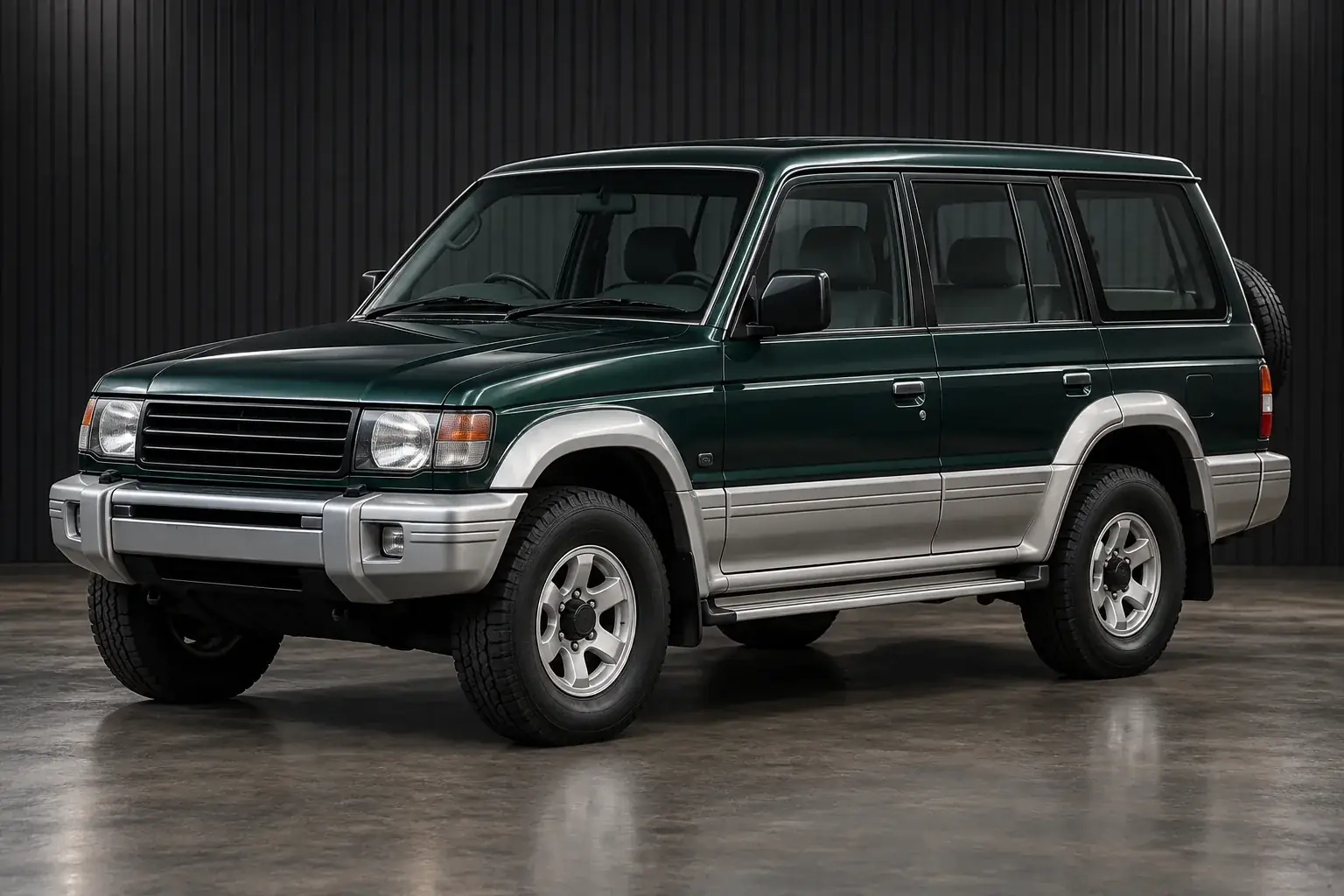
Mitsubishi history
Check fitted version
Engine identity matters
Build-date screen
Mitsubishi Pajero models and factory specification
Start with the manufacturer’s historical record, then inspect the auction vehicle’s stamped identity and equipment.
Mitsubishi’s vehicle history dates the second-generation Pajero to January 1991. Early engines included a 3.0-liter V6 and 2.5-liter diesel; 3.5-liter V6 and 2.8-liter diesel options followed in 1993. Mitsubishi’s 2026 historical account explains Super Select 4WD; its 4WD history covers the later SS4-II system. Generation 3 began in 1999, so chassis construction and 4WD controls should be verified on the precise vehicle. Mitsubishi Motors, Car History (current manufacturer history, checked September 26, 2026).
| Candidate path | Factory context | Buyer check |
|---|---|---|
| Generation 2 | Gasoline V6 and diesel variants | Check engine, short/long body, frame condition and Super Select operation. |
| Early Generation 3 | Later 4WD and chassis layout | Check build month and the exact driveline; avoid importing Gen 2 assumptions. |
| Diesel search | Factory 2.5 or 2.8 diesel in the applicable years | Match engine model and export record before planning the EPA route. |
Manufacturer history identifies representative specifications; auction vehicles may differ by year, market and prior modification.
How to buy the right Pajero from Japan
Define the version you actually want, then build an auction file that can support a confident decision.
Set the generation and body length first. A second-generation short-body diesel and an early third-generation long-body gasoline vehicle serve very different buyers, and the change in construction means they should not share a single inspection checklist. Record the factory engine and 4WD control layout as separate filters.
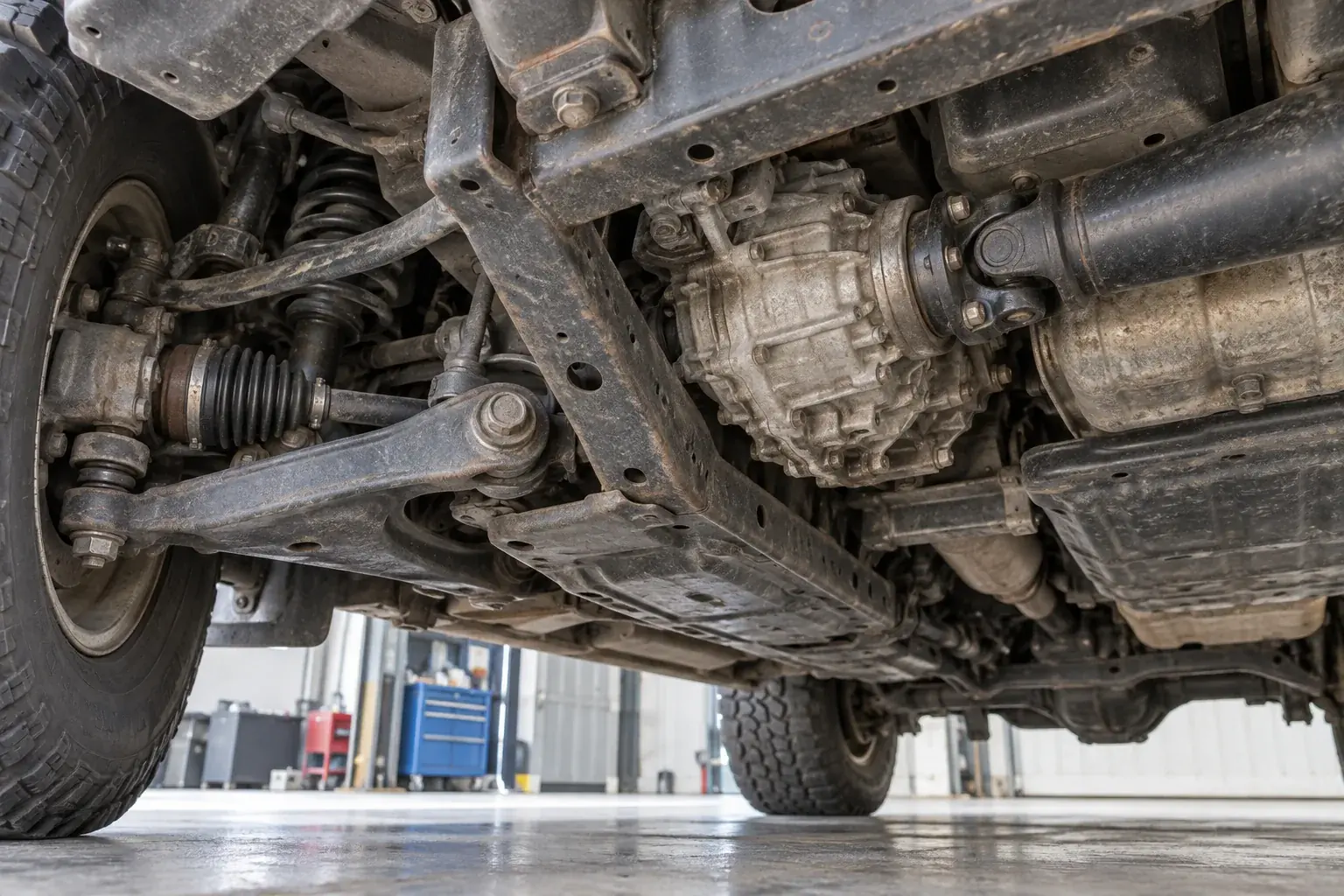
Ask Mirai for mode-by-mode evidence of Super Select operation where fitted, including indicators, transfer-case behavior and a driveline inspection. A flashing light deserves diagnosis in the bid decision. Add underbody, mounting and repair photographs and check how any lift or overland equipment was installed. A complete service story often matters more than another accessory.
Mirai can use these preferences to filter vehicles from major Japanese auctions, review the auction-sheet disclosures and request more evidence on serious candidates. Ask for a landed-cost breakdown and shipping timeline on the specific lot; exchange rates, freight and auction outcomes change, so no fixed vehicle price is quoted here.
Known problems and model-specific inspection points
These checks turn a broad auction grade into a vehicle-specific evidence request.
| Area | What to check |
|---|---|
| Super Select engagement | Test every fitted mode, indicator and transfer-case operation; diagnose flashing lights rather than assuming a harmless sensor. |
| Chassis/body corrosion by generation | Inspect the actual structural design, mounts and underbody repairs; do not treat Gen 2 and Gen 3 identically. |
| Diesel cooling and fuel service | Review maintenance and cold-start evidence on the exact engine, especially high-mileage touring vehicles. |
| Suspension and steering wear | Check bushings, joints, alignment and tire wear after off-road use or lift modifications. |
What drives value in this market
Use a qualitative condition ladder instead of a price that will age with the next auction.
Generation, factory engine and documented 4WD operation establish the first value tier. Structural condition, maintenance history, original specification and quality of any touring modifications determine whether a candidate deserves its grade.
Ask for the auction sheet, export certificate, chassis and engine photographs, odometer records, service history and a condition report. Compare the documents with physical evidence so grade, originality and repair history are judged together.
Cross-model comparison
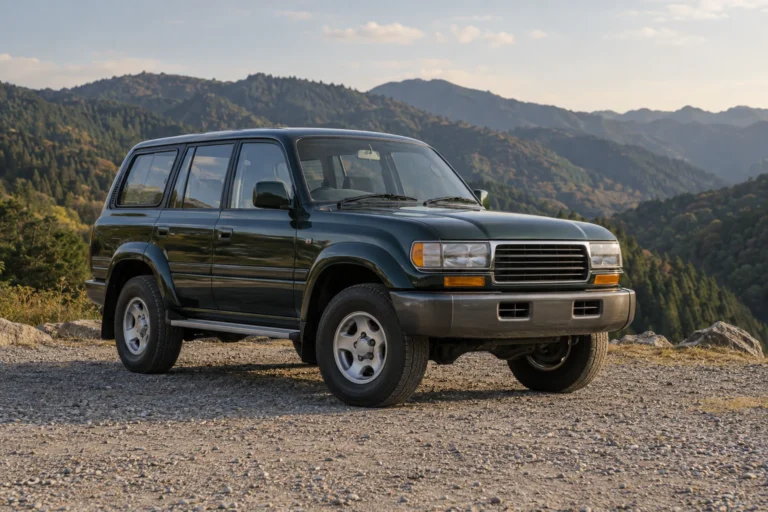
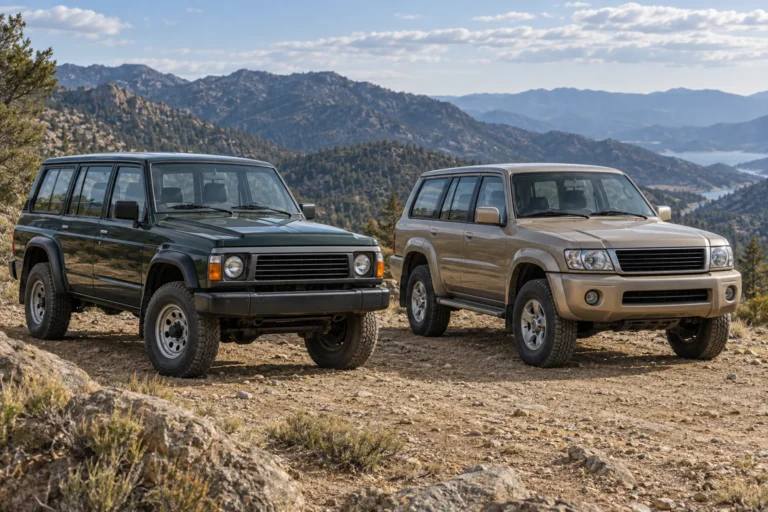
Pajero provides a Super Select alternative to Land Cruiser 80 and Nissan Patrol; the Evolution is a distinct, more specialized model. Explore the Japanese 4x4s hub for other U.S. buyer paths.
Build a U.S. auction search brief
Choose the variant and destination that will shape the first candidate shortlist. The result is a planning brief, not an eligibility decision.
Candidate planner
Your choices travel into a WhatsApp draft for Mirai to review with you.
The auction lot’s manufacture date, engine and export records decide which route can be assessed.
Your sourcing brief
SOURCE & VERIFYGeneration 2
Open to factory gasoline or diesel
Super Select engagement
Texas title and registration rules must be checked for the candidate.
USA import: age, engine, customs and state title
Apply four different screens to the exact auction vehicle and its destination.
- Manufacture date. NHTSA’s current Importation and Certification FAQ (checked September 26, 2026) counts the 25-year FMVSS exemption from actual manufacture and uses HS-7 Box 1.
- Original engine. EPA’s importing guidance, updated September 1, 2026, ties the over-21 provision to the same engine model and configuration originally installed.
- Entry file. CBP’s Article 000001340, published February 13, 2026, identifies the DOT HS-7 and EPA 3520-1 declarations. Keep identity, ownership and export documents aligned.
- Destination state. Use the current agency via USA.gov’s state directory. California DMV’s imported-vehicle page (checked September 26, 2026) illustrates why a nonconforming direct-import diesel needs particular caution.
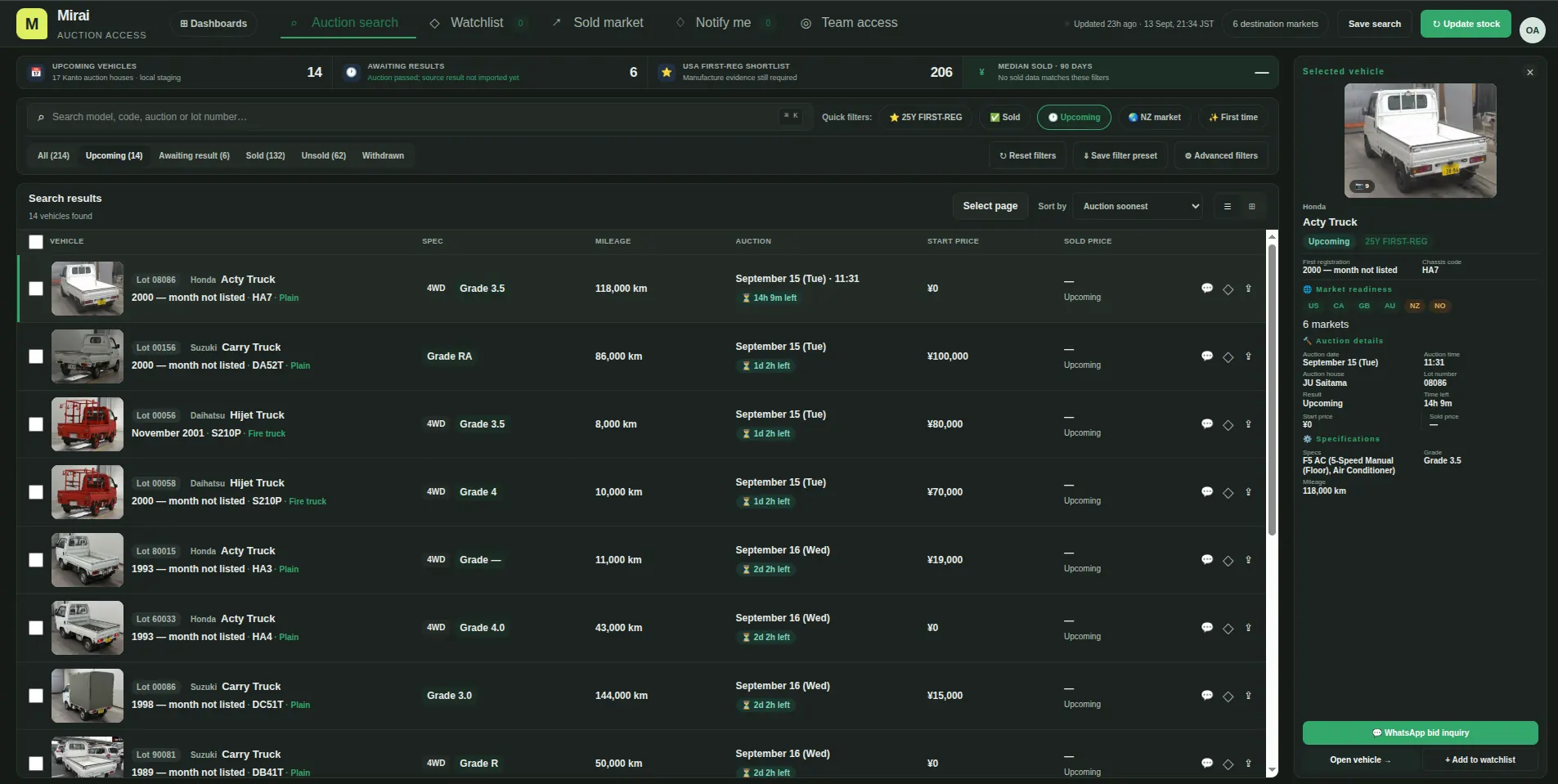
Mirai Auction Portal: find a real candidate across Japan
Mirai offers exclusive portal access to customers after inquiry. It covers major Japanese auctions and supports robust filters around a U.S. buyer’s brief.
Mirai can narrow listings by model, chassis, manufacture window, factory engine, mileage, grade, repair history and documents. Add your destination state and model-specific inspection requests, then compare lots with the evidence available.
What a U.S.-focused shortlist means
The search prioritizes age, identity, original engine, paperwork and condition relevant to your state. Each lot still needs its own review; listings are not automatically eligible or Mirai-owned.
Mitsubishi Pajero buying and import FAQs
Direct answers for the U.S. buyer’s first shortlist.
Is every Pajero fitted with the same Super Select system?
No. Mitsubishi used different generations and 4WD controls; inspect the actual chassis and transfer case.
Is Pajero Evolution simply a trim of any Pajero?
No. Mitsubishi describes a distinct 1997 model with wider body, specialized engine and suspension.
Can an engine-swapped Pajero use EPA’s over-21 provision?
Generally no. EPA requires the same engine model and configuration originally installed.
Can Mirai find a Pajero for sale through Japanese auctions?
Yes. Mirai can filter major Japanese auctions for a documented Pajero candidate and arrange exclusive customer portal access after inquiry; availability changes by auction.
Is every Pajero old enough for the U.S. 25-year route?
No. NHTSA counts 25 years from the individual manufacture date at U.S. entry, not just the model name or model year.
Does an auction listing prove the factory drivetrain?
No. Match the model plate, export record and fitted hardware on the exact vehicle; listing labels can be incomplete.
Does federal entry guarantee a state title?
No. The destination state separately decides title, inspections, emissions and road use.
Can a direct-import diesel be registered in California?
Generally no if it was not built to meet the required U.S. and California standards. California DMV says nonconforming direct-import diesels cannot currently be converted to its emissions standards.
Is an auction grade enough to judge condition?
No. Grade helps triage lots, but structural photos, the auction sheet, history and an independent inspection establish the condition tier.
What moves Pajero value most?
Factory originality, structural condition, mileage evidence, documented service and matching identity records set the value ladder; this guide gives no fixed prices.
Is the Mirai Auction Portal public inventory?
No. Access is exclusive to Mirai customers after inquiry. A displayed lot is not necessarily Mirai-owned stock or approved for U.S. entry.
What information should I send Mirai first?
Send your destination state, preferred Pajero variant, intended use and budget range. Mirai can build a filtered auction shortlist and request candidate-specific evidence.
Primary sources and review method
Manufacturer history supports model facts; federal and state agencies support import and title rules. Last checked September 26, 2026.
- Mitsubishi Motors, Car History — current manufacturer history, checked September 26, 2026.
- Mitsubishi Pajero History Part 2 — published May 16, 2026.
- Mitsubishi 4WD History Part 2 — 2026 edition, checked September 26, 2026.
- NHTSA Importation and Certification FAQs — current page, checked September 26, 2026: 25-year manufacture-date route and HS-7.
- EPA Learn About Importing Vehicles and Engines — updated September 1, 2026: over-21 original-engine condition.
- CBP How to Import Your Automobile — Article 000001340, published February 13, 2026: entry forms.
- USA.gov State Motor Vehicle Services — current directory, checked September 26, 2026.
- California DMV Register an Imported Vehicle — current page, checked September 26, 2026: direct-import documents and diesel limitations.
Candidate evidence
Factory specifications are reference points. Mirai should compare the actual chassis, engine, auction sheet, export certificate and inspection photos before treating a listing as a credible U.S. shortlist.
Related model guides
Compare the Mitsubishi Pajero with these Mirai buyer guides before you set an auction brief.

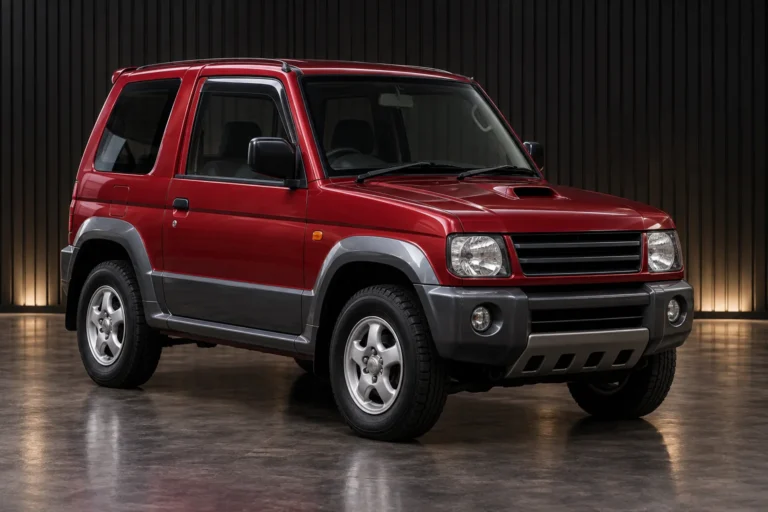
Find the right Pajero through Japan’s auctions
Send Mirai your target variant, state and condition priorities. We will shape a customer-only portal search and an evidence request for the lots you like.