
Kei Trucks Michigan: 25-Year Rule, Titles & Buying
Planning around kei trucks Michigan buyers can title or put to work? Start with the state’s exact classification, the federal entry file and the condition of the actual vehicle. Back to all state laws. Neighboring state guides: Ohio.
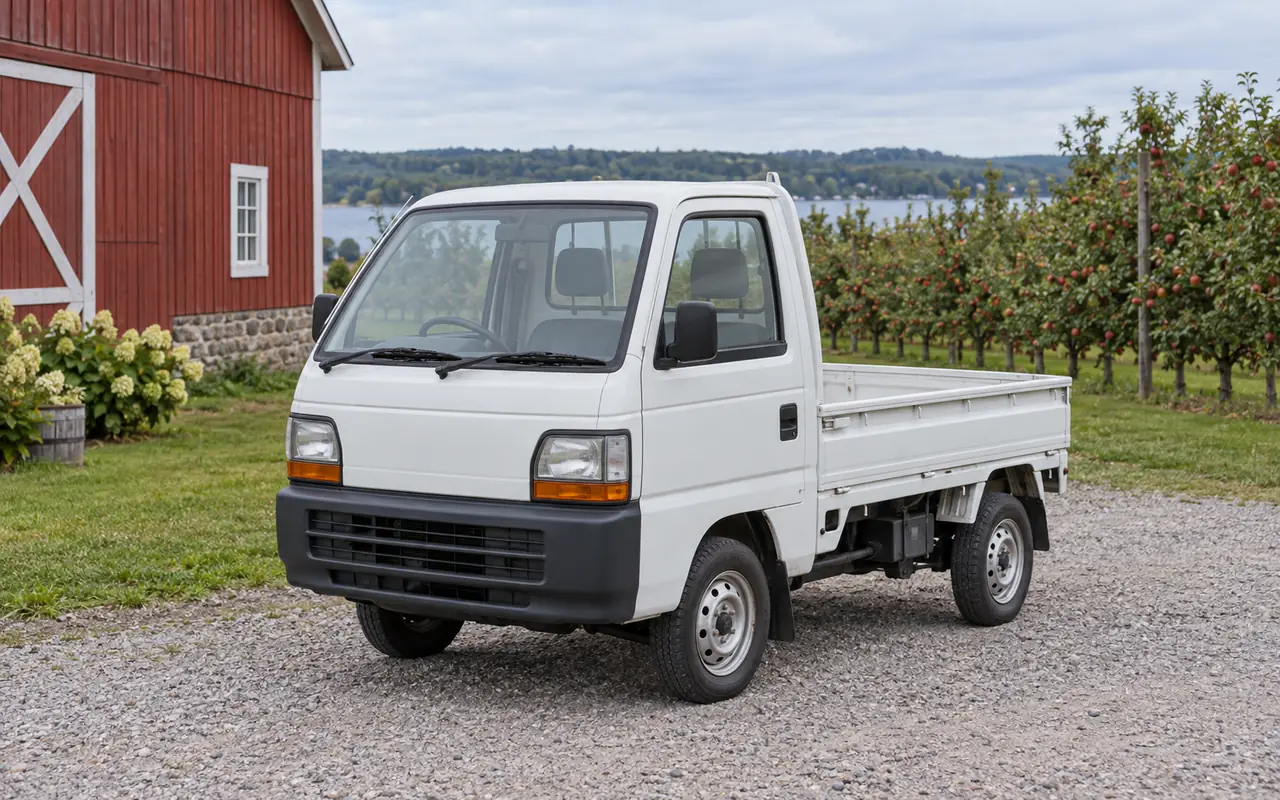
Verify the truck, not a model-year assumption.
Keep the authority’s current supporting records.
Resolve discrepancies before the purchase.
Approval remains vehicle and case specific.
Kei Trucks Michigan: Are They Legal for Road Use?
Yes, qualifying older kei-class vehicles can follow Michigan’s on-road title and registration process.
The Michigan Secretary of State answers the question directly: its title FAQ says kei-class vehicles, including mini-trucks and microvans, that are 25 years old or older can be titled and registered for on-road use if they were manufactured for on-road use in the United States or another country.
That answer has two gates: age and original design. Confirm actual manufacture date rather than relying only on an advertised model year, and preserve evidence that the vehicle was built for road use. A prior seller’s plate or a federal customs release does not replace Michigan’s review.
| Vehicle | Published Michigan treatment | Buyer implication |
|---|---|---|
| At least 25 years old and manufactured for road use | Eligible to be titled and registered for on-road use, subject to documents and the normal application. | Build the import, ownership and insurance file before the SOS appointment. |
| Under 25 years old | Not eligible for Michigan on-road title or registration; may only be titled as off-road. | Do not buy for ordinary street use based on a local ORV route alone. |
| Original design unclear | The published answer cannot be applied confidently. | Ask SOS to review manufacturer and import evidence for the actual chassis. |
The 25-year boundary uses the actual truck
A seller’s model-year shorthand is not enough for a federal age-exempt import.
NHTSA’s import FAQ measures the 25-year safety exemption from the vehicle’s actual manufacture date. If the original label does not establish that date, retain acceptable historical evidence. An import becomes age-exempt on the relevant anniversary, not automatically on January 1 of the model year.
EPA import treatment is a separate check. Its older-vehicle provisions use a different age threshold and include an original-engine-configuration condition. Confirm the correct EPA declaration with the broker. Use Mirai’s USA kei truck import guide for the federal sequence.
Michigan’s FAQ requires import documentation when the vehicle has not previously been titled in the United States. A previous US title is useful ownership evidence, but still verify that the chassis and history match and ask SOS what the transfer needs.
Michigan kei truck registration: prepare the SOS file
Make every identifier and owner name consistent before the appointment.
- Ownership: original Japanese ownership/export record, acceptable translation, purchase invoice or bill of sale, and any US title chain.
- Entry: CBP Form 7501, DOT HS-7 and EPA Form 3520-1 with supporting evidence for the declarations used.
- Identity and age: readable chassis marking and evidence of actual manufacture date. Do not substitute a listing description for the vehicle identifier.
- Applicant: Michigan driver’s license or ID and Michigan No-Fault insurance for on-road registration. Our guide to kei truck insurance in the USA covers quotes, coverage and chassis-number problems.
- Case-specific inspection: the SOS FAQ identifies TR-54 when a vehicle imported through another state is only being titled, not registered. Ask whether it or another verification applies to your transaction.
Do not default every kei truck to the assembled process
The assembled-vehicle procedure covers specified altered, reconstructed and off-road vehicle conversions. Michigan separately publishes a direct path for road-manufactured kei-class vehicles aged 25 years or more. Use the classification SOS assigns to the actual truck instead of modifying it to fit a different process.
Check your Michigan purchase plan
Four inputs identify the next record or use question to resolve.
Buyer preparation checker
Use verified answers. The result is a planning prompt, not a title, plate or road-use approval.
Start with confirmed records
Information neededSelect the answers you can document. The result will identify the next authority or record to check before purchase.
Obtain the required title, registration, insurance and driver credentials. This page cannot authorize a vehicle or route.
All selections and the current result are added to the WhatsApp draft. Review and edit it before sending. Mirai can discuss sourcing; government authorities decide eligibility.
Road registration and off-road access are separate
A younger off-road title or a local ORV ordinance is not a statewide passenger plate.
Michigan’s recreational vehicle guidance says an ORV cannot be operated on road unless it has been converted and titled as an assembled vehicle with registration and insurance. The kei-specific FAQ is clearer for younger mini-trucks: under 25 years old, they can only be titled as off-road vehicles.
Michigan State Police explains that an ORV without on-road title, registration and insurance has only limited highway operation, including certain crossings, and that local governments may open streets by ordinance. Confirm the ordinance, road segment, required ORV license, speed and operating conditions. Local permission does not become general statewide road registration.
The DNR’s street-licensed ORV FAQ says a street-licensed truck does not need an ORV license or trail permit on designated ORV routes while the route remains passable by a conventional two-wheel-drive passenger car. If the route is not passable by that standard, ORV licensing and a trail permit are required.
Kei trucks for sale in Michigan: local or Japan sourcing
Compare evidence and condition before deciding where to buy.
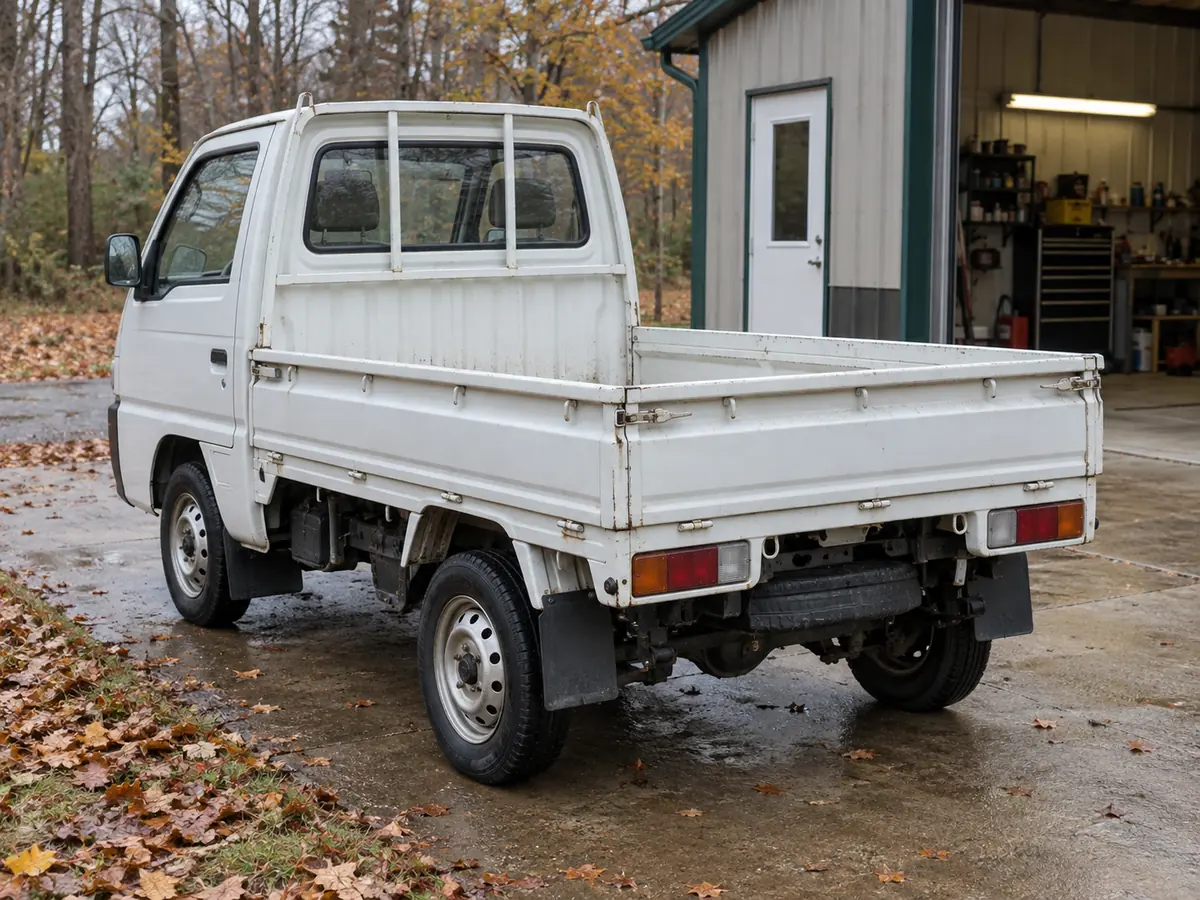
Inspect the truck behind the listing
Request clear chassis-stamp, frame, cab-floor, bed-mount and wheel-arch photographs. Ask for a cold-start video, warning-light check and notes on leaks, corrosion and previous repairs. Arrange an independent mechanical inspection when practical.
A clean exterior cannot prove structural condition. Four-wheel drive does not offset weak tires, brakes or steering. Compare the actual chassis, maintenance record and parts availability with the intended work.
Generated editorial illustration; not Mirai inventory or evidence that a vehicle passed inspection.
Start at the kei truck buying hub, then compare Suzuki Carry, Honda Acty, Daihatsu Hijet, Subaru Sambar and Mitsubishi Minicab candidates by year, chassis, body, drivetrain, condition and records. Model names alone do not settle registration or compatibility.
Use the Japanese auction sheet guide before bidding and request clarification of every material note. Plan kei truck parts sourcing from the chassis and part number rather than assuming every 660 cc truck shares components.
Budget beyond the purchase price
Include federal entry, Michigan application and first-service uncertainty.
A purchase price is only one line of the budget. Use the Japanese auction price guide as a starting point, then request an itemized estimate that states what is included and who carries delay or storage risk.
| Cost group | Include before committing |
|---|---|
| Vehicle and Japan-side work | Purchase, service fees, inland movement, documentation and agreed inspection or repairs. |
| Freight and US entry | Ocean freight, marine coverage, broker charges, duty, port handling and possible storage. |
| Michigan delivery | Domestic transport, unloading, appointment travel and a contingency for failed or deferred state steps. |
| Title and registration | Translation, taxes, title, plates, registration and any vehicle-specific inspection or ownership process. |
| Insurance and first service | A written quote for the actual chassis and use, plus tires, brakes, fluids and deferred maintenance. |
Michigan kei truck FAQs
Direct answers for decisions before purchase.
Are kei trucks legal in Michigan?
Yes, Michigan SOS says kei-class mini-trucks and microvans aged 25 years or more can be titled and registered for on-road use if they were manufactured for road use. The actual vehicle still needs acceptable documents, insurance and approval.
Can an under-25 kei truck get a Michigan road title?
No. The Michigan SOS FAQ says mini-trucks and microvans under 25 years old are not eligible for on-road titling or registration and may only be titled as off-road vehicles.
Does the model year prove the 25-year import age?
No. NHTSA measures the age exemption from the actual manufacture date. Keep reliable date evidence and wait until the vehicle’s 25th anniversary before using that federal exemption.
Does a previous US title guarantee a Michigan title?
No. It can support the ownership history, but the chassis, seller, title and import record must still agree. Ask SOS what the specific transfer requires.
Which federal import forms should I retain?
Keep CBP Form 7501, DOT HS-7 and EPA Form 3520-1 with the ownership documents and evidence supporting each declaration. Michigan lists those forms for imported vehicles.
Is Michigan No-Fault insurance required?
Yes, the Michigan SOS lists No-Fault insurance for on-road title and registration transactions. Obtain a quote for the actual chassis and intended use before purchase.
Does every older kei truck need an assembled-vehicle title?
No. Michigan publishes a direct on-road answer for road-manufactured kei-class vehicles aged 25 years or more. Use an assembled process only when SOS classifies the actual vehicle for that process.
Can a younger off-road-titled truck use any public road?
No. Off-road titling is not general road registration. Some local ordinances and limited statutory situations may allow specific operation; check the exact road, license and operating conditions.
Does a street plate include every ORV trail?
No. DNR distinguishes routes passable by conventional two-wheel-drive cars from terrain where the truck is being used as an ORV and needs an ORV license and trail permit.
Should I drive a newly purchased import to the SOS office?
Not without confirmed lawful registration and insurance. Ask SOS whether a vehicle verification is needed and arrange legal transport while title or plate eligibility is unresolved.
What should a Michigan buyer compare before bidding?
Compare manufacture evidence, original road-use design, complete import and ownership records, actual chassis condition, insurance availability and itemized delivered cost.
Can Mirai help source a Michigan truck?
Yes. Mirai Trading LLC can discuss a Japan shortlist based on age, intended use, condition and budget. Michigan SOS and other authorities decide title, registration and route eligibility.
Primary sources and research method
Official references for the current state and federal preparation.
- Michigan SOS — kei-class title FAQ
- Michigan SOS — vehicle titles and assembled conversions
- Michigan SOS — recreational vehicles and watercraft
- Michigan State Police — traffic law FAQs
- Michigan DNR — street-licensed ORV FAQs
- NHTSA — importation FAQs
- EPA — importing vehicles and engines
Research method and limits
Prepared by Mirai Trading LLC from official sources accessed September 10, 2026. Current administrative guidance controls the page’s practical distinction; federal safety and EPA entry questions are kept separate from state title and road-use steps.
Comparisons use document quality, eligibility evidence, actual condition and itemized delivered cost. Images are generated illustrations and no vehicle is represented as stock. No professional legal review, insurer acceptance, mechanical inspection or government approval is claimed.
Build a Michigan sourcing shortlist
Tell Mirai the intended use, location, budget, body preference and records already available. Resolve the state questions before choosing a shipment.