
Kei Truck Laws by State: The 50-State & DC Road-Use Guide
Kei truck laws by state differ sharply. No national rule bans kei trucks by name: a vehicle may enter under the federal 25-year safety exemption, while state agencies decide whether and where it can be titled, registered and driven. Use the table for all 50 states and DC, then open a detailed guide where available.
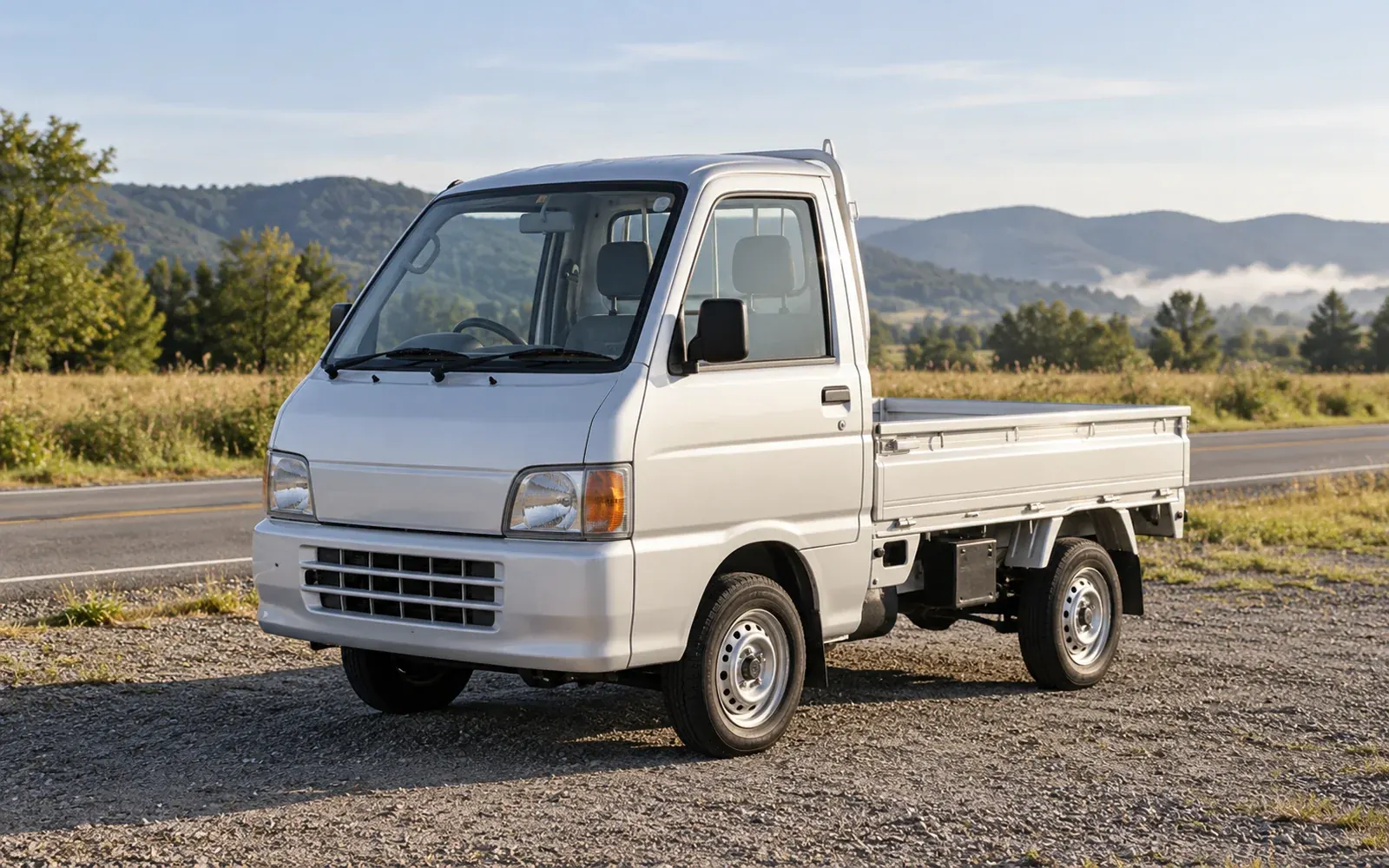
50 states and DC in one table.
Mirai state guides linked in the table.
Measured from manufacture, not model year.
Federal entry, state registration and actual road use.
Kei Truck Laws by State: What Federal Entry Does—and Does Not—Decide
Federal import permission is the start of a state registration decision.
Under NHTSA’s current importation FAQ, a vehicle at least 25 years old from its date of manufacture can be declared on HS-7 Box 1 for the FMVSS exemption. EPA has its own vehicle and engine import provisions, including a separate age route when the engine remains in its original configuration. CBP handles entry documentation and applicable duty; the 2026 HTS edition and current classification govern the rate. These federal steps do not issue a state plate, which is why kei trucks are illegal in some states even after a lawful import. Our USA kei-truck import guide covers the paperwork and duty sequence.
All 50 States and DC: Road-Use Status at a Glance
Read each category as a route, not a guarantee for every chassis. “Unclear” means we found no reliable primary-source kei verdict, so no yes or no is inferred.
- Standard registration routePublished ordinary vehicle plate process for an eligible imported truck.
- Restricted road routeMini-truck, farm, local-permit or special-purpose rules limit use.
- No ordinary road routeOfficial policy blocks typical road registration; narrow exceptions may exist.
- Future route, not yet openEnacted pathway has a later application date.
- Case-specific reviewAgency process exists, but approval depends on the exact vehicle or definition.
- Unclear: confirm with DMVNo current kei-specific answer verified from a primary source.
| State | Category | Key limit or finding | Primary source | Mirai guide | Verified |
|---|---|---|---|---|---|
| Alabama | Restricted road route | Restricted mini-truck tag; statutory 25 mph design/governor condition; no interstate. Older imported-vehicle title path is separate. | AL DOR Rule 810-5-1-.238, Oct. 2024; Code §§32-6-59, 40-12-240 | Alabama guide | |
| Alaska | Standard registration route | 25+ lawfully imported foreign vehicle may use Alaska DMV title/registration process. | Alaska DMV Foreign Vehicles; AS 28.10.068, 28.10.221(e); SB 239 (2026) | Alaska guide | |
| Arizona | Case-specific review | Foreign-vehicle title review requires ownership and federal-compliance evidence; no blanket kei approval. | A.R.S. §28-2052; current statute; ADOT checklist R07/25 | Arizona guide | |
| Arkansas | Restricted road route | Class Eight farm mini-truck registration is for farm use, not general commuting. | Ark. Code §27-14-726; ARDOT 2023 code compilation | Arkansas guide | |
| California | Case-specific review | 1975+ direct imports generally need CARB laboratory compliance route; federal age alone does not clear California. | CARB certification procedures for 1975+ used modifier-certified vehicles; current page | California guide | |
| Colorado | Future route, not yet open | Current Rule 3 bars kei title/registration; HB25-1281 applies to applications from Jan. 1, 2028. | Colorado Rule 3 §3.2; HB25-1281, 2025 act | Colorado guide | |
| Connecticut | Case-specific review | Imported grey-market vehicle follows Wethersfield DMV inspection and individual title review. | Connecticut DMV imported vehicles; current page | Connecticut guide | |
| Delaware | Unclear: confirm with DMV | No kei-specific road verdict verified in the public agency material reviewed. | State DMV/registration starting point; accessed 2026-10-04 | Guide coming | |
| District of Columbia | Unclear: confirm with DMV | No kei-specific road verdict verified in the public agency material reviewed. | State DMV/registration starting point; accessed 2026-10-04 | Guide coming | |
| Florida | Restricted road route | Registered mini-trucks may use roads posted 35 mph or less, subject to local restrictions. | Fla. Stat. §316.2122; 2026 statutes | Florida guide | |
| Georgia | No ordinary road route | DOR policy refuses Japanese kei vehicle/mini-truck titles and registration, including out-of-state titles. | Georgia DOR Policy Bulletin MVD-2023-05 | Georgia guide | |
| Hawaii | No ordinary road route | Typical Japanese kei truck is not automatically eligible for road registration; county application and HRS requirements control. | HRS §286-42; current statute | Hawaii guide | |
| Idaho | Unclear: confirm with DMV | No kei-specific road verdict verified in the public agency material reviewed. | State DMV/registration starting point; accessed 2026-10-04 | Guide coming | |
| Illinois | Unclear: confirm with DMV | No kei-specific road verdict verified in the public agency material reviewed. | State DMV/registration starting point; accessed 2026-10-04 | Guide coming | |
| Indiana | Case-specific review | BMV has mini-truck plate route, but its published definition says engine displacement not less than 660 cc; many kei engines are smaller. | Indiana BMV Mini Truck Registrations; current page | Guide coming | |
| Iowa | Unclear: confirm with DMV | No kei-specific road verdict verified in the public agency material reviewed. | State DMV/registration starting point; accessed 2026-10-04 | Guide coming | |
| Kansas | Restricted road route | Micro utility truck route excludes interstate, federal and state highways; city roads require local authorization. Vehicle definition is narrow. | Kan. Stat. §§8-15,106 and 8-14,94; 2025–26 | Guide coming | |
| Kentucky | Restricted road route | Public-road use is limited to listed exceptions, designated roads or short crossing; not an ordinary commute. | KRS §189.517; current statute | Guide coming | |
| Louisiana | Restricted road route | Roads posted 55 mph or less, excluding interstate, controlled-access and specified divided highways; off-road decal required. | La. R.S. §32:299.2; current law | Louisiana guide | |
| Maine | No ordinary road route | BMV classifies mini trucks as off-road vehicles; current public-road registration route is not offered. | Maine BMV off-road vehicles; current page | Maine guide | |
| Maryland | Unclear: confirm with DMV | No kei-specific road verdict verified in the public agency material reviewed. | State DMV/registration starting point; accessed 2026-10-04 | Guide coming | |
| Massachusetts | Standard registration route | RMV resumed kei vehicle registration Sept. 18, 2024, subject to ordinary title/insurance/inspection rules. | Massachusetts RMV advisory, Sept. 17, 2024 | Massachusetts guide | |
| Michigan | Standard registration route | SOS says 25+ imported vehicles originally designed for road use may be titled/registered; younger ones have off-road treatment. | Michigan SOS title FAQ; current page | Michigan guide | |
| Minnesota | Restricted road route | Mini-truck operation requires a local permit on designated roadways; no statewide blanket plate. | Minn. Stat. §169.045; 2025 statutes | Minnesota guide | |
| Mississippi | Unclear: confirm with DMV | No kei-specific road verdict verified in the public agency material reviewed. | State DMV/registration starting point; accessed 2026-10-04 | Guide coming | |
| Missouri | Unclear: confirm with DMV | No kei-specific road verdict verified in the public agency material reviewed. | State DMV/registration starting point; accessed 2026-10-04 | Guide coming | |
| Montana | Standard registration route | MVD offers street-legal unconventional light vehicle route with MV70A equipment self-certification, or an OHV route. | Montana Title Manual, March 2026 | Montana guide | |
| Nebraska | Restricted road route | Registered minitruck road use excludes interstate, expressway and freeway. | Neb. Rev. Stat. §60-6,379; current statute | Guide coming | |
| Nevada | Unclear: confirm with DMV | No kei-specific road verdict verified in the public agency material reviewed. | State DMV/registration starting point; accessed 2026-10-04 | Guide coming | |
| New Hampshire | Unclear: confirm with DMV | No kei-specific road verdict verified in the public agency material reviewed. | State DMV/registration starting point; accessed 2026-10-14 | Guide coming | |
| New Jersey | Unclear: confirm with DMV | No kei-specific road verdict verified in the public agency material reviewed. | State DMV/registration starting point; accessed 2026-10-04 | Guide coming | |
| New Mexico | Unclear: confirm with DMV | No kei-specific road verdict verified in the public agency material reviewed. | State DMV/registration starting point; accessed 2026-10-04 | Guide coming | |
| New York | Unclear: confirm with DMV | No kei-specific road verdict verified in the public agency material reviewed. | State DMV/registration starting point; accessed 2026-10-04 | Guide coming | |
| North Carolina | Restricted road route | Mini-truck may use roads posted 55 mph or less with required equipment, registration and insurance. | N.C. G.S. §20-121.1; current statute; 2026 title manual | North Carolina guide | |
| North Dakota | Unclear: confirm with DMV | No kei-specific road verdict verified in the public agency material reviewed. | State DMV/registration starting point; accessed 2026-10-04 | Guide coming | |
| Ohio | Restricted road route | Road use only when local authority permits it on roads posted 35 mph or less after required inspection. | Ohio Rev. Code §4511.215; current statute | Ohio guide | |
| Oklahoma | Restricted road route | Titled and registered mini-trucks may use roads except interstates. | Okla. Stat. tit. 47 §1151.3; 2026 code | Guide coming | |
| Oregon | No ordinary road route | DMV says kei vehicles cannot normally be titled/registered; HB4063 remains in House committee. | Oregon DMV Vehicle Types; HB4063 status, 2026 | Oregon guide | |
| Pennsylvania | No ordinary road route | PennDOT says no ordinary road registration for new mini-truck applicants; narrow antique/grandfather exceptions. | PennDOT Mini-Trucks FAQ; current page | Guide coming | |
| Rhode Island | Unclear: confirm with DMV | No kei-specific road verdict verified in the public agency material reviewed. | State DMV/registration starting point; accessed 2026-10-04 | Guide coming | |
| South Carolina | Unclear: confirm with DMV | No kei-specific road verdict verified in the public agency material reviewed. | State DMV/registration starting point; accessed 2026-10-04 | Guide coming | |
| South Dakota | Unclear: confirm with DMV | No kei-specific road verdict verified in the public agency material reviewed. | State DMV/registration starting point; accessed 2026-10-04 | Guide coming | |
| Tennessee | Restricted road route | Class I off-highway vehicle includes mini-trucks; qualifying vehicles may get restricted road plates. | Tenn. Code §§55-8-101, 55-8-185 (2026); TN DOR off-highway vehicles page | Tennessee guide | |
| Texas | Standard registration route | TxDMV manual says miniature vehicles used on public roads require title and registration; exact vehicle file still matters. | SB 1816 (effective June 20, 2025); TxDMV Registration Manual, Aug. 2026 §12.5 | Texas guide | |
| Utah | Unclear: confirm with DMV | No kei-specific road verdict verified in the public agency material reviewed. | State DMV/registration starting point; accessed 2026-10-04 | Guide coming | |
| Vermont | Standard registration route | From July 1, 2026, Act 153 adds kei vehicles to pleasure-car registration and lets kei trucks qualify as farm trucks; DMV classifies each vehicle and use. | Vermont Act 153, enacted June 16, 2026; effective July 1 | Vermont guide | |
| Virginia | Unclear: confirm with DMV | No kei-specific road verdict verified in the public agency material reviewed. | State DMV/registration starting point; accessed 2026-10-04 | Guide coming | |
| Washington | Unclear: confirm with DMV | No kei-specific road verdict verified in the public agency material reviewed. | State DMV/registration starting point; accessed 2026-10-04 | Guide coming | |
| West Virginia | Restricted road route | Street-legal special-purpose route includes mini-trucks with equipment, registration and insurance; excludes federally funded highways. | W.Va. Code §17A-13; July 2026 edition | Guide coming | |
| Wisconsin | No ordinary road route | Post-1969 foreign vehicles need FMVSS conformity or RI label for regular road plates; age alone is insufficient. | Wisconsin DOT Foreign Vehicles; current page | Guide coming | |
| Wyoming | Unclear: confirm with DMV | No kei-specific road verdict verified in the public agency material reviewed. | State DMV/registration starting point; accessed 2026-10-04 | Guide coming |
Research date in every row: Oct. 4, 2026. For “unclear” rows, the linked official agency page is a starting point, not proof of a legal outcome. Bills are not law until enacted. Recheck the exact chassis and intended route when you apply.
Kei Truck Registration by State Finder
Choose a state to read the table’s same finding and open its source. The full table above works without JavaScript.
Keyboard: type a state name or use Arrow, Home, End and Enter.
Alabama
Restricted road routeRestricted mini-truck tag; statutory 25 mph design/governor condition; no interstate. Older imported-vehicle title path is separate.
AL DOR Rule 810-5-1-.238, Oct. 2024; Code §§32-6-59, 40-12-240
Ask about Alabama on WhatsAppHow the Rules Vary Across U.S. Regions
The table is the source of each state result; regional patterns help you compare a move or delivery plan.
South
For the question “what are the federal and state laws for importing kei cars or trucks into southern states?”, the federal NHTSA/EPA/CBP steps are national. State road rules differ: Florida limits mini-trucks to roads posted 35 mph or less, North Carolina allows qualifying mini-trucks on roads posted 55 mph or less, and Georgia refuses typical kei titles. Mini-truck statutes often do not cover kei passenger cars.
West
Colorado has a future pathway with 2028 application timing; Oregon DMV still rejects ordinary kei registration. California adds a demanding direct-import emissions path for many 1975+ trucks. Several western states remain explicitly unverified in this table.
Midwest
Minnesota relies on local road permits; Ohio also requires local authorization. Michigan describes a standard route for eligible 25+ road-designed imports, while Wisconsin requires federal-conformity evidence for regular plates.
Northeast
Massachusetts resumed kei registration in 2024 and Vermont enacted a route in 2026. Maine currently treats mini trucks as off-road. Connecticut uses a case-specific imported-vehicle inspection process.
What to Check Before You Buy for Any State
Choose a vehicle around the route you will actually use.
- Build date and identityMatch the manufacturing month, chassis number and Japanese export certificate to the federal age route.
- Ownership fileKeep the invoice, export certificate, translation and every transfer in one coherent chain.
- State plate classMatch the truck’s exact dimensions, engine and equipment to your state’s category.
- Insurance and roadsRequest a quote for the actual chassis and use; trace the road segments you intend to drive. Read our kei-truck insurance guide.
What Drives Value in a State-Ready Kei Truck?
Compare like-for-like candidates; a low auction bid does not tell you the whole landed or usable value. This guide does not publish a fixed price because specification, condition, timing and transaction terms change.
- Auction gradeA grade is a screening signal; sheet notes and photos explain why one truck grades above another.
- Originality and identityMatching chassis, engine and export records reduce uncertainty about federal age and state paperwork.
- Mileage evidenceConsistent auction, inspection and service records matter more than a lone odometer reading.
- Documented historyMaintenance, ownership and repair evidence make a truck easier to evaluate and support a cleaner title file.
- Condition tierPreserved, usable and project trucks have different repair exposure; corrosion, leaks and equipment condition can outweigh cosmetic appeal.
Find a Documented Candidate Through Mirai
Start with the state requirement, then filter the Japanese auction shortlist.
Mirai Auction Portal
Mirai customers can obtain exclusive portal access after an inquiry. It covers candidates from major auctions across Japan and offers robust filters for a U.S. brief: age, identity, engine, documents, condition and destination-state requirements. Mirai can help interpret auction sheets, check a candidate’s record trail and prepare Japanese export and chassis documents. The portal is curated auction access, not public or Mirai-held inventory. “USA-ready” screening does not promise customs entry or state registration.
Request Auction Portal access on WhatsAppCompare vehicle types in the kei-truck buying hub. Recent importers can also review the separate tariff-refund guide if its claimed entry window applies to their file.
Frequently Asked Questions
Direct answers first; the table and linked state sources carry the detail.
Are kei trucks legal in every state?
No. Federal import eligibility and state road permission are different decisions. The table shows verified routes and labels unverified states as unclear.
Does the federal 25-year rule make a kei truck street legal?
No. It may provide an FMVSS import exemption measured from the manufacture date, but a state still decides title, registration, insurance and road use.
Can a kei truck use an interstate?
Generally no. Many mini-truck routes expressly exclude interstates; even where standard registration is possible, check the exact vehicle and applicable road rules.
Are kei cars treated the same as kei trucks?
No. Federal import provisions are vehicle-based, but many state mini-truck statutes apply to a truck body rather than every kei car or van.
Can I register a kei truck in Florida?
Generally yes. Florida has a mini-truck route for roads posted 35 mph or less, with registration, insurance and local limits.
Can I register a kei truck in Texas?
Generally yes. The current TxDMV manual says miniature vehicles used on public roads require title and registration; the applicant still needs an acceptable vehicle file.
Can I drive a kei truck in North Carolina?
Generally yes. North Carolina permits registered, insured mini-trucks on roads posted 55 mph or less when required equipment is present.
Can I register a kei truck in Georgia?
Generally no. Georgia DOR’s published policy refuses title and registration of Japanese kei vehicles and mini-trucks, including ones titled elsewhere.
Can I register a kei truck in Oregon in 2026?
Generally no. Oregon DMV still says ordinary kei vehicles cannot be titled or registered. The 2026 bill to change that remains in committee.
Can I register a kei truck in Vermont?
Yes. Vermont Act 153 took effect July 1, 2026 and provides a pleasure-car route for qualifying kei vehicles and a farm-truck route for qualifying kei trucks.
What if my state is marked unclear?
The table does not assert permission or a ban. Ask the state title and registration agency about your exact chassis, documents, intended use and available plate class.
Can Mirai guarantee road registration?
No. Mirai can help source a documented truck and assemble Japanese export records; state agencies and insurers make their own decisions.
Sources and Verification Method
Last editorial check: October 4, 2026.
- NHTSA importation and certification FAQs — current web guidance on 25-year FMVSS exemption and HS-7.
- EPA vehicle and engine import guidance — current web guidance on emissions import provisions.
- USITC 2026 HTS Revision 19 — duty schedule edition available at research time; CBP makes entry/classification decisions.
- Each state row links its governing statute, enacted act, agency policy or current agency page and identifies the edition or date where supplied.
How this table was assembled
Mirai’s 12 existing state guides were read for their current verdicts and compared with available primary sources. Other rows use enacted state statutes, motor-vehicle manuals or agency pages. A general registration page alone was not treated as evidence that a kei truck is allowed or barred: those rows are marked unclear. The table summarizes typical imported Japanese kei trucks, not every kei car, antique exception, farm-only case or locally approved route. It is maintained editorially and should be refreshed when laws, manuals or agency policies change.
Need a Truck That Fits Your State Brief?
Tell us your state, intended use and preferred model. We can help narrow auction candidates and documentation questions.