
Kei truck vs UTV: choose by job, terrain and road access
Kei truck vs UTV is a job decision: an enclosed kei truck suits weather-protected hauling on firm routes, while a UTV is designed for rough recreational or utility terrain. Neither automatically gains public-road permission.
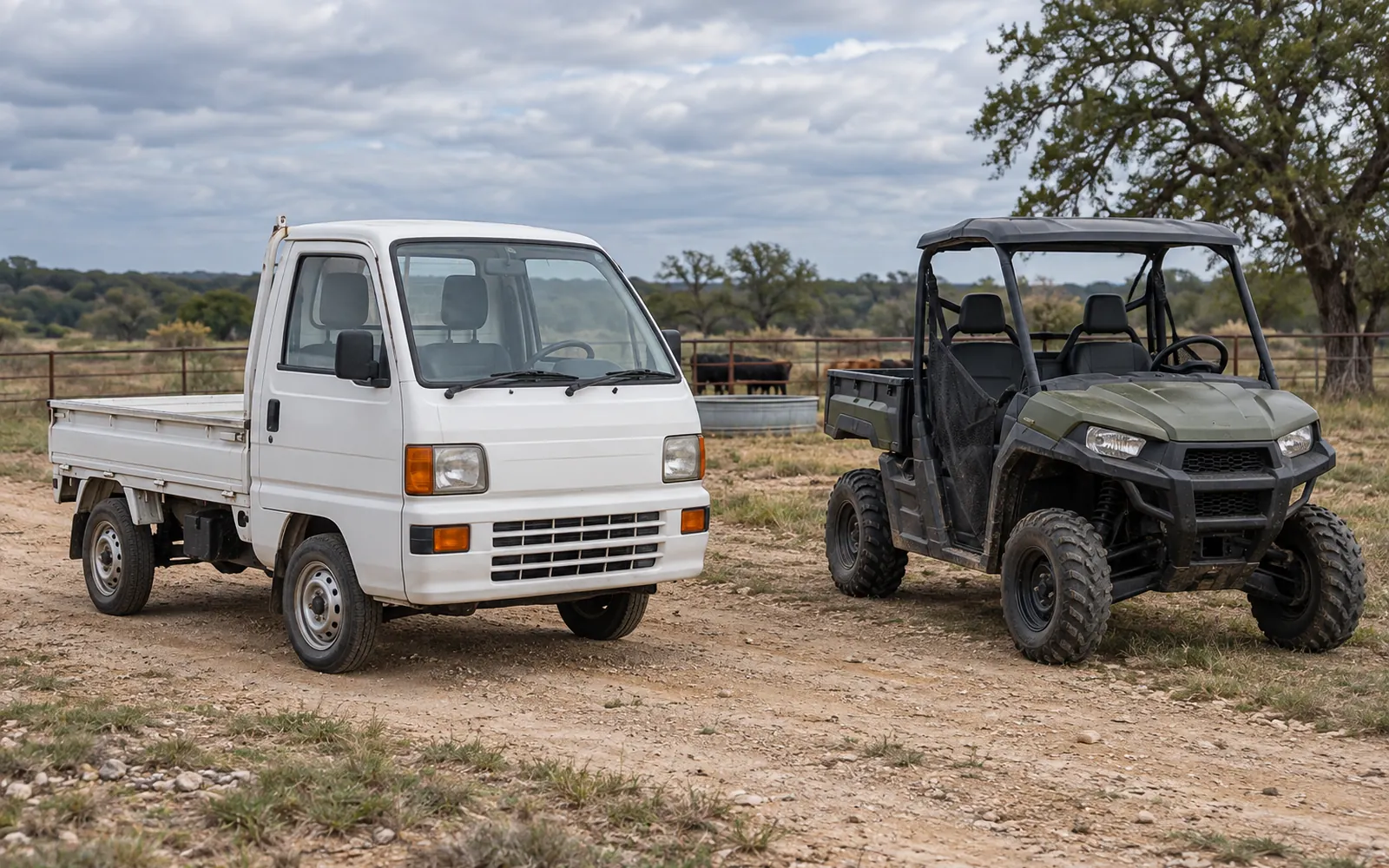
Base manufacturer price, before fees.
Base manufacturer price, before fees.
Factory doors, windshield and heater.
Purpose-built rough-ground platform.
Kei truck vs UTV: what changes in daily use
A kei truck has a hard cab, doors, windshield, wipers and usually heat. The flatbed with drop sides favors crates, feed and landscaping supplies on yards and farm lanes. A utility side-by-side is built around off-road access, suspension travel and ground clearance; open or accessory cabs vary by model. An enclosed UTV with heat and A/C is a higher-spec trim, not a feature of the entry price.
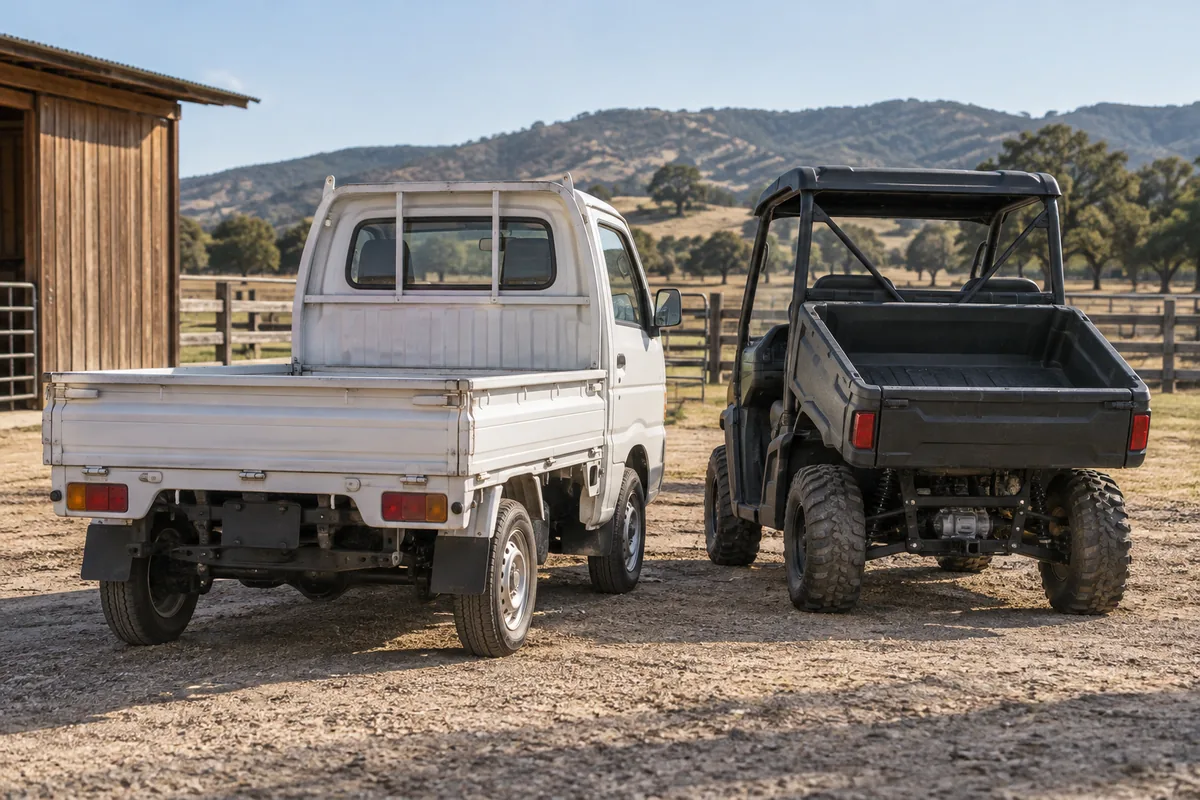
For load planning, compare the actual UTV cargo-box rating with the truck’s recorded rating rather than its visual size. Current Carry and Hijet catalogs list 350 kg (about 772 lb) for cited truck grades. The payload guide tests common materials against that number.
Mini truck vs UTV purchase and ownership costs
Polaris lists the 2026 Ranger 1000 from $14,299 U.S. MSRP plus a stated destination charge; Can-Am lists the 2026 Defender from $13,399 before transport and preparation. These are base manufacturer examples, not drive-away totals. Mirai’s July 2026 sold-price dataset shows a ¥69,000–¥185,250 middle-half auction-bid band across 1,948 mixed trucks. That is not a U.S. landed-cost range: Japan fees, shipping, import charges, inland delivery and repairs must be quoted for the actual candidate.
Parts and resale follow different markets. UTV dealers offer current domestic support, but trim-specific components can still be expensive. Japanese truck service parts are often available by chassis and engine code, while U.S. availability varies by generation. Condition and documentation matter more than an apparent bargain bid.
Road rules, insurance and rollover risk
CPSC’s ROV overview describes rollover protective structures and restraints used by side-by-sides. It does not establish that every UTV is safer than every kei truck or yield a comparable rollover frequency. Drive either within its design limits, use fitted restraints and avoid side slopes beyond the operator manual.
A UTV is ordinarily an off-highway vehicle; a 25-year-old kei truck can qualify for federal import yet still face state title restrictions. Use the state-law map and discuss the exact use with an insurer using the insurance guide. For a broad truck-model comparison, browse kei trucks for sale.
Which machine fits your use?
This helper weighs the job, surface and weather; it does not decide legality or vehicle safety for you.
Calculating
Comparing value: a kei truck or a UTV
Compare complete, usable configurations. A clean cab, working heater and sound drop-side bed raise a truck’s utility; UTV accessories can alter its true delivered cost. Road-use eligibility and service history matter to resale.
See real kei trucks in the Mirai Auction Portal
The biggest uncertainty in a used-truck comparison is the individual truck. Customer access to Mirai’s Auction Portal lets us filter major Japanese auctions by build date, grade, 4WD hardware, body condition and export documents before comparing it with a UTV quote. Portal listings are auction candidates, not Mirai-held stock or guaranteed road-approved units. Send your terrain, weather and load brief; we can identify realistic truck choices and show the inspection questions that could change the economics.
Request Auction Portal access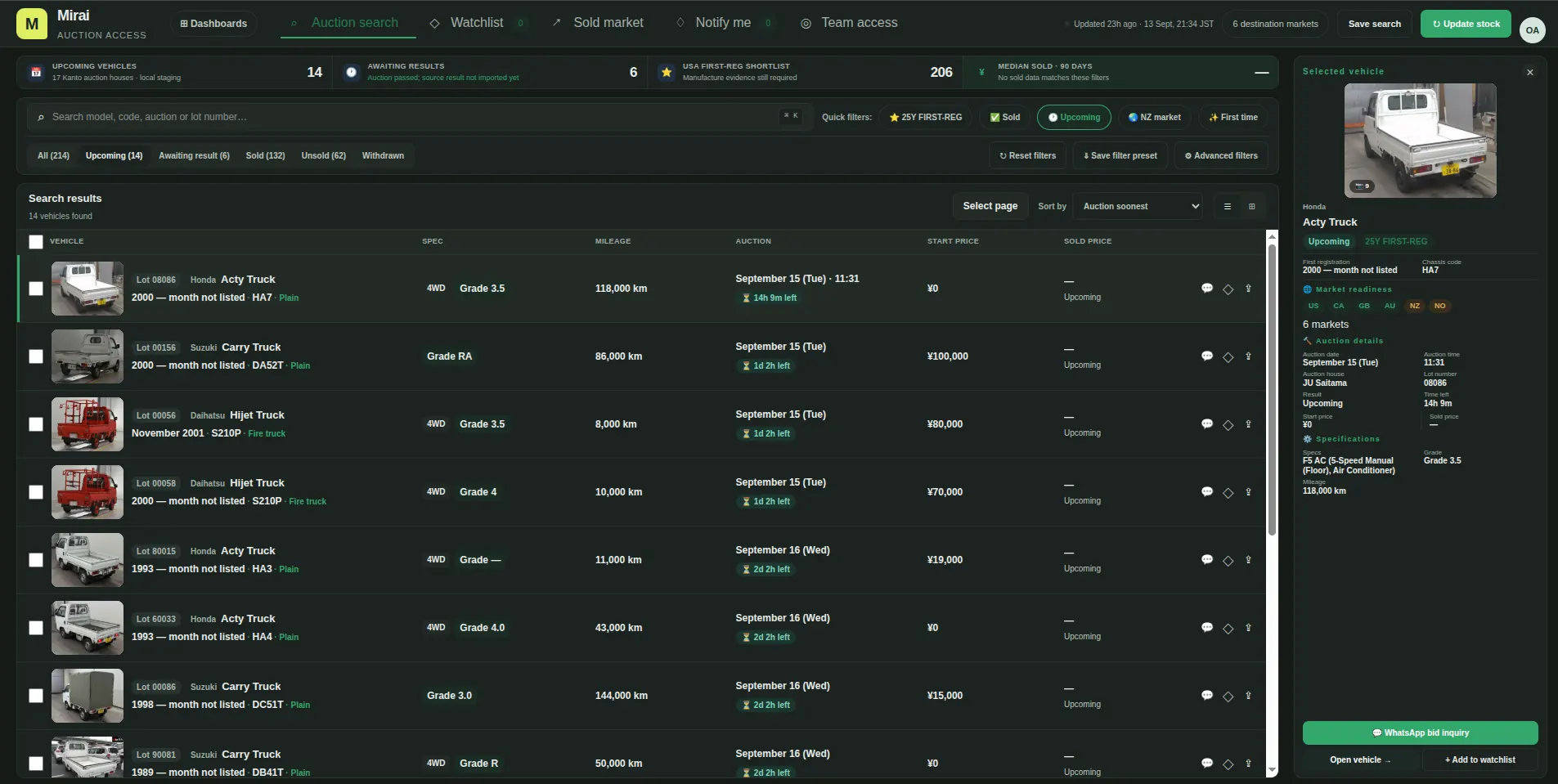
Frequently asked questions
Is a kei truck better than a UTV?
Yes. For weather-protected work on firm routes, a kei truck can fit better; a UTV may suit rough ground. Compare the actual machines and lawful uses.
Is a UTV street legal wherever a kei truck is?
No. Road permission for UTVs and imported trucks depends on different state categories. Check the route for the exact vehicle and state.
Do kei trucks flip easily?
No. A general rollover rate for imported kei trucks is not established here. A narrow, high vehicle still needs careful speed and load management on slopes.
Why are kei trucks so cheap at auction?
Auction bids reflect age, specification, condition and Japan-market demand. A low hammer price excludes the many costs of getting a truck to a U.S. buyer.
Is a kei truck legal in the U.S.?
Yes. A qualifying older truck can be imported under federal rules, while state road registration remains a separate decision. Federal entry does not grant a plate.
Does every UTV have a heated cab?
No. Many entry utility side-by-sides are open or use accessory enclosures. Compare equipment on the actual trim.
Can a kei truck carry more than a UTV?
Yes. Current catalog kei trucks commonly list 350 kg cargo load, while UTV boxes vary substantially. Use model-specific ratings and do not compare cargo load with towing.
Which is easier to service in the United States?
A current UTV usually has a closer authorized dealer network. Kei truck support depends on engine code, model generation and local independent shops.
Can I insure an imported kei truck?
Generally yes. Eligibility and coverage vary by insurer, state and actual use. Quote the specific year, chassis and registration class.
Should I compare purchase price alone?
No. Include transport, import charges, repairs, insurance, consumables and resale evidence. A base UTV MSRP and a Japanese auction bid are not equivalent totals.
Sources and verification
- Polaris 2026 Ranger 1000 — 2026 model page.
- Can-Am 2026 Defender — 2026 model page.
- CPSC recreational off-highway vehicles — live page, checked 2026-10-14.
- Suzuki Carry and Super Carry specifications — December 2025 edition.
- Daihatsu Hijet Truck catalog — March 2026 edition.
- NHTSA importation and certification FAQ — live page, checked 2026-10-14.
Compare a real truck with a real UTV
A budget and work route are more useful than a generic “which is better.” Mirai can source the truck side of that comparison.