
Unique Japanese Cars: Kei Sports, Nissan Pike Cars & JDM Oddballs
Meet ten Japanese specialty cars chosen for ideas that ordinary production cars rarely attempted: mid-engine kei sports cars, removable roofs, true gullwing doors, butterfly doors, retro Pike Factory design and turbocharged tall-boy hatchbacks.
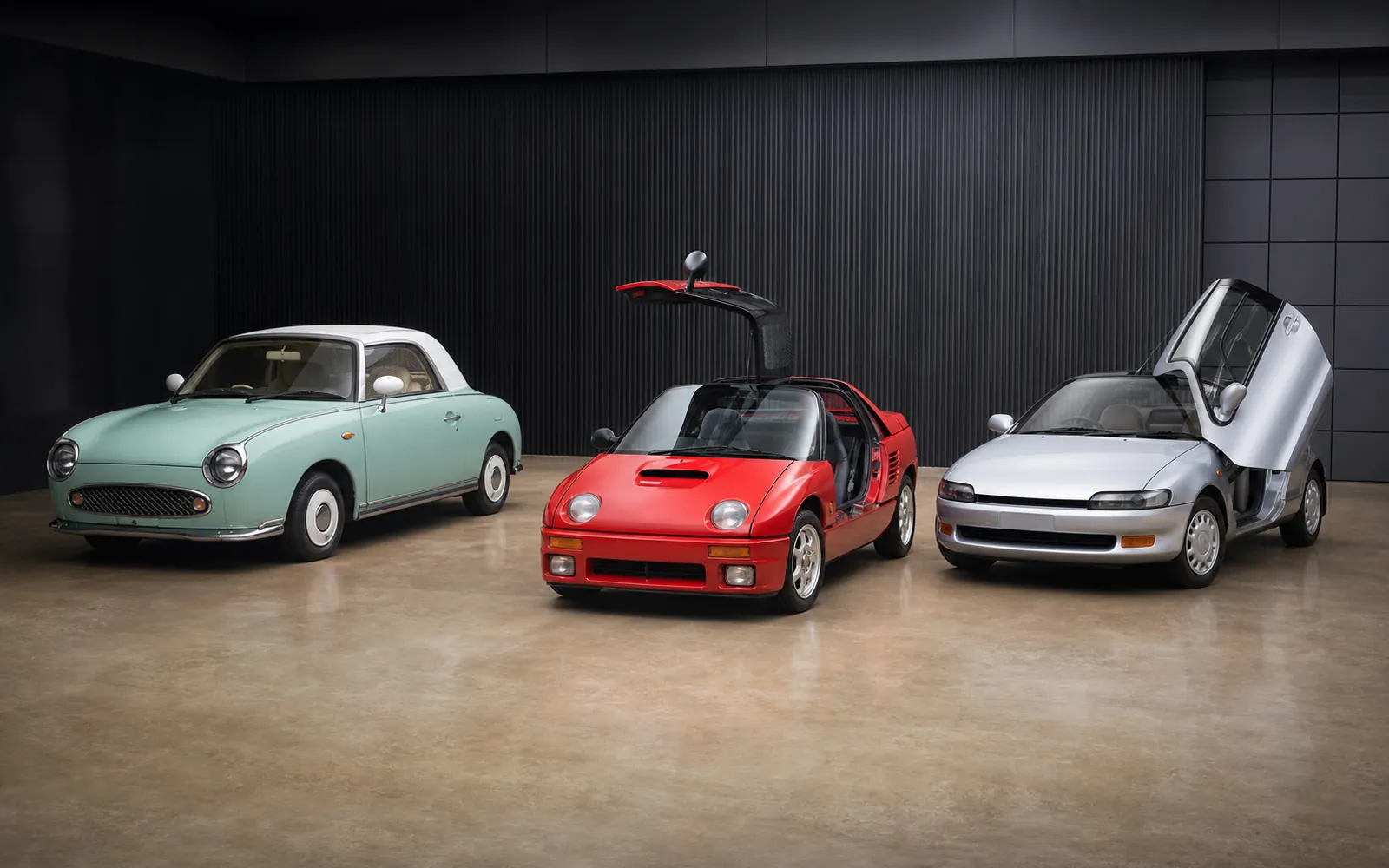
The Autozam AZ-1 and “Mazda AZ-1” are one model, not two.
Beat, Cappuccino, AZ-1 and period Alto Works.
Be-1, Pao, S-Cargo and Figaro.
Exact year, chassis code and condition still decide the purchase.
Three Ways Japan Made the Ordinary Extraordinary
This is a model-discovery and sourcing page, not an import guide. The cars are grouped by the engineering or design idea that makes each one collectible. For other enthusiast-focused pages, see Mirai’s classic Japanese cars, JDM sports cars and Japanese 4x4s guides. Kei-car buyers can also use Mirai's full model guides for the Subaru Vivio RX-R, Mitsubishi Minica, Subaru Pleo and Subaru R2.
ABC kei sports trio
Autozam AZ-1, Honda Beat and Suzuki Cappuccino compressed sports-car layouts into Japan’s kei dimensions. All are two-seaters, but their personalities are radically different.
Explore the ABC trioNissan Pike Factory cars
Be-1, Pao, S-Cargo and Figaro used familiar Nissan mechanicals beneath highly distinctive retro-industrial bodies. Their appeal is design, detail and completeness.
Explore the Pike carsJDM engineering oddballs
Toyota’s glass-canopy Sera, Honda’s wide-body City Turbo II and Suzuki’s Alto Works each made a small hatchback feel much more exotic than its footprint suggested.
Explore the oddballsWhy there are ten cars, not eleven
Autozam AZ-1 is the Mazda-built gullwing kei coupe often advertised as a “Mazda AZ-1.” Autozam was Mazda’s specialist sales channel, so those two names refer to the same PG6SA model. This page covers it once, accurately.
Unique Japanese Car Finder
Filter by the kind of experience you want. Results are a short list for deeper inspection, not an invented ranking or a promise that a specific car is available.
Choose the Character
Every result shows the original model era and chassis code to use in a Japanese auction search.
The ABC Trio: Three Kei Sports Cars, Three Different Answers
The enthusiast nickname uses the models’ initials: Autozam AZ-1, Beat and Cappuccino. All reached Japan in the early 1990s and all meet the classic 660 cc kei limit of their era — the same regulatory class covered on Mirai’s kei truck pages.
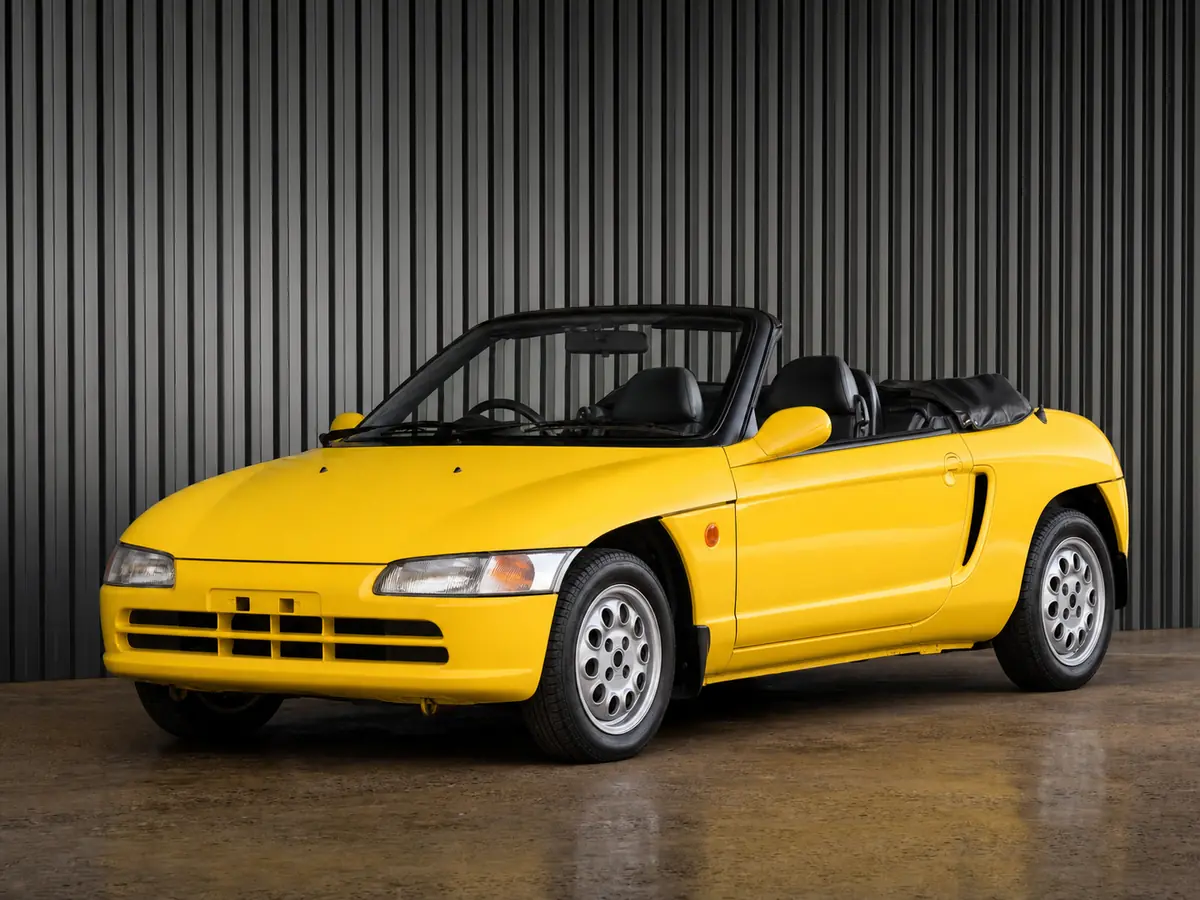
Honda Beat PP1
Honda chose response over turbo boost: a high-revving 656 cc engine sits behind two occupants and drives the rear wheels through a five-speed manual.
- Manual fabric roof and compact proportions create the purest open-roadster experience here.
- Four-wheel disc brakes and Honda’s quoted 43:57 occupied weight distribution support its handling brief.
- Inspect roof condition, drainage, sill and floor corrosion, cooling behavior, timing-belt history and access-limited engine service.
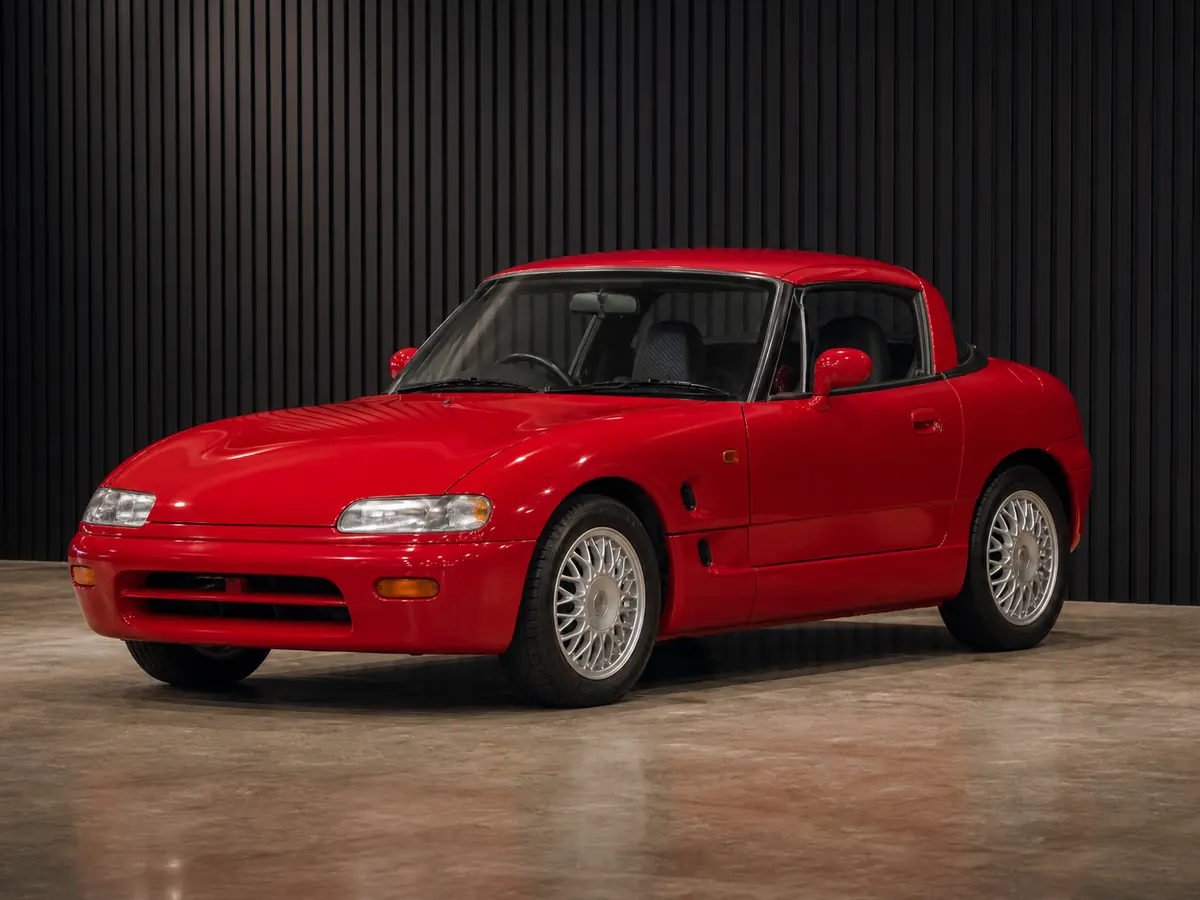
Suzuki Cappuccino EA11R / EA21R
The most traditional sports-car layout of the trio pairs front-engine rear-wheel drive with a configurable three-piece roof.
- Roof panels support closed coupe, T-bar, targa and fully open configurations.
- Double-wishbone suspension at both ends and four-wheel disc brakes are unusually serious hardware for the class.
- Confirm EA11R versus EA21R, all roof pieces and bags, seal condition, sill/floor rust, turbo health and cooling-system history.
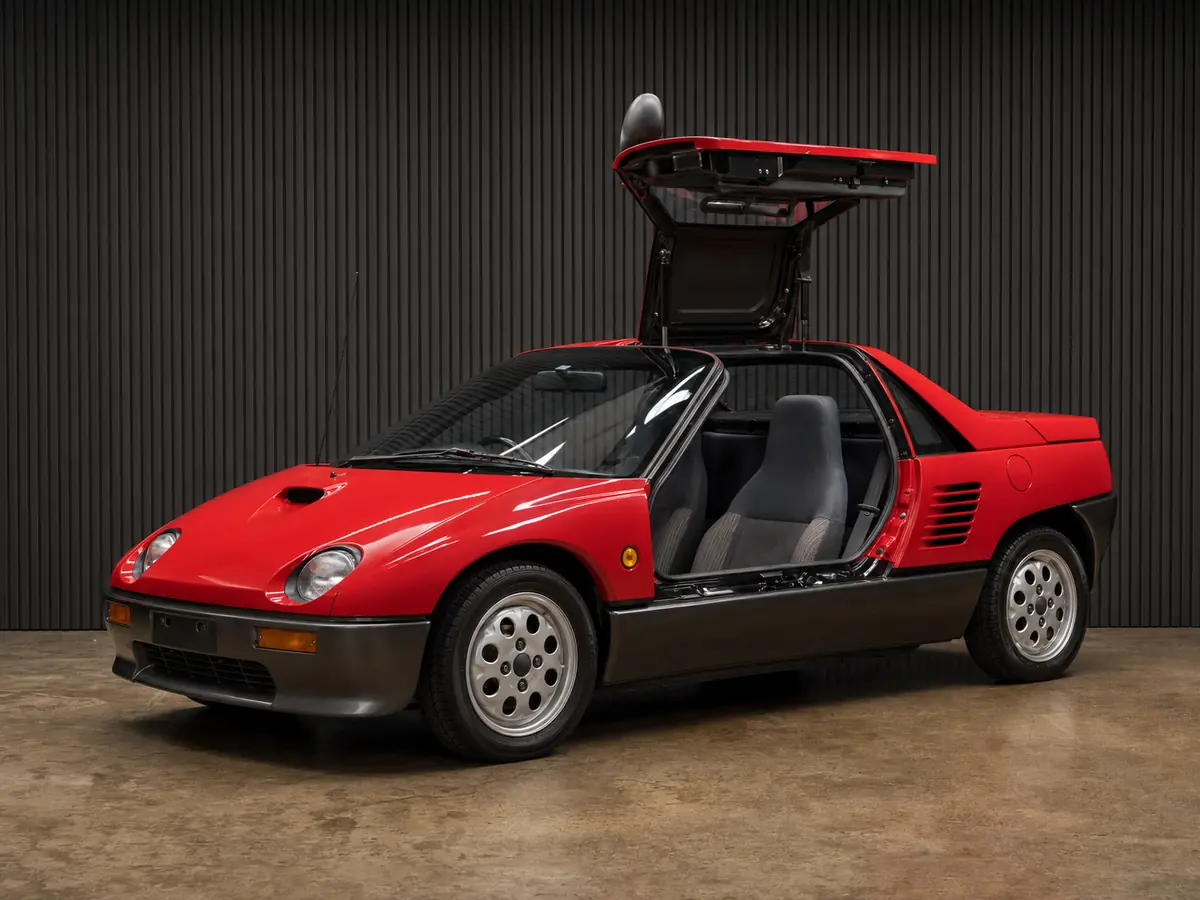
Autozam AZ-1 (Mazda) PG6SA
The smallest exotic in this group combines a mid-mounted turbo engine, plastic exterior panels and roof-hinged gullwing doors. Its official model name is Autozam AZ-1.
- Mazda’s archive confirms the Autozam identity, gullwing doors, mid-engine layout and 44:56 occupied weight distribution.
- Door struts, hinge alignment and roof seals matter because the openings are structural to the experience and costly to correct badly.
- Inspect panel fit, evidence of underlying structural repair, cooling, turbo condition and the availability of model-specific glass and trim.
Nissan Pike Factory Cars: Design Before Convention
Nissan used the “Pike car” idea for limited-volume, deliberately unconventional designs. The series moved from the Be-1 through Pao and S-Cargo to the Figaro.

Nissan Be-1 BK10
A deliberately friendly reinterpretation of a compact hatchback, mechanically related to the March but collectible for its body, interior materials and completeness.
- Nissan limited production to 10,000 and used a lottery after demand exceeded supply.
- Inspect unique bumpers, lamps, trim textures, dashboard pieces and any canvas-roof mechanism rather than valuing it like an ordinary March.
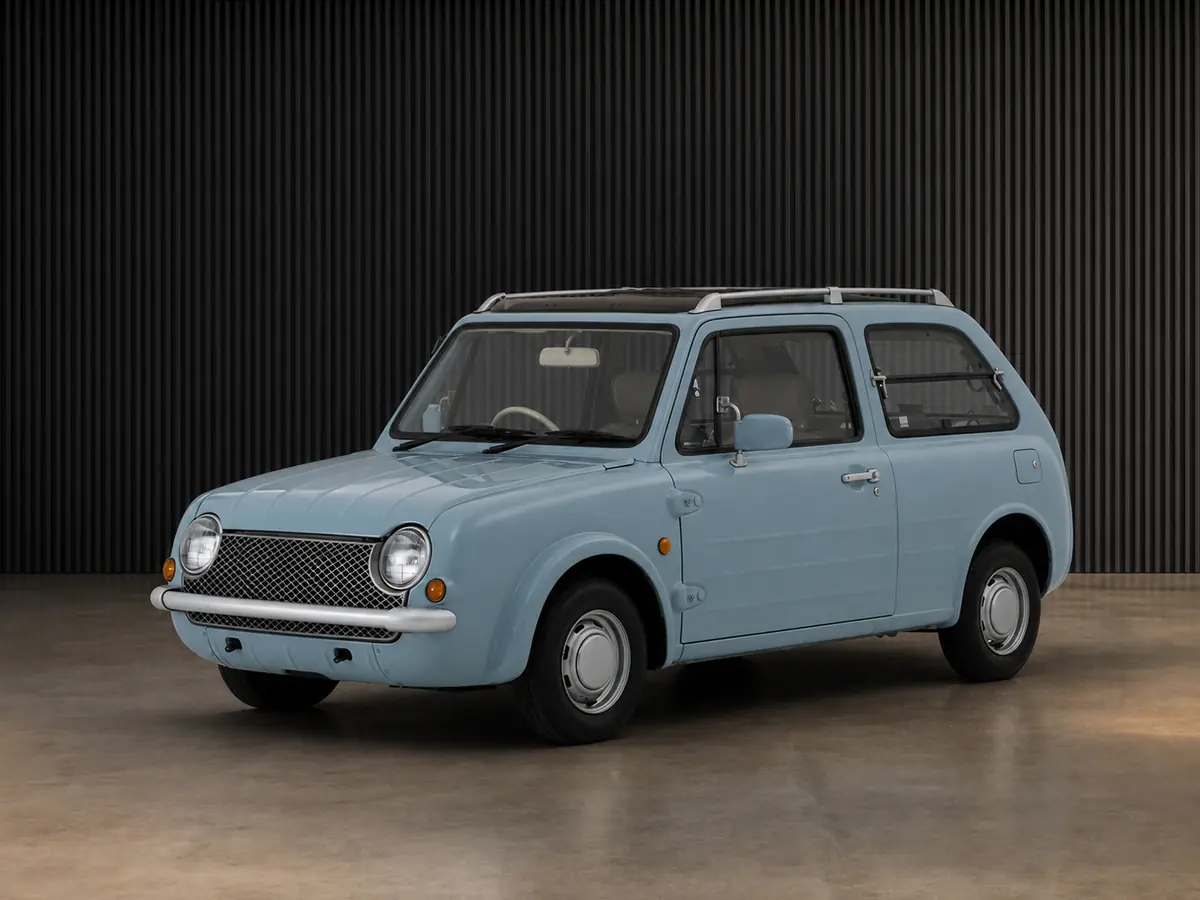
Nissan Pao PK10
Exposed hinges, split rear glass and ribbed body details turn familiar small-car mechanicals into an adventure-themed design object.
- Choose between fixed-roof and canvas-top examples only after checking drainage, roof fabric, seals and operation.
- Original exterior and interior hardware is central to value; missing model-specific details can outweigh ordinary mechanical repairs.
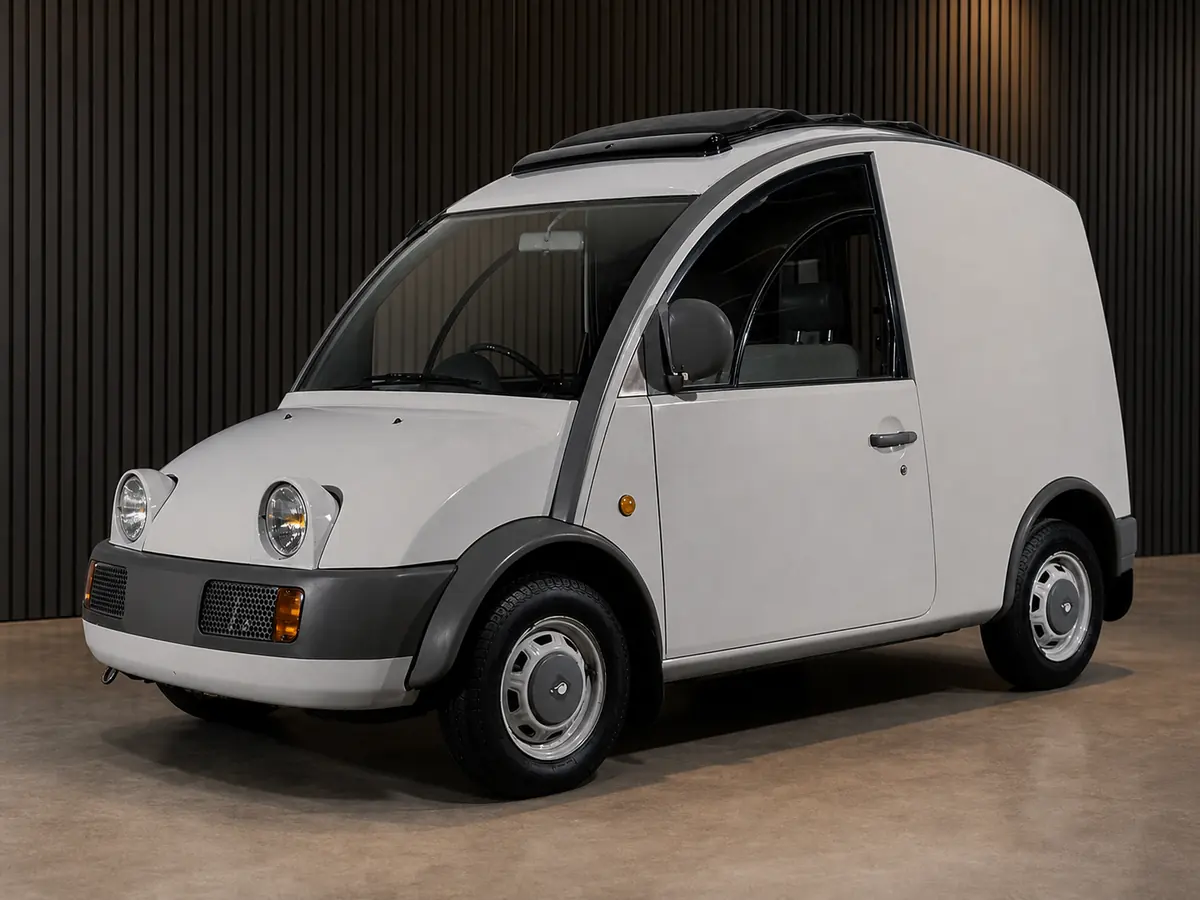
Nissan S-Cargo G20
Its name and rounded profile play on “escargot,” but this is a real compact delivery van with a dash-mounted automatic selector and useful cargo body.
- It is the practical outlier: cargo-body condition, rear doors, floor, partition and commercial-use wear deserve close inspection.
- Confirm the registered seating and body configuration rather than assuming all S-Cargo vans have the same payload or interior.
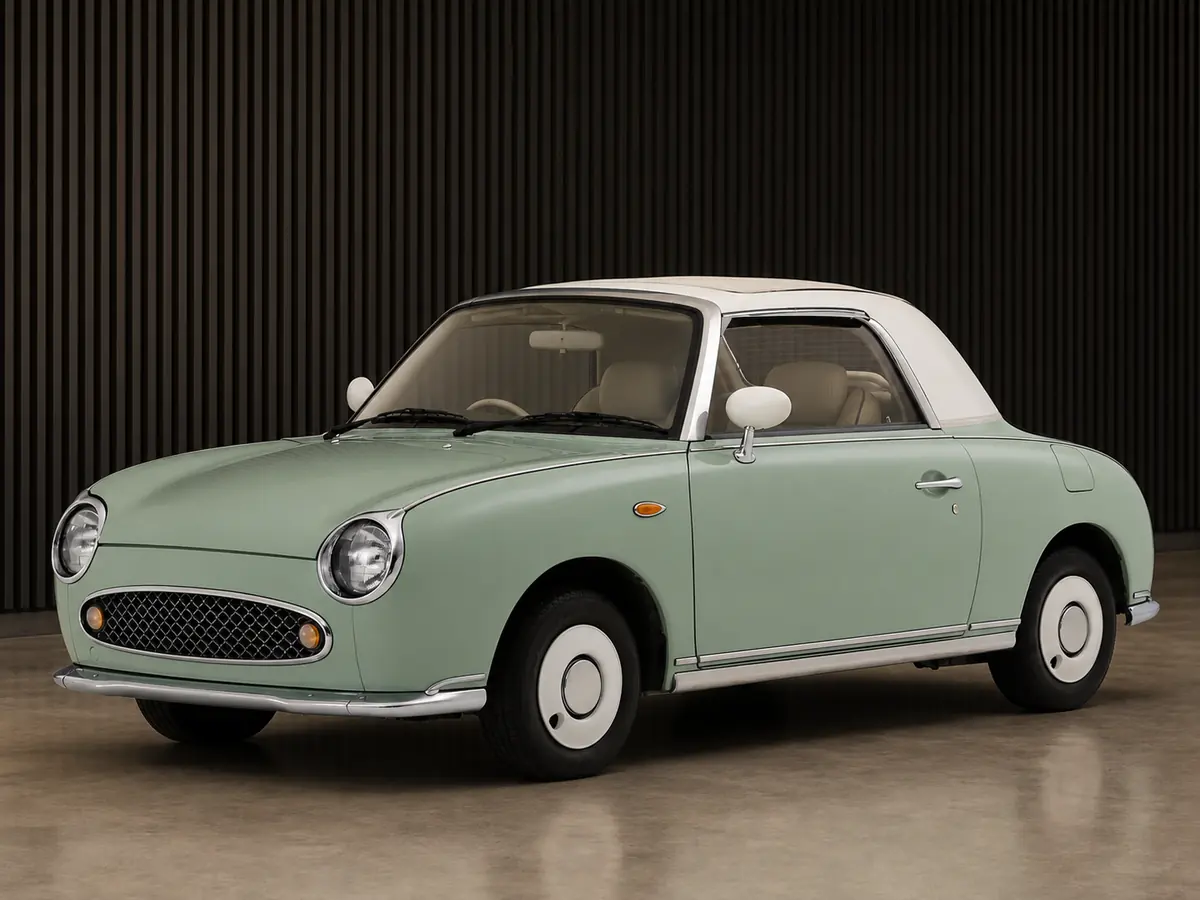
Nissan Figaro FK10
The fourth Pike car combines 1950s-inspired details, a fixed side structure and a retracting fabric roof with turbocharged March-based mechanicals.
- Roof fabric, rear-window area, drainage and seals should be tested with water, not judged from dry photographs.
- Inspect turbo/cooling health, corrosion and the completeness of its model-specific interior and exterior fittings.
Three Japanese Oddballs Worth Knowing by Chassis Code
These cars are not a single factory family. They belong together because each took a normal compact-car premise in a direction no successor repeated exactly.
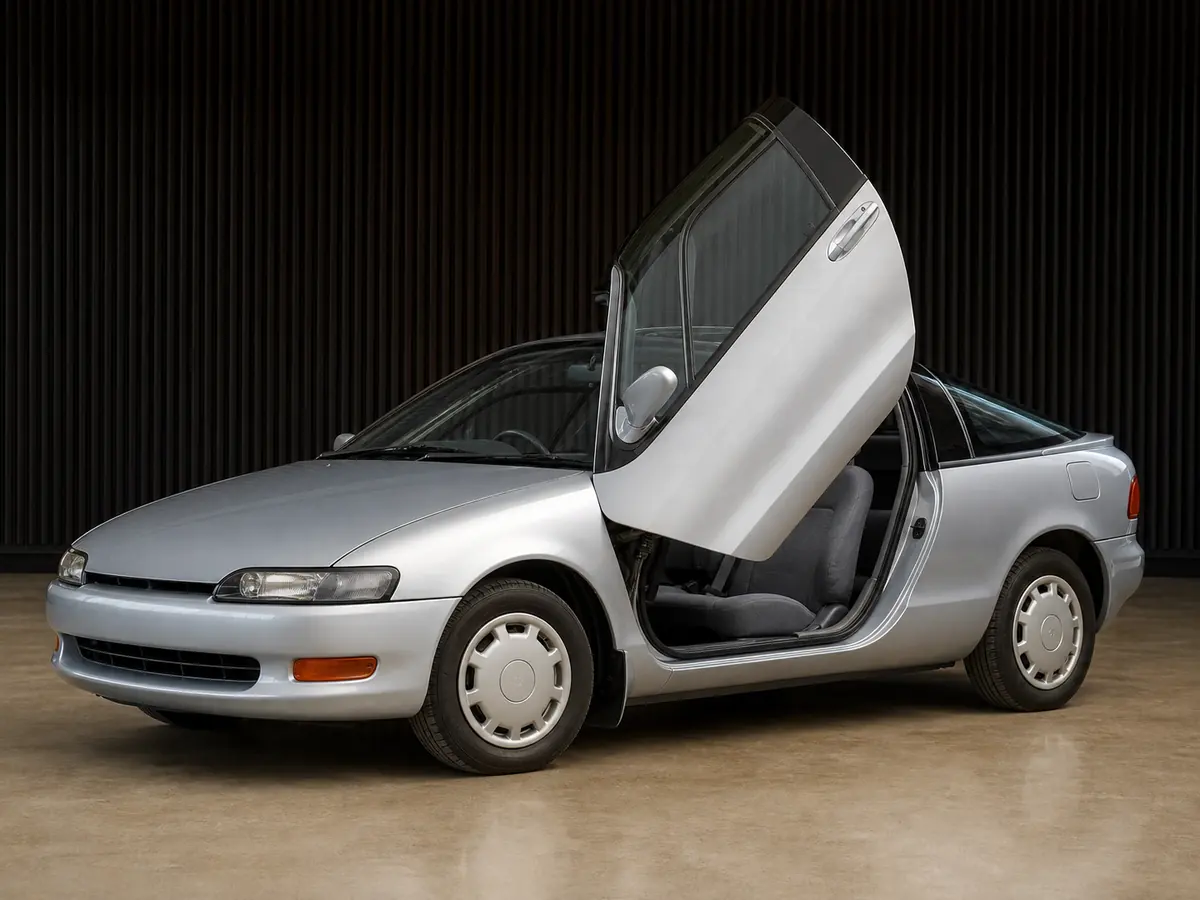
Toyota Sera EXY10
Toyota wrapped a front-wheel-drive compact in a dramatic glass canopy and upward-forward opening doors. Toyota called them gull-wing doors at launch; the hinge motion is more accurately described as butterfly or dihedral.
- Door struts must support the heavy glass doors smoothly; check hinge alignment, weather seals and headlining around the canopy.
- The optional ten-speaker Super Live Sound system is a completeness item, not a feature to assume on every car.
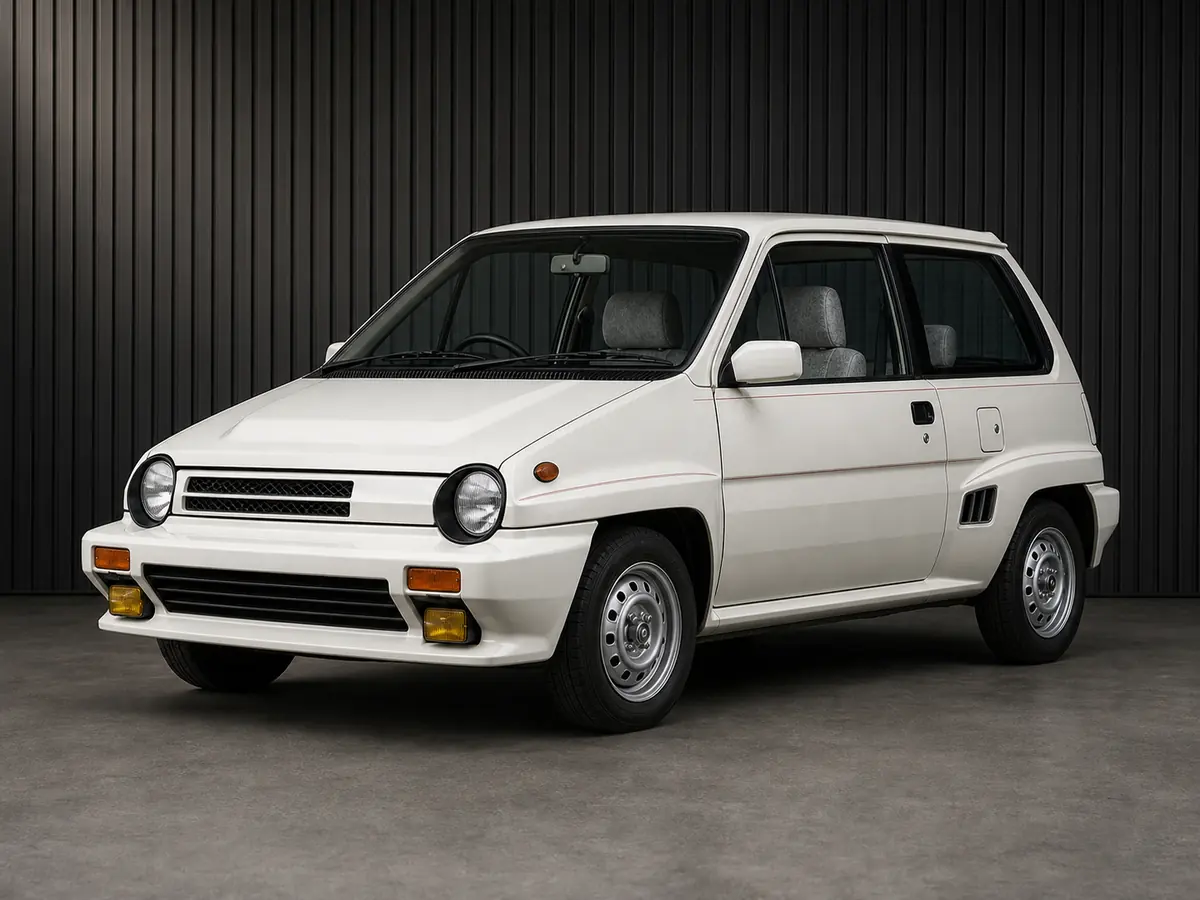
Honda City Turbo II E-AA
Honda widened the original tall City, added an intercooler and extracted 110 PS from 1.2 litres. Enthusiasts know its muscular stance by the “Bulldog” nickname.
- Honda documented its intercooler, wide tracks, power bulge and ten-second scramble-boost strategy below 4,000 rpm at full throttle.
- Verify turbo and fuel-injection function, period engine controls, cooling, corrosion and the difficult-to-replace wide-body and interior pieces.
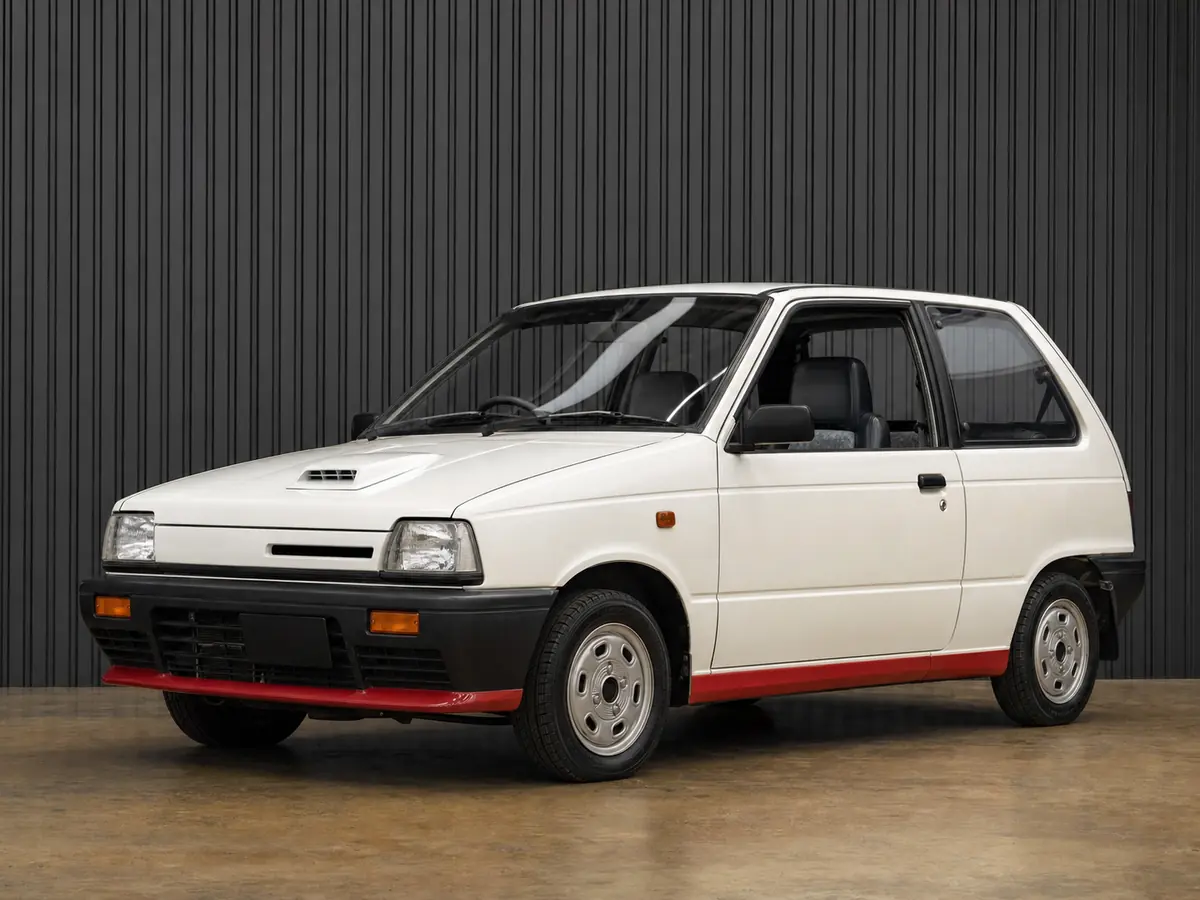
Suzuki Alto Works
“Alto Works” spans several generations, so the badge alone is not enough. The landmark 1987 launch used CA72V for front-wheel-drive RS grades and CC72V for the full-time 4WD RS-R.
- Suzuki identifies the 1987 Works as Japan’s first kei car with a twin-cam turbo engine.
- Confirm chassis code, engine, RS grade, drivetrain and transmission from the vehicle—not from copied auction-title text.
- For a USA age-route search in 2026, early generations are straightforward candidates; later 2000 or revival-era cars require exact date review.
Ten-Model Specification and Chassis Comparison
Use this table to create the first search instruction. Final specifications vary by year and grade; the chassis plate and export certificate control.
| Model | Featured era | Chassis code | Engine | Drive / transmission | Defining idea | Purchase-critical check |
|---|---|---|---|---|---|---|
| Honda Beat | 1991–1996 | PP1 | E07A 656 cc NA · 64 PS | Mid-engine RWD · 5MT | High-revving open kei roadster | Roof, corrosion, cooling and service access |
| Suzuki Cappuccino | 1991–1998 | EA11R / EA21R | F6A/K6A turbo · 64 PS | Front-engine RWD · 5MT/3AT | Four roof configurations | All roof pieces, seals, rust and turbo |
| Autozam AZ-1 | 1992 launch | PG6SA | F6A 657 cc turbo · 64 PS | Mid-engine RWD · 5MT | True gullwing kei coupe | Door geometry, structure and unique panels |
| Nissan Be-1 | 1987 | BK10 | MA10 987 cc · 52 PS | FWD · 5MT/3AT | First Nissan Pike car | Original trim and optional roof condition |
| Nissan Pao | 1989–1990 | PK10 | MA10 987 cc · 52 PS | FWD · 5MT/3AT | Retro utility design | Canvas roof, hinges, split hatch and trim |
| Nissan S-Cargo | 1989–1990 | G20 | E15S 1,487 cc · 73 PS | FWD · 3AT | Design-led delivery van | Cargo wear, doors, floor and registered layout |
| Nissan Figaro | 1991 | FK10 | MA10ET 987 cc turbo · 76 PS | FWD · 3AT | Retro fixed-side convertible | Roof, drainage, seals, corrosion and turbo |
| Toyota Sera | 1990–1995 | EXY10 | 5E-FHE 1,496 cc · 110 PS | FWD · 5MT/4AT | Glass canopy and butterfly doors | Door struts, hinges, seals and glass |
| Honda City Turbo II | 1983 launch | E-AA | ER 1,231 cc turbo · 110 PS | FWD · 5MT | Intercooled wide-body tall-boy | Turbo controls, rust and unique body parts |
| Suzuki Alto Works | 1987–2000 focus | CA/CC72V, CN/CP21S, HA12S/HA22S | F5A/F5B/F6A/K6A turbo | FF or 4WD · grade-dependent | Kei twin-cam turbo hot hatch | Exact code, grade, engine and drivetrain |
Power figures are period Japanese PS values. “NA” means naturally aspirated. Alto Works is a multi-generation name; its row intentionally lists several code families instead of pretending it is one specification.
How Mirai Should Inspect a Specialty Car Before Bidding
Mechanical parts may be shared with mass-market relatives, but the body, glass, roof, doors and interior details often create the real replacement risk.
1. Prove the identity
Match chassis code, model plate, engine, transmission and drivetrain to the export certificate. Reject a sales title that treats “Mazda AZ-1” as a separate model or hides an engine swap.
2. Test the signature feature
Operate every removable roof, fabric roof, gullwing or butterfly door repeatedly. Check struts, hinges, latches, alignment, drains and seals with close photographs and water testing.
3. Inspect structure before cosmetics
Look behind fresh paint for sill, floor, wheel-arch, suspension-mount and roof-aperture repairs. On plastic-panel cars, inspect the supporting structure—not only the panel surface.
4. Preserve unique trim
Inventory lights, lenses, glass, switches, seats, fabrics, wheel trims, roof bags and audio components. A complete original example can be cheaper than reconstructing a missing interior.
5. Verify turbo and cooling systems
Request cold-start and fully warm videos, boost behavior, smoke check, fan operation, coolant condition and leak evidence. Do not infer health from a short auction-lane drive.
6. Price parts and support first
Before bidding, identify consumables, model-specific seals and glass, a destination workshop, and a realistic repair allowance. Rarity changes downtime more than it changes basic maintenance.
U.S. Age and Approval Triage
Every car needs individual verification. This short screen only prevents obviously mismatched sourcing instructions; the linked USA import guide carries the legal detail.
United States
The federal older-vehicle route starts at 25 years and is measured to the month. Original-era examples on this page are now age candidates in July 2026, but exact manufacture date, EPA treatment and state registration still matter. A 2015 Alto Works revival is not age-eligible.
Read the USA import and registration guideWhat to send Mirai
Destination state, model, acceptable years, chassis code, manual or automatic, color flexibility, originality target, condition threshold and maximum landed budget.
Use the model finder firstUnique Japanese Car FAQs
Clear answers to common naming, specification and sourcing questions.
What are the ABC kei cars?
The ABC trio is the Autozam AZ-1, Honda Beat and Suzuki Cappuccino. All are early-1990s two-seat kei sports cars, but the AZ-1 is a mid-engine gullwing coupe, the Beat is a naturally aspirated mid-engine roadster and the Cappuccino is a turbo front-engine, rear-wheel-drive roadster.
Are the Autozam AZ-1 and Mazda AZ-1 different cars?
No. Mazda built the car and sold it through the Autozam channel as the Autozam AZ-1. “Mazda AZ-1” is common shorthand for the same PG6SA model, not a separate vehicle.
Does the Toyota Sera have gullwing doors?
Toyota called them gull-wing doors in its 1990 launch material, but the doors hinge upward and forward and are more accurately described today as butterfly or dihedral doors. The Autozam AZ-1 has roof-hinged true gullwing doors.
Which Nissan models are Pike cars?
The four production Nissan Pike cars are the Be-1, Pao, S-Cargo and Figaro. Nissan’s own heritage collection describes the Figaro as the fourth Pike car following the Be-1, Pao and S-Cargo.
Is the Nissan S-Cargo a passenger car or a van?
It is a compact light commercial van. Nissan documented both two-seat and four-seat layouts, with respective 300 kg and 200 kg load ratings, so buyers should verify the registered configuration of the individual vehicle.
Which cars on this page are kei cars?
The Honda Beat, Suzuki Cappuccino, Autozam AZ-1 and period Suzuki Alto Works are kei-class cars. The Nissan Pike cars, Toyota Sera and Honda City Turbo II are larger non-kei vehicles.
Which model is best if I need an automatic?
The Nissan Figaro and S-Cargo are automatic-only choices in this group, while the Be-1, Pao, Toyota Sera and later Suzuki Cappuccino were available with automatics. Verify the exact chassis and transmission before bidding.
Which model offers the most traditional sports-car layout?
The Suzuki Cappuccino most closely follows the classic front-engine, rear-wheel-drive roadster formula. The Beat and AZ-1 place the engine behind the occupants, while the other featured cars are front-wheel drive.
Why does the Alto Works need extra chassis-code research?
Alto Works is a multi-generation performance name rather than one fixed specification. Codes such as CA72V, CC72V, CN21S, CP21S, HA12S and HA22S identify different eras, engines and drivetrains.
Are all of these cars old enough for the United States?
Original-era examples listed on this page are at least 25 years old by July 2026, subject to the exact manufacture month and federal documentation. Later Alto Works revival models are not; state registration is a separate decision.
What matters more than low mileage on a specialty car?
Structural condition, corrosion, complete model-specific trim, correct glass, functional roofs or doors, service history and a documented chassis identity can matter more than a low odometer reading.
Can Mirai source a specific model and configuration?
Yes. Send Mirai the destination, model, acceptable years and chassis codes, transmission, color flexibility, originality target, condition threshold and landed-budget range for a focused Japan search.
Research Sources and Editorial Method
Manufacturer archives were used for the defining engineering, chassis and production facts. U.S. import rules are intentionally summarized and delegated to the detailed USA import guide.
- Honda Beat launch release and specifications.
- Suzuki Cappuccino digital archive and Suzuki Alto Works history.
- Mazda 100th Anniversary Autozam AZ-1 archive and Mazda 1990s history.
- Nissan Figaro, Pao, S-Cargo and Be-1 heritage records.
- Toyota Sera launch release and Toyota Sera lineage record.
- Honda City Turbo II launch release and specifications and Honda City development history.
- Current U.S. import rules should be checked against CBP, NHTSA and EPA guidance and your destination state’s motor-vehicle agency, as summarized in Mirai’s USA import guide.
Image and data boundary
The page’s images are original Mirai Trading editorial images guided by official manufacturer photography and model records. Images illustrate model identity and are not auction-condition evidence. Every sourced vehicle still requires chassis, document and condition verification.
Ask Mirai to Source Your Specialty Japanese Car
Send your destination, preferred model and chassis code, acceptable years, transmission, color flexibility, originality target, condition threshold and landed budget. Mirai can search Japanese auction and dealer supply for a configuration that matches the brief.