
Are Kei Trucks Legal in Vermont? Act 153 and Buying Guide
Yes. If you are asking are kei trucks legal in Vermont, Act 153, signed June 16 and effective July 1, 2026, §§20–21 now defines kei vehicles and provides rules for registered kei vehicles and farm-class kei trucks. The right registration class, imported-vehicle paperwork and inspection still matter.
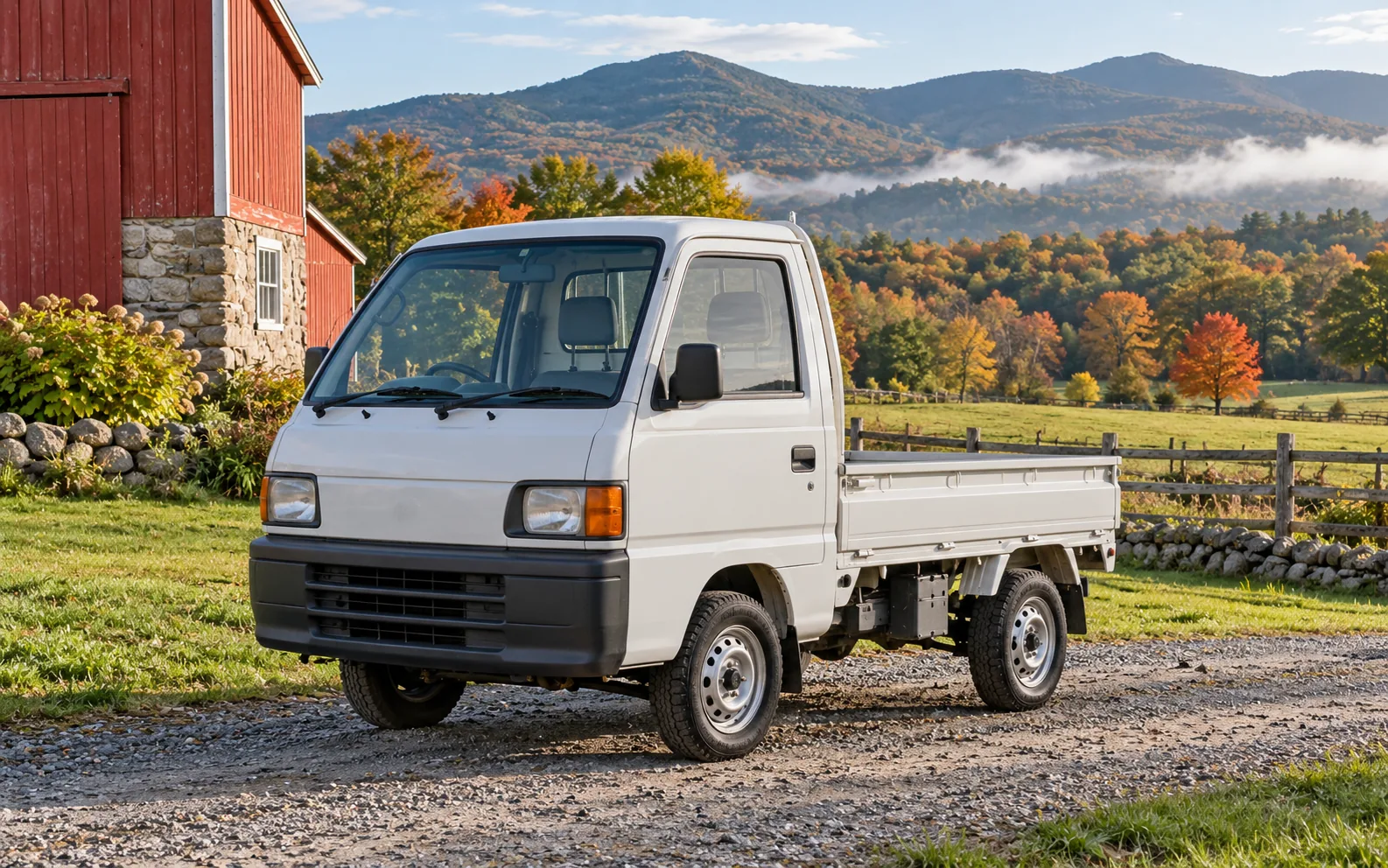
Act 153 took effect July 1, 2026.
Plus four wheels and statutory size caps.
Farm-truck and pleasure-car provisions differ.
DMV’s newly registered vehicle window.
Are Kei Trucks Legal in Vermont? The 2026 Answer
The new statute recognizes the vehicle, then attaches normal class rules.
Act 153 (2026), §§20–21, pp. 22–24, adds “kei vehicle” and “kei truck” definitions to 23 V.S.A. §4 and new §1044. A kei vehicle must have four wheels, an engine no larger than 660 cc and maximum overall dimensions of 130 inches long, 78 inches high and 60 inches wide. A kei truck is one primarily designed, used or maintained to carry property. Back to all state laws. Other New England state guides: Massachusetts and Maine.
Section 1044 says a registered pleasure-car kei vehicle follows pleasure-car law, while a kei truck registered as a farm truck follows farm-truck law. It also prevents the Traffic Committee and political subdivisions from excluding either registered class from the same manner and locations as its corresponding class. The act states no special kei-only speed cap.
Vermont Kei Truck Registration: Pleasure Car or Farm Truck?
The act creates related provisions without declaring every truck a pleasure car.
Act 153 adds kei vehicles to “pleasure car” and kei trucks to “farm truck.” The farm-truck definition lets the owner choose registration under 23 V.S.A. §367(f), or a much narrower unregistered farm use under §370(b). A farm registration is tied to agricultural use rather than a general delivery business; DMV’s current farm-vehicle guidance limits agricultural transport to products and materials connected with the registrant’s farm within 150 miles. Because the statute also contains the broader pleasure-car wording, a nonfarm kei-truck buyer should get the DMV’s classification for that particular build and use instead of treating farm plates as the only or automatic option.
| Use brief | Act 153 provision | Buyer’s next step |
|---|---|---|
| Registered kei vehicle as pleasure car | §1044(a): pleasure-car provisions | Ask DMV whether this truck and its use qualify for that class. |
| Kei truck registered as farm truck | §1044(b): farm-truck provisions | Document qualifying farm use under §367(f). |
| Unregistered farm truck | §4(72) points to §370(b) | Do not treat narrow farm movements as general road permission. |
The registration-class question is the key buyer uncertainty. This page does not promise a pleasure-car plate for every cargo truck.
How to Prepare an Imported Truck for Vermont DMV
Match the Japanese vehicle’s identity and dimensions to the U.S. and state file.
Vermont DMV’s vehicle-purchased-outside-the-U.S. instructions, checked October 2026 start with application VD-119 and ownership, import/emissions, odometer and tax records as applicable. A Japanese export certificate, invoice, CBP entry, NHTSA HS-7 and EPA declaration should tell one consistent vehicle story. DMV’s VIN-verification page lists foreign registration as a verification trigger for a title application and uses form VT-010, but says no verification is required when no title is issued. A short Japanese chassis identifier should be recorded accurately; this guide does not claim that it automatically wins or loses Vermont acceptance.
For federal eligibility, NHTSA’s current import FAQ explains the 25-year safety standard exemption measured from manufacture, while EPA’s current import guidance governs emissions separately. See Mirai’s USA import guide for the entry process. Register for the approved class, arrange liability coverage consistent with the use and consult the kei-truck insurance guide.
Vermont DMV’s inspection-station guidance says newly registered vehicles must be inspected within 15 days and registered vehicles annually. The Periodic Inspection Manual, July 21, 2026 edition is the current manual identified on the DMV site; inspect lights, brakes, tires, glass, mirrors, wipers, steering and body condition against it. Fees and tax depend on the transaction and registration class, so the guide gives no fixed total.
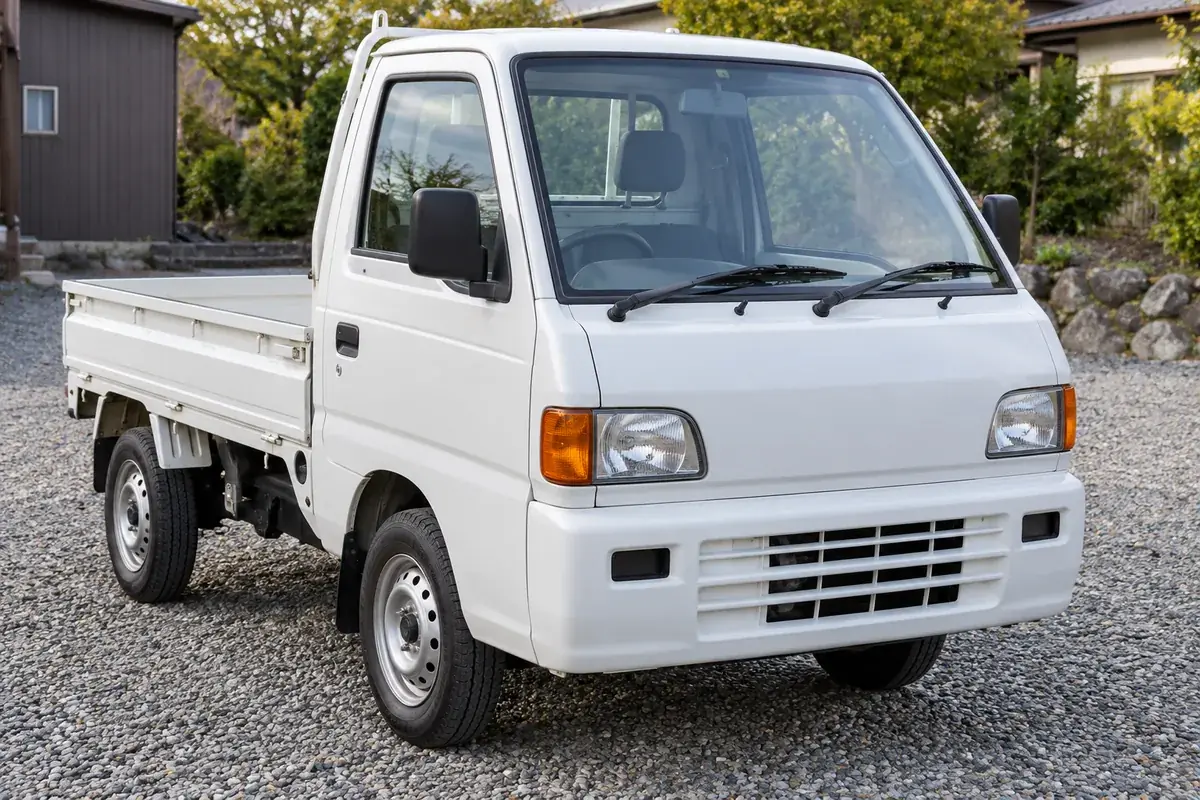
Vermont Use and Registration Planner
Select the intended use to frame a DMV class question and Mirai sourcing brief.
Use Arrow keys, Home, End, type-ahead, Enter or Escape.
Farm-truck class to examine
Act 153 expressly includes kei trucks in the farm-truck definition. Document qualifying agricultural use and ask DMV about §367(f) registration.
Ask about a farm-use candidateBuyer Checklist Before a Vermont Auction Bid
Screen the vehicle against the statute and the registration file, not just its model badge.
- Measure the actual truckFour wheels, ≤660 cc, ≤130 in long, ≤78 in high and ≤60 in wide under Act 153.
- Match the intended classDescribe real farm, personal or business use to DMV.
- Prove age and engineCapture build month and original engine configuration for federal entry.
- Match identityChassis stamp, export certificate, invoice and entry documents should agree.
- Inspect conditionRequest lighting, brakes, tires, glass, bed and corrosion evidence for Vermont inspection.
- Arrange coverageSeek insurance for the class and actual work before road operation.
Compare models in the kei-truck buying hub after setting the Vermont use brief.
Review my Vermont shortlistWhat Drives Value in a Vermont Kei Truck?
Compare like-for-like candidates. No fixed price is published because grade, condition, auction timing and transaction terms change.
Find a Vermont-Fit Candidate Through Mirai
Search major Japanese auctions with the U.S. and state brief already defined.
Mirai Auction Portal
Exclusive access is available to Mirai customers after inquiry. The portal covers candidates from major auctions across Japan and lets buyers filter for a U.S. brief: build age, size, chassis identity, engine, export records, grade, condition and destination-state needs. Mirai can interpret auction sheets and prepare Japanese documents. This is curated auction access, not public or Mirai-held inventory. A “USA-ready” filter is screening, not a promise of customs entry, Vermont registration or insurance.
Request Auction Portal accessVermont Kei Truck FAQs
Direct answers based on Act 153 and Vermont DMV guidance.
Are kei trucks legal in Vermont?
Yes. Act 153 took effect July 1, 2026 and expressly provides operation rules for registered kei vehicles and kei trucks, subject to the applicable registration class.
Can a kei truck receive a Vermont farm-truck registration?
Generally yes. Act 153 adds kei trucks to the farm-truck definition and applies farm-truck provisions when one is registered in that class.
Can I register every kei truck as a pleasure car?
No automatic answer. The act includes kei vehicles in the pleasure-car definition and separately names kei trucks as farm trucks; the Vermont DMV must determine the correct class for the specific vehicle and intended use.
What counts as a kei vehicle under Act 153?
A four-wheel motor vehicle with an engine of 660 cc or less, length of 130 inches or less, height of 78 inches or less, and width of 60 inches or less.
Does Vermont have a special kei-only speed limit?
No. Act 153 does not set a separate kei-only speed cap; a properly registered vehicle follows the provisions for its registration class and the posted road rules.
Can a town ban all registered kei trucks?
Generally no. Act 153 bars political subdivisions from prohibiting a registered farm-class kei truck in the same manner and locations as other farm trucks.
Is an unregistered farm truck free to drive anywhere?
No. Act 153 preserves the narrower farm-use treatment under 23 V.S.A. §370(b); unregistered status is not a general public-road plate.
Will Vermont inspect a newly registered kei truck?
Yes. Vermont DMV says a newly registered vehicle must be inspected within 15 days, with annual inspection thereafter under the current manual.
Does a Japanese chassis number need Vermont verification?
Generally yes when titling a vehicle previously registered abroad. Vermont DMV lists foreign registration as a VIN-verification trigger but says verification is not required when no title is issued.
Do federal 25-year papers guarantee a Vermont registration?
No. Federal entry eligibility, the Act 153 size definition, Vermont ownership review and the selected registration class are separate steps.
Can an engine-swapped truck use EPA’s over-21 provision?
Generally no. EPA’s age-based provision depends on the original engine configuration; a swap needs a different compliance analysis.
Can Mirai guarantee my registration or insurance?
No. Mirai can screen auction candidates and assemble export evidence, but Vermont DMV decides registration and the insurer decides coverage.
Sources and Verification Method
Editorial primary-source check: October 4, 2026.
- Vermont Act 153 (2026), enacted June 16, effective July 1, §§20–21, pp. 22–24 — definitions and operation.
- Vermont DMV, purchased outside U.S., current page and DMV VIN verification, current page — application and foreign-vehicle identity.
- DMV farm-vehicle guidance, current page — farm use.
- DMV inspection stations, current page and Periodic Inspection Manual, July 21, 2026 edition — inspection.
- NHTSA import FAQ, current page and EPA import guidance, current page — federal entry.
How we checked this
We read the enacted Act 153 definitions and §1044, then compared DMV’s current foreign-purchase, VIN, farm-use and inspection pages. The pleasure-car and farm-truck wording is reported separately because the act does not decide every individual truck’s registration class. No individual DMV determination, insurance acceptance or legal-specialist review is claimed.
Ready to Source for Your Vermont Use?
Send Mirai the intended class, farm or personal use, model preference and documents you need. We will screen candidates against the brief.