
Kei Trucks Connecticut: Buying, Inspection & Registration
Researching kei trucks Connecticut buyers can put to work? Start with the vehicle’s documents and inspection plan. Connecticut publishes a grey-market registration process, but acceptance depends on the actual truck and its file. Back to all state laws. Neighboring state guides: Massachusetts.
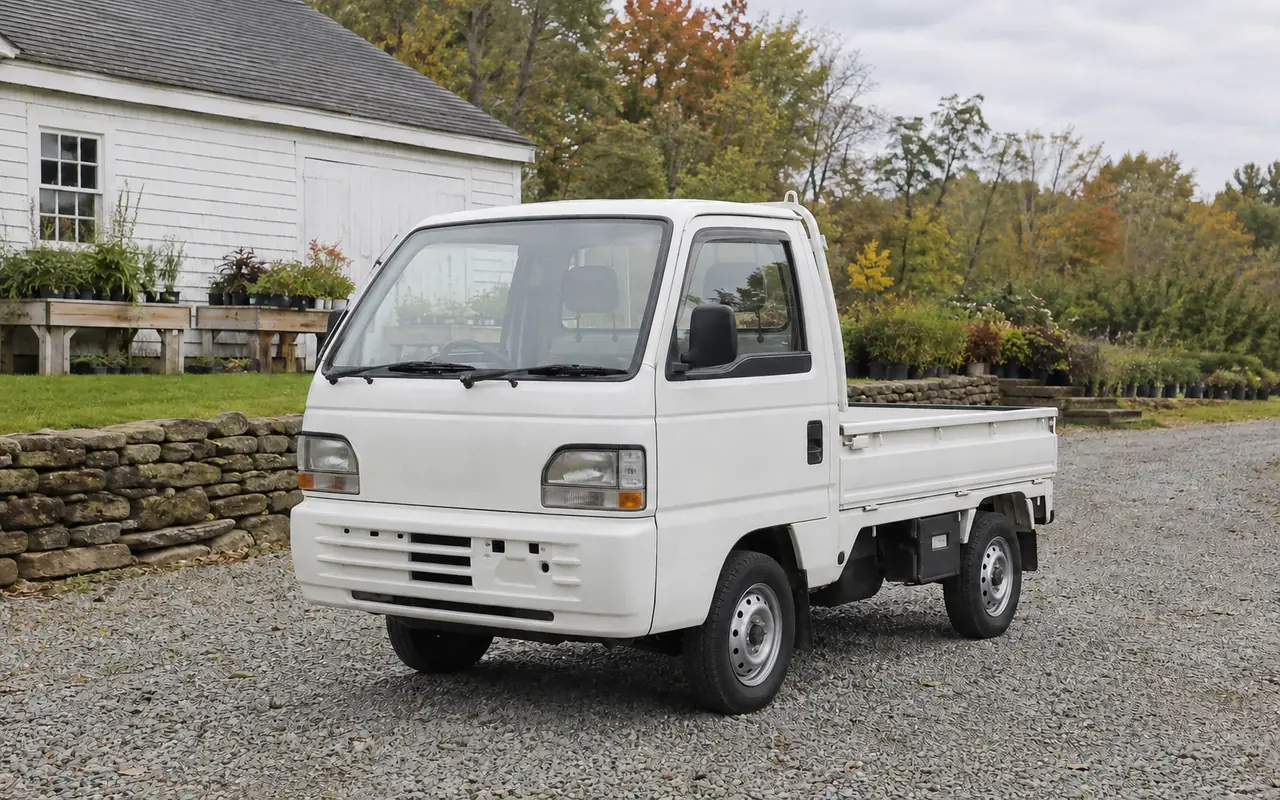
Measured from actual manufacture, not just model year.
Connecticut’s listed model-year exemption in 2026.
Use DMV’s specific lane instructions for imports.
A seller’s plate cannot settle your application.
Kei Trucks Connecticut: Are They Street Legal?
Only if Connecticut DMV accepts the actual vehicle and its records and the required registration, insurance and inspection steps are completed.
Connecticut’s imported-vehicle guidance describes a process for grey-market vehicles: vehicles made for another market that were not originally built to US safety and emissions standards. That is a useful starting point for a Japanese mini truck. It is not a published approval of every kei model, chassis or import history.
The practical answer to “are kei trucks legal in Connecticut” therefore begins with a file review. Before paying a non-refundable deposit, send DMV the chassis identity, manufacture evidence, ownership history and import records, and describe the intended use. Ask what the office will require for this vehicle. Federal customs release and a previous state registration answer different questions.
| Starting point | What to establish before committing |
|---|---|
| A truck still in Japan | Confirm federal entry eligibility, acceptable ownership and translation records, and the Connecticut inspection and registration sequence. |
| A truck registered in another US state | Review the actual title or registration chain and federal import file. Ask Connecticut DMV what inspection and verification your transfer requires. |
| A truck already registered in Connecticut | Check the seller’s identity, chassis and transfer documents. An existing registration is relevant evidence; confirm the requirements for your purchase and intended use. |
Ask a vehicle-specific question
“Can I register a kei truck?” is less useful than “Here is the chassis, ownership chain and import file; what must I provide for this truck?” Keep the office’s response with the purchase records and resolve missing evidence before shipment.
Three age rules that buyers should keep separate
Federal entry, state emissions testing and Connecticut title issuance do not use one interchangeable age test.
| Question | Current rule or guidance | What it does not settle |
|---|---|---|
| Federal motor-vehicle safety import exemption | NHTSA allows a vehicle at least 25 years old to enter under the age exemption, measured from its actual manufacture date. HS-7 box 1 is the relevant declaration. | Connecticut registration, ownership evidence and EPA treatment. |
| Connecticut emissions testing | The DMV emissions overview currently lists model year 2001 and older as exempt. This is the cutoff shown when checked in September 2026. | VIN verification, imported-vehicle safety inspection or federal EPA import evidence. |
| Connecticut title requirement | DMV’s ownership guidance says a Connecticut title is not required for vehicles more than 20 model years old. | The need to establish ownership with acceptable prior records and sale documents. |
For example, a truck manufactured in October 2001 may fall within Connecticut’s current model-year emissions exemption in September 2026, while its 25th manufacture anniversary is still a month away. Do not schedule an age-exempt federal entry using only the number “2001” in a listing.
EPA’s older-vehicle import treatment is another check. Its over-21-year guidance depends on the engine being the same model and configuration as originally installed. A replacement or modified engine needs careful review against those conditions; age alone is not the whole EPA test. Have the broker confirm the declaration and supporting records before export.
Use the USA kei truck import guide for the national process, then return to the state file and inspection steps below. A federal exemption should be documented, not assumed from an advertisement.
Connecticut kei truck registration: document checklist
Prepare a readable file before purchase, and confirm which originals DMV will need at the appointment.
The DMV’s personal-truck registration instructions identify the H-13B application, identification, insurance and ownership evidence, with H-31 used for the bill of sale. An imported truck also needs the evidence applicable to its entry and inspection history. Ask DMV to reconcile the following checklist with your specific situation.
- Identity and ownership: Match the chassis stamping to every record. Assemble the foreign ownership or export document, any subsequent US title or registration, and bills of sale connecting the owners. Resolve spelling, chassis and seller discrepancies.
- Translations: Use a DMV-approved translator for non-English documents. DMV requires identifying translator information, the date and signature, along with the original document. Arrange this before the visit; a seller’s informal English summary is not a substitute for an acceptable translation.
- Federal entry file: Keep CBP Form 7501, the HS-7 declaration and applicable EPA declaration/supporting evidence together. Confirm the evidence of federal compliance or exemption that DMV expects for the exact truck.
- Inspection and testing records: Keep the DMV safety/VIN outcome and any applicable emissions report or confirmed exemption basis. Do not replace an inspection report with the vehicle’s age.
- Applicant and transaction records: Prepare identification, the completed application, sale evidence and the Connecticut insurance card in the required owner name or names. Check taxes, fees and any compliance block before the appointment. Our guide to kei truck insurance in the USA covers quotes, coverage and chassis-number problems.
“No Connecticut title required” does not mean “bill of sale only”
Age can change which ownership document is appropriate. It does not erase the previous ownership record or imported-vehicle requirements. Have DMV review a missing title or registration before purchase; a surety bond is a conditional remedy DMV may require when ownership is unsatisfactory, not a standard fee for every kei truck.
Connecticut kei truck inspection: plan the DMV visit
Use the specific grey-market VIN guidance when choosing the inspection location.
The DMV VIN-verification page directs grey-market vehicles to the Wethersfield inspection lane at 60 State Street. Although the general inspection page lists more than one DMV lane, confirm the instructions for this category before arranging transport.
The vehicle must be fully operational for the required examination. A truck delivered on a trailer must be unloaded for testing, including checks such as brakes, lights and horn. A loose chassis number photograph or a routine third-party VIN appointment does not replace the DMV process described for grey-market vehicles.
Connecticut’s general inspection guidance lists imported vehicles as a special inspection category. The usual statement that most personal vehicles do not need a safety inspection should not be used to skip that category’s requirements.
Do not plan to collect temporary plates first
The imported-vehicle page says temporary plates are available only after a passed DMV safety inspection, and not after a failure. Arrange lawful transport and confirm the sequence before collection. Include unloading, a possible repair visit and return transport in your schedule.
Before booking, ask which documents the lane wants to see and which registration steps follow a pass. Passing an inspection is one part of the application. It does not automatically complete ownership review, insurance acceptance or registration.
Check your Connecticut buying preparation
A practical next-step tool based on the September 4, 2026 research snapshot.
Document and inspection planner
Choose what you have actually confirmed. The result identifies a next question; it does not query DMV or approve road use.
Choose your purchase situation
Information neededIdentify whether the truck is in Japan, another US state or already registered in Connecticut. The relevant ownership and inspection questions depend on that starting point.
Obtain DMV acceptance, required registration and insurance, and confirm the intended vehicle use and route. A result in this tool is not permission to drive.
Your selections and current result are added to the WhatsApp draft. You can review and edit it before sending. Mirai can discuss sourcing and preparation; Connecticut authorities decide eligibility.
Kei trucks for sale in Connecticut: local purchase or Japan sourcing?
Compare the evidence and total cost of the actual vehicle, then decide where to buy.
| Buying route | Useful advantage to check | Question to resolve |
|---|---|---|
| Existing Connecticut vehicle | You may be able to inspect the truck and review its current registration in person. | Do the seller, chassis, transfer records and intended use match? Which steps remain for your transfer? |
| Another US state | A truck may already have completed federal entry and be available for domestic delivery. | Can the seller provide the import and ownership file, and what will Connecticut require? |
| Sourcing from Japan | You can compare vehicles before choosing a shipment and specification. | Can the candidate support the federal age, engine and ownership evidence, plus the Connecticut inspection plan? |
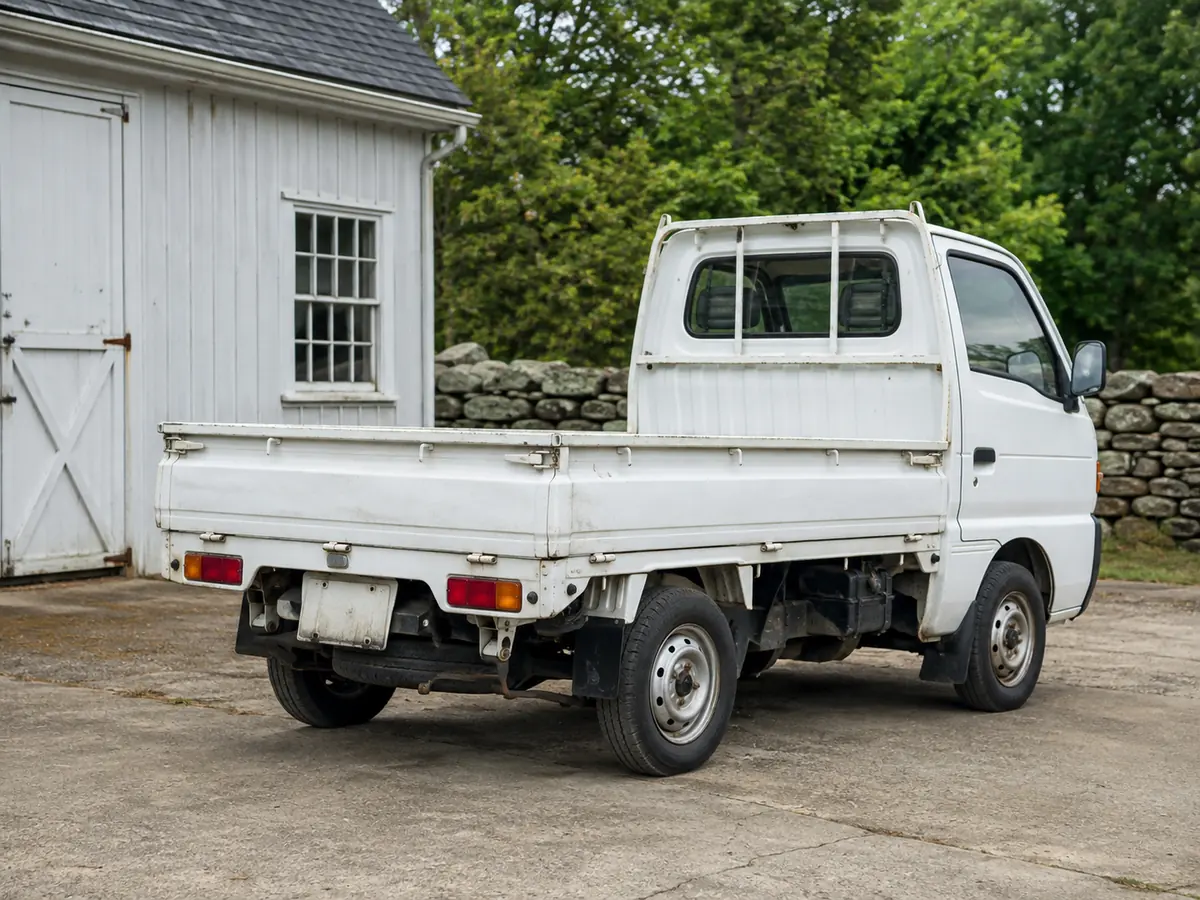
Ask for evidence beyond a polished cab
Request clear photographs of the frame, cab floor, wheel arches, bed mounts, brake lines and chassis marking. Ask for a cold-start video and a description of leaks, warning lights and recent repairs. A distant photograph cannot establish structural condition.
For a Connecticut work truck, corrosion and maintenance history deserve close attention. Have an independent inspection assess the actual vehicle and any previous repairs. Four-wheel drive does not replace tire, brake or steering condition.
Illustrative generated image; not a specific vehicle offered in stock or proof of an inspection.
Start a shortlist at the kei truck buying hub. Compare the Suzuki Carry, Honda Acty, Daihatsu Hijet, Subaru Sambar and Mitsubishi Minicab by the year, chassis, condition, body and equipment actually offered. A model name alone does not determine registration or parts compatibility.
If considering an auction vehicle, learn how to read Japanese auction sheets and request clarification of condition notes before bidding. Plan kei truck parts sourcing with the chassis and part identification rather than assuming every 660 cc truck shares components.
Budget for delivery, insurance and the first DMV visit
The purchase price is one line in a complete Connecticut ownership budget.
The Japanese auction price guide helps frame a bid, but a buyer deciding whether to import a kei truck to Connecticut needs an itemized delivered estimate. Ask what each quote includes, which costs are provisional and who handles a delay.
| Cost area | Ask for this detail |
|---|---|
| Vehicle and Japan-side work | Purchase price, service fees, inland movement, export documentation and any agreed inspection or repairs. |
| Ocean freight and US entry | Freight terms, marine coverage, broker charges, applicable duties, port handling and possible storage. |
| Connecticut delivery and inspection transport | Delivery address, trailer access, unloading, DMV movement and a contingency for a failed inspection. |
| Documentation and registration | Translation, applicable taxes, registration charges and any case-specific ownership requirement. Confirm current fees for the vehicle’s use and classification. |
| Insurance and initial maintenance | A written quote for the actual chassis and use, followed by a reserve for tires, brakes, fluids and deferred service. |
Ask an insurer to quote the truck before purchase, using its actual chassis identifier and a clear description of personal or business use. Connecticut’s DMV compliance page lists minimum liability limits of $25,000 bodily injury per person, $50,000 per accident and $25,000 property damage. Those figures describe liability minimums, not every coverage requirement or a recommendation for adequate protection.
Confirm that the insurer can issue the required Connecticut evidence in the applicant’s name. Discuss business deliveries, use away from the property and any seasonal storage arrangement directly with the insurer. Keep insurance and registration status coordinated; do not assume that parking the truck automatically ends the coverage obligation.
Connecticut road use: check the parkway rules
Registration and a small body size do not settle every route question.
For the Merritt and Wilbur Cross parkways and the Milford Parkway, Connecticut DOT’s restrictions distinguish pickup registration classes. Passenger-registered pickups are permitted subject to the stated dimensions. The combination-registration exception requires total gross weight, including contents, of 7,500 pounds or less and compliance with those dimensions.
The published limits are 8 feet high, 7 feet 6 inches wide excluding mirrors, and 24 feet long. All trailers are prohibited. A transporter collecting your truck therefore needs a route that does not take a trailer onto those parkways.
Confirm the truck’s proper registration class and intended work use with DMV, then resolve route questions with DOT. Do not choose a plate category solely to obtain parkway access. The sources reviewed do not establish a statewide kei-only 35 or 55 mph limit; rules from another state should not be copied into a Connecticut purchase plan.
Connecticut kei truck FAQs
Direct answers for the questions to resolve before purchase.
Are kei trucks legal in Connecticut?
Only if DMV accepts the actual vehicle and its records and the required registration, insurance and inspection steps are completed. Connecticut publishes a grey-market imported-vehicle process; that is not approval of every kei truck.
Does being 25 years old guarantee Connecticut registration?
No. Federal age-based entry, Connecticut ownership review, inspection and insurance are separate checks. Use actual manufacture evidence for the federal safety exemption and obtain DMV guidance for the specific vehicle.
Does a truck more than 20 model years old need no ownership paperwork?
No. Connecticut’s title-age guidance does not remove the need for acceptable prior ownership and sale records. Confirm the documents for the truck’s previous jurisdiction and import history.
Do model year 2001 kei trucks need Connecticut emissions testing in 2026?
No, model year 2001 and older are listed as exempt on the DMV emissions overview checked in September 2026. That testing exemption does not waive VIN verification, safety inspection or federal EPA entry evidence.
Can I use any ordinary VIN verification station for a grey-market truck?
No. DMV’s specific grey-market guidance directs these vehicles to the Wethersfield inspection lane. Confirm the current visit instructions and have the truck fully operational for the required examination.
Can I obtain temporary plates before the imported-vehicle safety inspection?
No. The imported-vehicle guidance says temporary plates are available only after a passed safety inspection. Arrange lawful transport and confirm the sequence before collecting the truck.
Does every old Japanese truck need a federal conversion?
No. The DMV guidance recognizes evidence of federal compliance or exemption. Have the broker and DMV confirm the accepted records for the actual vehicle; do not assume that age eliminates the need to document its exemption.
Will an out-of-state title transfer automatically?
No. Review the ownership chain, import evidence and Connecticut requirements for that chassis before purchase. Another state’s registration does not decide the Connecticut application.
Does every kei truck require an ownership surety bond?
No. The DMV describes a bond as a possible requirement when ownership evidence is unsatisfactory. Ask DMV to review a document gap before treating a bond as the solution.
Can a kei pickup use Connecticut parkways?
Only if its registration class, loaded weight where applicable, dimensions and use meet the relevant rules. Confirm those details; small size alone does not establish access.
Is an existing Connecticut registration enough to skip every check?
No. Confirm the seller, chassis and required transfer records, and ask DMV which steps apply to your situation. A current registration is relevant evidence, not a guarantee of your completed transfer.
Can Mirai help source a truck for Connecticut?
Yes. Mirai Trading LLC can discuss a Japan sourcing shortlist using your intended use, location, budget and document questions. Use a WhatsApp button to share your plan; DMV and the relevant authorities determine eligibility.
Primary sources and research method
Official references accessed on September 4, 2026.
- Connecticut DMV — imported grey-market vehicles
- Connecticut DMV — VIN verification
- Connecticut DMV — vehicle inspection
- Connecticut DMV — proof of ownership
- Connecticut DMV — emissions overview
- Connecticut DMV — registration, Truck/Personal section
- Connecticut DMV — insurance and compliance
- Connecticut DMV — approved translators
- Connecticut DOT — parkway restrictions
- NHTSA — importation and certification FAQs
- EPA — vehicle and engine imports
Research method and scope
Prepared by Mirai Trading LLC using Connecticut DMV and DOT guidance and federal NHTSA and EPA sources. The specific grey-market VIN instruction is used for location planning; the general lane listing is not treated as an override. Age rules are separated by purpose and the current emissions cutoff is dated.
The official material reviewed does not establish blanket approval or a blanket ban for every kei truck. Purchase comparisons use record quality, inspection preparation, vehicle condition and itemized cost. No inspection of a particular vehicle, insurer acceptance or professional legal review is claimed. Both images are generated illustrations, not inventory photographs.
Prepare a Connecticut sourcing shortlist
Tell Mirai your town, intended work or road use, purchase budget and preferred body. Share the document and inspection questions you need resolved before choosing a truck.