
Kei truck MPG: what Japanese ratings mean in the U.S.
Kei truck MPG from a Japanese catalog is a test-cycle figure, not a U.S. owner result. For example, a March 2026 Hijet rated 15.6 km/L on WLTC converts to about 36.7 U.S. mpg; real use may differ materially.
km/L × 2.352 = U.S. mpg.
Do not equate with older 10-15 mode.
About 36.7 U.S. mpg, test only.
Your route may differ from a lab cycle.
Kei truck MPG begins with the test cycle
Japan has used 10-15 mode, JC08 and WLTC fuel-economy cycles across the kei-truck generations. Those results cannot be lined up as if they were the same drive. Daihatsu’s March 2026 Hijet catalog gives WLTC 15.6 km/L for a cited 4WD/5MT grade and 15.8 km/L for a 4WD/CVT grade; the same CVT grade shows 20.3 km/L on JC08. Multiply km/L by 2.3521458 to obtain U.S. miles per gallon: 15.6 becomes 36.7 mpg. Suzuki’s December 2025 Carry chart supplies separate grades and official fuel figures.
Daihatsu’s February 2000 Hijet Special 2WD/5MT archive lists 17.4 km/L on the older 10-15 cycle, a 38-L tank and regular unleaded fuel for that grade. It does not mean that truck will beat a newer WLTC truck on a U.S. commute; the procedures and vehicles differ.
Kei truck gas mileage on U.S. routes
Faster sustained travel, four-wheel-drive hardware, stop-start hills, an automatic, winter temperatures, aggressive tires and a loaded bed all change consumption. Owner reports are anecdotal and often omit speed and odometer accuracy, so this guide does not promise one real-world MPG number. Test your route over multiple fills after verifying tire size and speedometer accuracy.
The calculator uses a transparent planning discount from a selected official figure and a user-entered tank size to estimate range with a reserve. It is intentionally not a prediction. The top-speed guide explains why sustained fast roads may be a poor match; the automatic guide separates transmission types that affect gearing.
Range, tank size and fuel grade
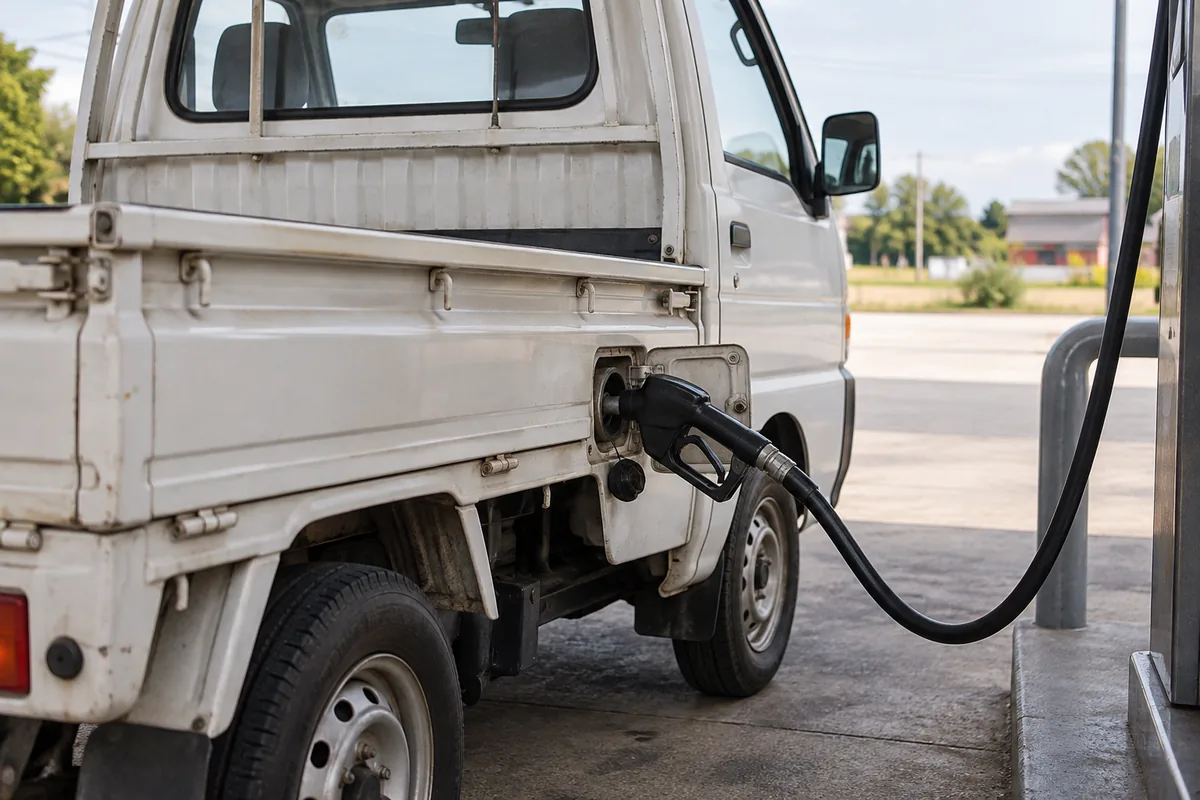
Range equals usable tank gallons multiplied by achieved mpg, not the catalog headline multiplied by a guessed tank. Fuel tanks differ by model and year; read the exact owner manual or grade sheet and preserve a reserve rather than running dry. The current Subaru Sambar specifications are a useful example of how grade and drive columns differ.
Most naturally aspirated kei trucks use gasoline, but the required octane and any ethanol cautions belong to the exact Japanese manual. Do not substitute an enthusiast claim for that instruction. For model comparisons, start at the kei trucks for sale hub, then calculate fuel cost using a realistic local pump price.
Estimate annual fuel cost
Choose an official figure and a scenario. The discount is an explicit assumption, not an observed U.S. test result.
Calculating
What actually predicts fuel economy
A current fuel-economy catalog figure is a comparison aid, not a resale premium by itself. Original tire sizing, sound fuel delivery and documented servicing make the truck more predictable than an implausible economy claim.
Shortlist economical trucks in the Mirai Auction Portal
Fuel economy filters must point to an actual grade, not a generic model name. With Mirai’s customer-only Auction Portal, we can search major Japanese auctions for trucks matching the age, drivetrain and transmission in your U.S. brief, then pull the period catalog that defines its test-cycle figure. The portal does not measure the candidate’s real fuel consumption. Share your route and annual mileage; we can weigh fuel cost against condition, gearing and the likely repair work.
Request Auction Portal access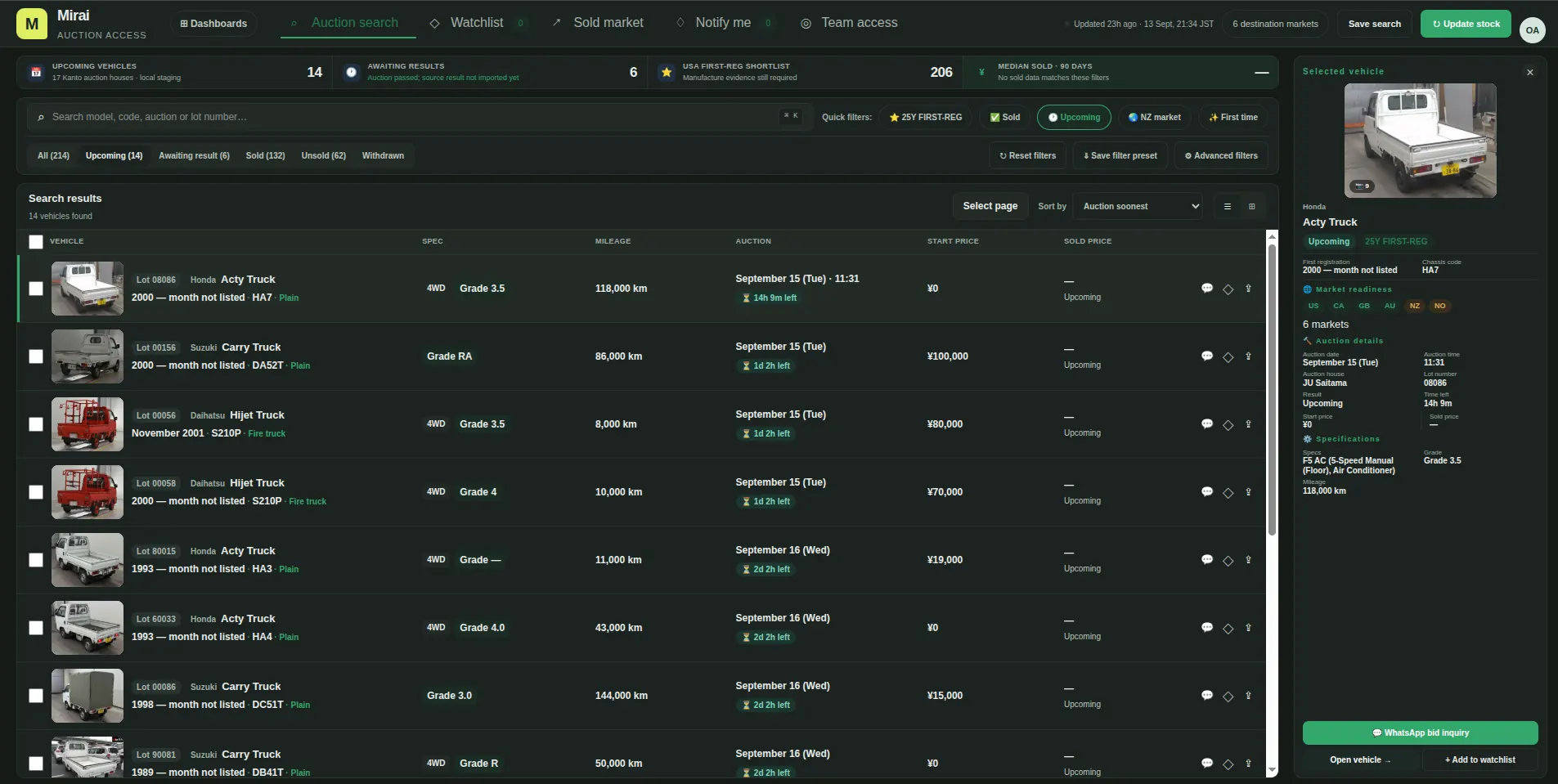
Frequently asked questions
What is the MPG for a kei truck?
It varies by year, drivetrain and test cycle. A 2026 Hijet 4WD/5MT catalog figure of 15.6 km/L WLTC converts to about 36.7 U.S. mpg, not a guaranteed U.S. result.
How do I convert km/L to U.S. mpg?
Multiply the km/L figure by 2.3521458. Use U.S. gallons; an Imperial mpg conversion would be different.
Are older 10-15-mode figures comparable to WLTC?
No. The drive cycles differ, so a higher older number may reflect the test rather than a more economical truck. Compare like methods and configurations.
Why does my truck get less than the catalog figure?
Higher speeds, loads, 4WD hardware, cold weather and tire changes can raise fuel use. Mechanical faults or an inaccurate odometer may also distort the result.
How far can a kei truck go on a full tank?
It depends on the exact tank capacity and achieved mpg. Read the vehicle manual and keep a reserve; do not multiply an optimistic lab figure by the entire tank.
Do automatic kei trucks use more fuel?
Generally no. Older 3AT/4AT designs and newer CVTs differ, and the manufacturer test data must be matched by grade. Your route can reverse a small catalog difference.
Does 4WD reduce fuel economy?
Generally yes. It can add weight or driveline losses, but the amount varies by truck. Use the 2WD and 4WD columns of the same model-year catalog.
Can I use regular gasoline?
Generally yes. Usually these naturally aspirated trucks use gasoline, but the required grade belongs to the exact owner manual. Check fuel-system compatibility on the individual import.
Are kei trucks good for daily driving?
Generally yes. They can suit local trips where title and traffic conditions allow, but sustained fast-road use needs a separate comfort and safety assessment. Fuel economy alone should not decide.
Will larger tires improve MPG?
Generally no. Larger or heavier tires can change gearing and rolling resistance. They also distort an odometer-based fuel calculation unless recalibrated.
Sources and verification
- Daihatsu Hijet Truck catalog — March 2026 edition.
- Daihatsu Hijet Truck period grade archive — February 2000 Special 2WD/5MT.
- Suzuki Carry and Super Carry specifications — December 2025 edition.
- Subaru Sambar Truck specifications — 2026 edition.
- Honda Acty Truck period specifications — 2009 model archive.
Find a truck for your route
Tell us your typical miles, road speeds and state. Mirai can shortlist grades with the right gearing and documentation.