
Kei truck reliability: lifespan, weak points and checks
Kei truck reliability is condition-led: there is no defensible universal mileage at which these trucks fail. An older, documented truck with clean cooling, structure and drivetrain is a better bet than a low-odometer example with gaps.
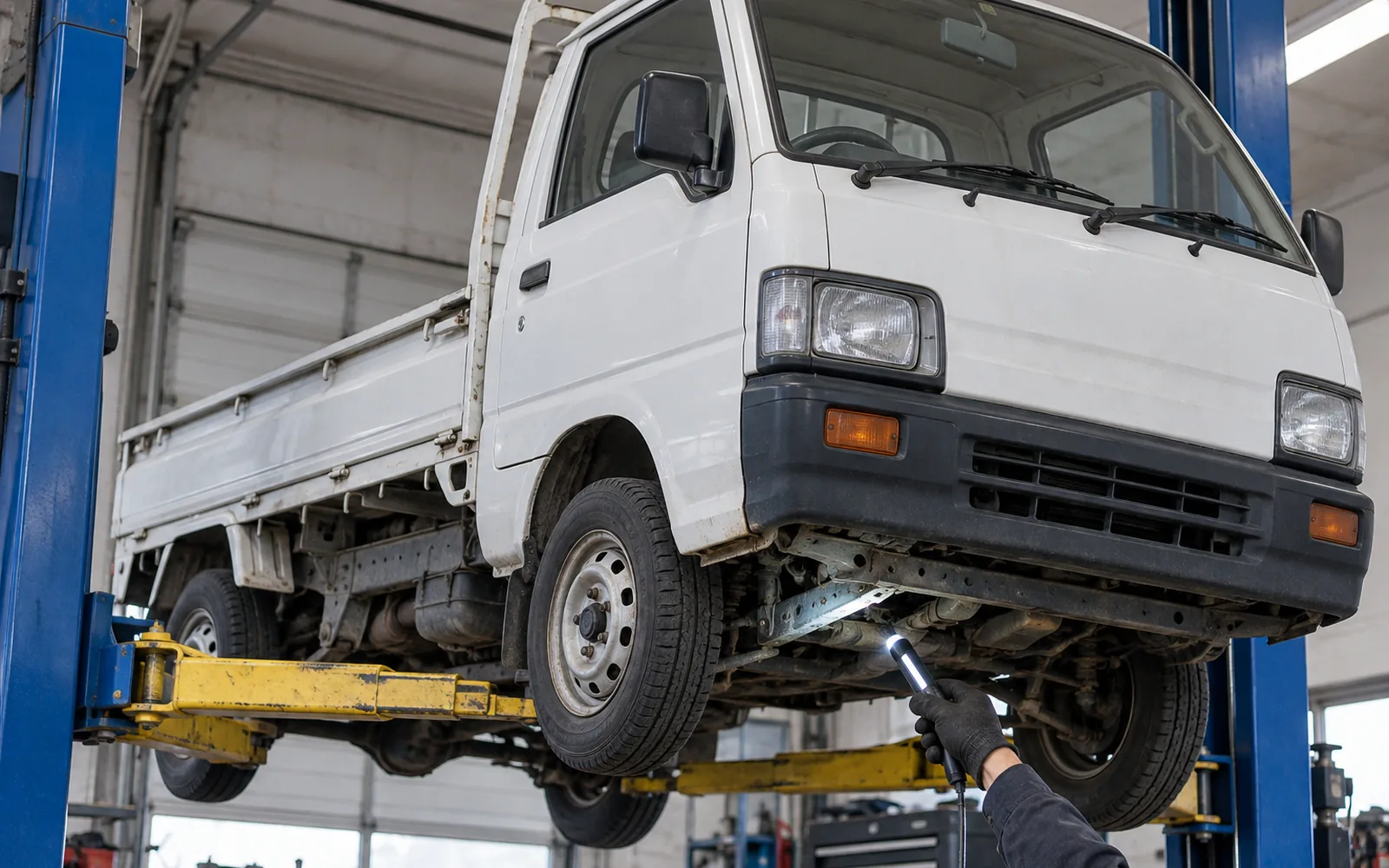
Condition and maintenance dominate.
Also Sambar and Minicab.
Find leaks and unstable idle.
Match engine code and chassis ID.
Kei truck reliability is a condition question
Anecdotal reports of 100,000–200,000 km (about 62,000–124,000 miles) and beyond cannot be turned into a population lifespan. Odometer evidence may be incomplete; farm idling and frequent short trips can wear a truck without adding many kilometers. Compare documented oil, coolant, timing-drive and clutch work with cold-start behavior, structural rust and a test drive. The service schedule must match the chassis and engine code, not merely the badge.
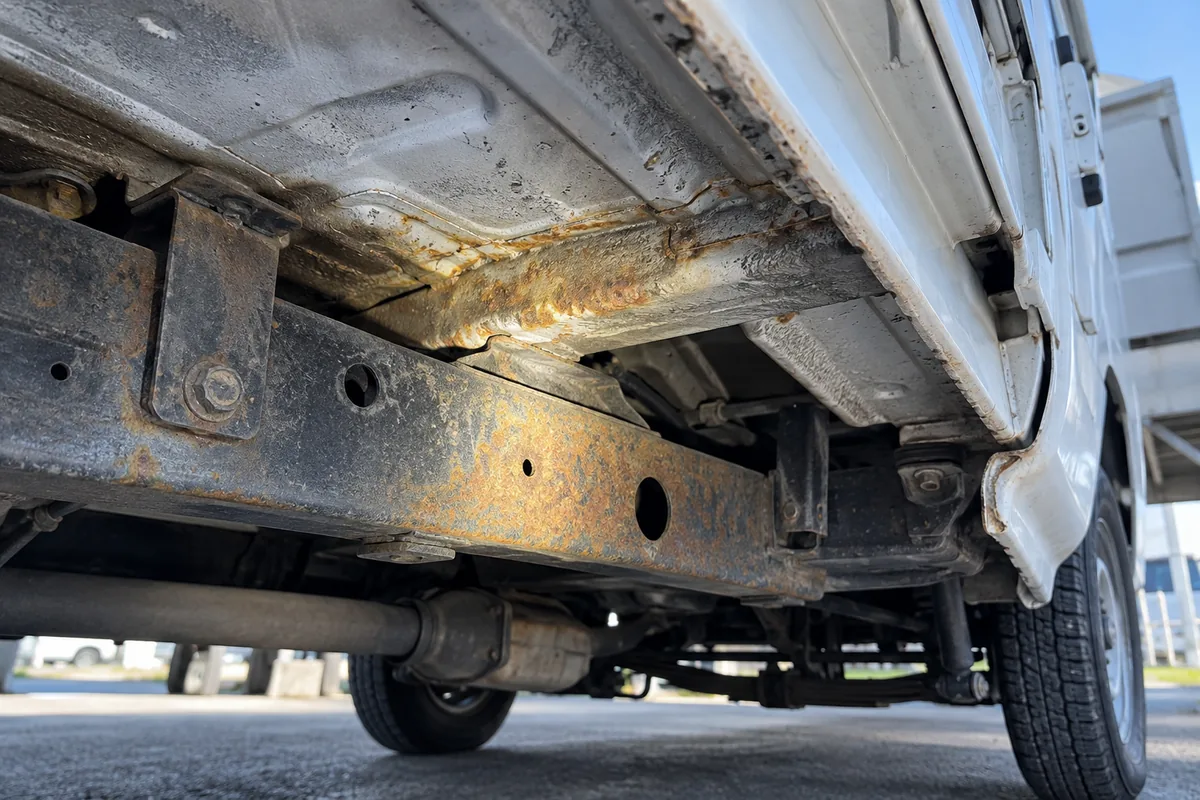
An auction grade is a summary, not a mechanical warranty. The auction-sheet guide explains diagram marks and repair-history signals. Ask for the underbody, cab floor, spring mounts, battery tray and coolant area in focused photographs.
Kei truck problems across five model families
Honda Acty: inspect the mid-engine cooling circuit, rear engine bay leaks and Real Time 4WD behavior where fitted. Honda’s 2009 E07Z specification identifies SOHC belt drive; match its service interval to the actual engine. Suzuki Carry: look at cab-floor and chassis corrosion, gearbox engagement and transfer operation; identify F6A versus K6A before buying service parts. Daihatsu Hijet: inspect cooling, automatic/CVT behavior by generation and front suspension loads on work trucks. Current Hijet data do not describe a 1990s example.
Older Subaru-built Sambar: inspect rear-engine cooling and belt/chain specification by engine code; later Subaru-badged trucks use different underlying hardware. Mitsubishi Minicab: verify its engine and body generation before interpreting a parts or timing schedule. These are inspection priorities, not claims that one make fails at a known rate. Manufacturer period archives and current catalogs establish configurations, while the individual service book establishes intervals.
Parts, repairs and honest downsides
Many filters, belts, hoses and brake items can be sourced in the United States, but exact fitment is harder when a seller advertises only “kei truck.” Match part numbers to the chassis and engine; the parts guide covers that workflow. A local shop may decline right-hand-drive or Japanese-only diagnostic work, so choose service support before purchase.
Downsides include modest highway performance, small crash structures, narrow cabs, rust exposure and parts lead times. There is no defensible “most reliable” badge across decades of different engines. The kei truck comparison hub helps choose the model family; this checklist judges the specific truck.
Build an inspection request
Choose the family and era; the checklist tells you what evidence to request, without inventing a failure rate.
Calculating
What signals a reliable truck
Service records, dry underbody seams and correct engine identity deserve more weight than a low odometer alone. A cosmetically tidy auction grade can still hide deferred cooling, timing-drive or clutch work.
Shortlist well-documented trucks in the Mirai Auction Portal
Mirai’s Auction Portal makes it practical to compare condition evidence rather than badges alone. Qualified customers can search major Japanese auction houses with filters for age, mileage, grade and repair-history notes, then request inspection photographs before bidding. An auction sheet cannot prove a timing service was done or a cooling system is healthy. We can ask the selling auction for specific records and images and favor trucks whose chassis identity supports U.S. parts matching.
Request Auction Portal access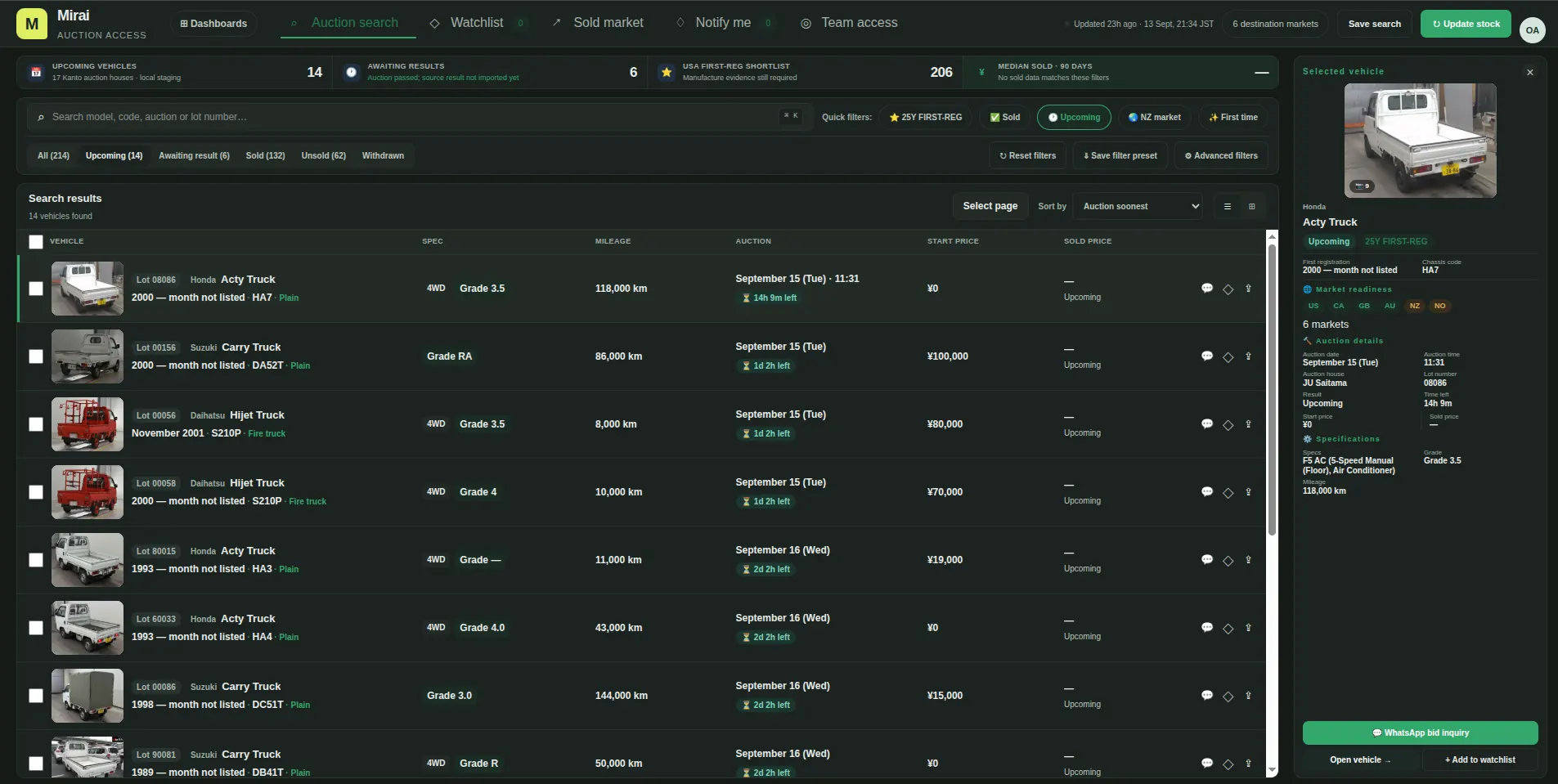
Frequently asked questions
How reliable are kei trucks?
They can be durable when maintained and used within their ratings, but there is no universal reliability score. Condition, rust and service evidence matter more than model reputation alone.
How long do kei trucks typically last?
There is no manufacturer-backed lifespan number for the used imports in this guide. Some owners report high kilometer counts, but an individual truck needs its own inspection.
Which kei truck is the most reliable?
No defensible across-era winner exists. Compare trucks of the same period by documented maintenance, corrosion, cooling condition and available parts.
What are the common downsides?
Small cabs, low high-speed reserves, corrosion, variable parts lead times and limited local repair familiarity are real tradeoffs. State road restrictions may also limit use.
Do all kei trucks use timing belts?
No. Timing-drive design differs by engine and era. Identify the engine code and follow its factory schedule.
Are kei trucks easy to work on?
Generally yes. Some routine service is simple, but packaging and Japanese-only references can complicate access. A shop experienced with the exact engine helps.
Can an auction grade guarantee reliability?
No. A grade summarizes observed cosmetic and condition factors at one auction. It cannot replace a cold start, underbody photos and maintenance records.
Is low mileage always better?
No. An unused truck may have aged rubber, stale fuel or long gaps between services. Evidence of care beats the odometer alone.
Can U.S. shops get parts?
Generally yes. Many service items are available when the chassis and engine codes are known. Rare trim or body pieces may require a Japan order.
Should I worry about frame rust?
Yes. Examine chassis rails, spring mounts, cab floor and repaired sections. Structural corrosion changes the buying decision more than superficial paint blemishes.
Sources and verification
- Honda Acty Truck archive — period catalog index, checked 2026-10-14.
- Honda Acty Truck period specifications — 2009 model archive.
- Suzuki Carry and Super Carry specifications — December 2025 edition.
- Daihatsu Hijet Truck catalog — March 2026 edition.
- Subaru Sambar Truck equipment chart — November 2025 edition.
- Mitsubishi Minicab Truck specifications — February 2026 release.
Buy the condition, not the odometer
Send Mirai your model shortlist and intended use; we can seek the records and inspection images that matter.