
Import Kei Truck to USA: 25-Year Rule, EPA, CBP & State Handoff
This guide shows exactly how to import kei truck to USA: screen the exact manufacture month, preserve the original-engine evidence EPA expects, prepare the federal entry file, estimate border costs and then move the cleared truck into the correct state—and county—guide.
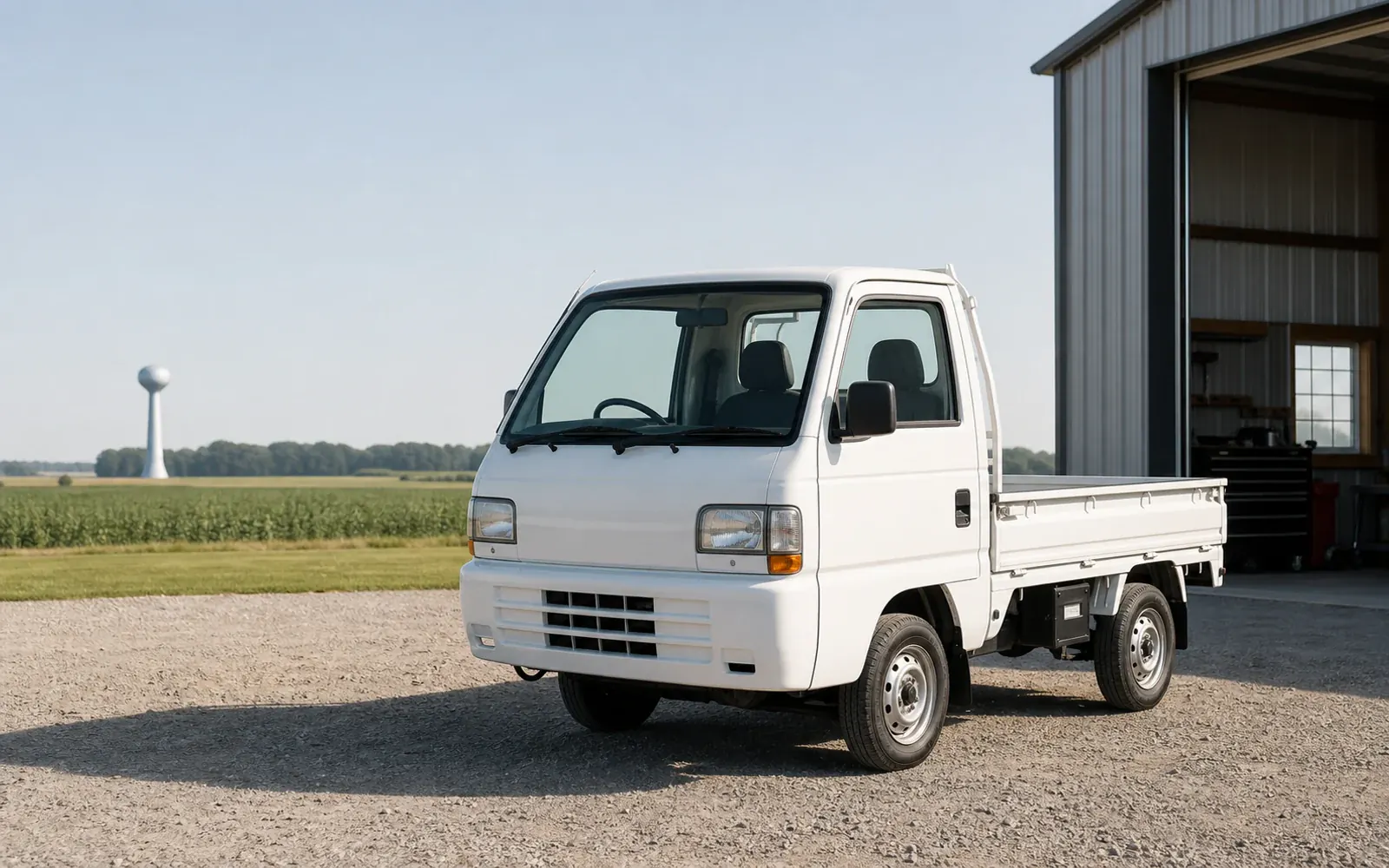
Measured from the actual manufacture month.
Original engine and configuration remain material.
For a qualifying vehicle at least 25 years old.
Federal entry does not issue a title or plate.
Import Kei Truck to USA: Is It Legal?
Yes—when the individual truck clears NHTSA, EPA and Customs, followed by the destination’s separate title and road-use rules.
The most practical federal pathway is a truck at least 25 years old from its actual manufacture date. NHTSA says that vehicle may enter without conforming to current Federal Motor Vehicle Safety Standards and is normally declared under Box 1 of Form HS-7.
EPA is a different statute and uses a different screen. Its over-21-year route depends on the same model and configuration of engine originally installed. CBP then examines the declaration, ownership, value and tariff classification. None of those federal decisions guarantees that a state will title or register the truck.
Three gates, not one “legal” label
First prove federal admissibility. Then clear Customs. Only then apply the destination state’s title, registration and road-use rules—and check county or municipal restrictions where relevant.
The Japan-to-USA federal route
Keep the same chassis, date, engine and value evidence consistent from auction purchase through entry.
Pre-screen
Confirm manufacture month, original engine and the intended state/county route.
Before biddingBuild the Japan file
Match the stamped chassis, export certificate, invoice and body.
Identity evidenceBook shipping
Use a carrier and entry port that accept the vehicle and paperwork.
Logistics gateDeclare NHTSA/EPA
Submit HS-7 and 3520-1 under the actual qualifying provisions.
Federal gateClear CBP
Enter the completed truck under the broker-confirmed HTS treatment.
Customs gateTitle locally
Use the destination state guide, then verify county and insurer acceptance.
Road-use gate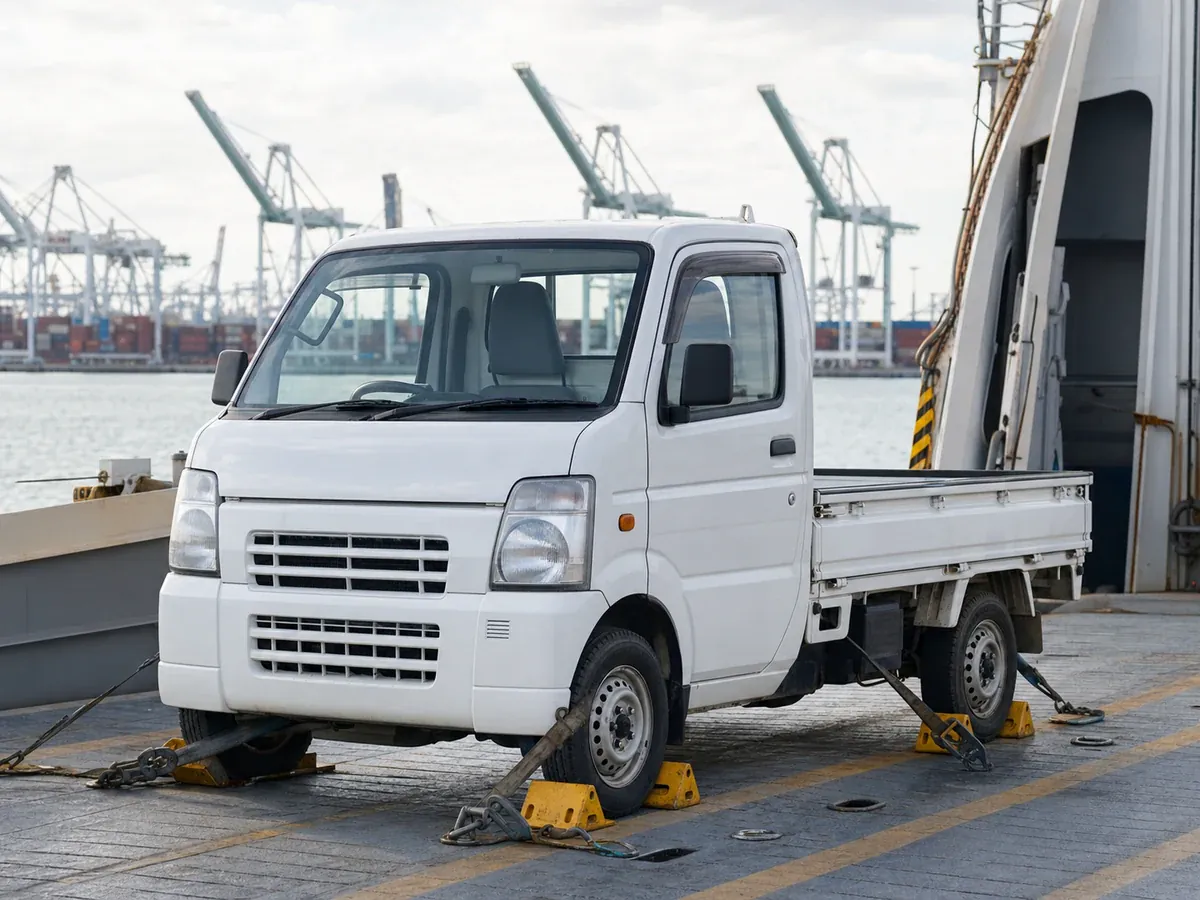
The entry file starts before the vessel sails
Originals and clear translations reduce disputes about age, identity and transaction value.
- Japanese export or deregistration certificate
- Reliable English translation
- Invoice, bill of sale and proof of payment
- Bill of lading and freight/insurance evidence
- Manufacture-date, chassis and engine photographs
- Completed HS-7 and EPA 3520-1 declarations
NHTSA 25 years and EPA 21 years are separate tests
A truck can satisfy one agency’s age threshold without satisfying the other agency’s configuration requirement.
| Federal screen | Threshold | What must be proved | Typical declaration |
|---|---|---|---|
| NHTSA / FMVSS | At least 25 years from manufacture date | Actual month and year; acceptable historical evidence if no label exists | DOT HS-7 Box 1 |
| EPA / Clean Air Act | At least 21 years | Same model and configuration of engine originally installed | EPA 3520-1 Code E when qualified |
| Under-25 nonconforming route | No age shortcut | NHTSA eligibility, Registered Importer, bond and conformity requirements | Vehicle-specific; not assumed |
| Right-hand drive | Not an age exemption | RHD alone neither bars entry nor proves conformity | State treatment still separate |
If the exact manufacture month is unavailable, do not represent the truck as eligible. Obtain acceptable evidence before purchase or schedule arrival conservatively.
Inspect identity before relying on a listing
The chassis stamping, export record and engine evidence should describe one vehicle.
- Photograph the full stamped chassis sequence
- Record the manufacture month from reliable evidence
- Confirm engine code and whether it is original
- Document specialty bodies or major modifications
- Resolve damage or identity inconsistencies before shipping
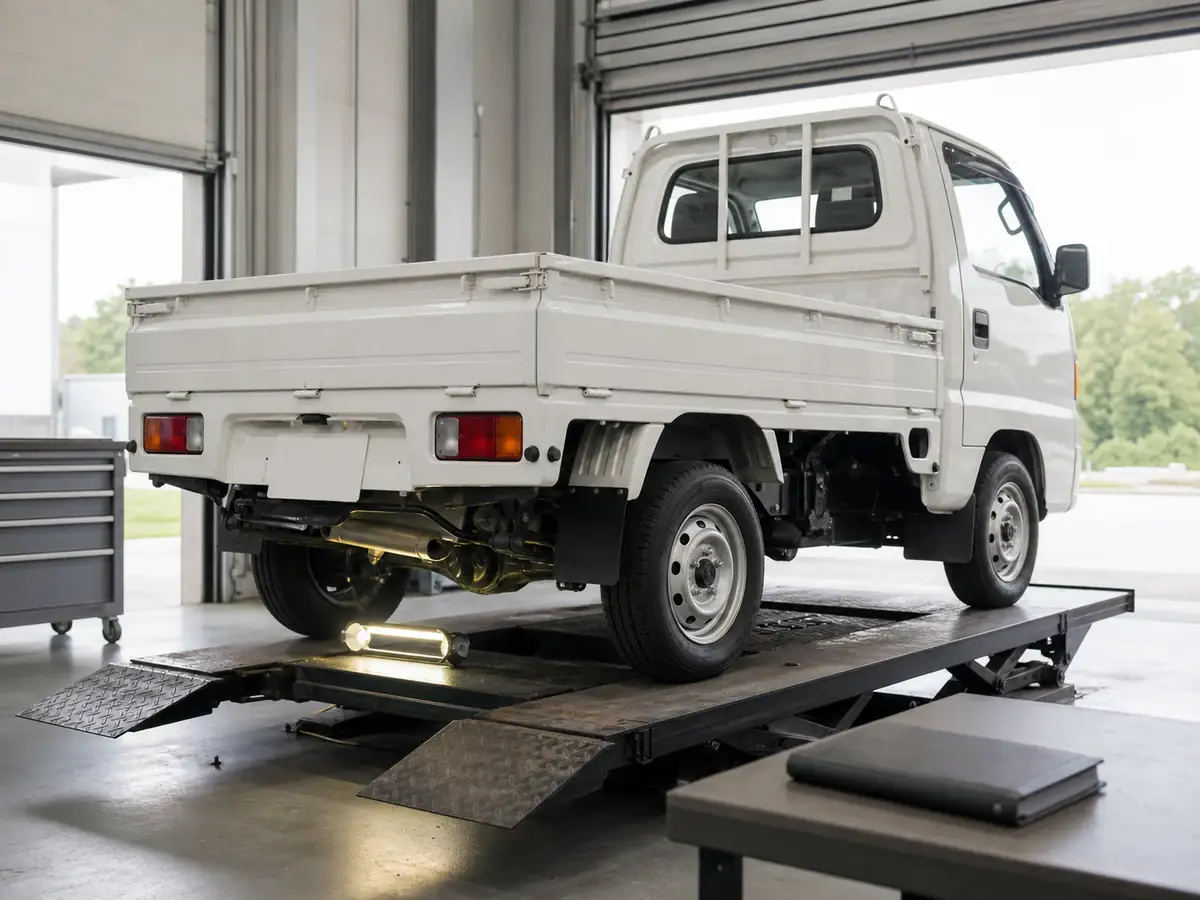
CBP entry, tariff classification & landed-cost planning
Duty follows the completed vehicle’s current classification and measures in force on the entry date.
CBP expects the ownership and transport file together with the EPA and DOT declarations. A customs broker can prepare the entry, but the importer remains responsible for accurate identity, value and classification information.
A 2026 CBP ruling on a Japanese Honda Acty truck applied a 25% general rate. Treat that as a current official classification example—not as a universal landed-cost quote. Confirm the exact body, gross weight, tariff line and any additional measures in the current HTS before the vehicle ships. If a 2025–26 entry also paid IEEPA tariffs, see kei truck tariff refunds for the CBP claim route.
One chassis record
Every ownership, shipping and declaration record should reconcile to the physical stamping.
Full transaction evidence
Retain purchase, agent, inland freight, ocean freight and insurance records.
Completed body matters
Standard dropside, dump, fire, lift or other specialty equipment may change the analysis.
Federal clearance hands the truck to a state—and sometimes a county
This national page stops at the federal boundary so detailed state guides can own titling, registration, local-road and insurance questions. For insurance quotes and short chassis numbers, start with the national guide to kei truck insurance in the USA.
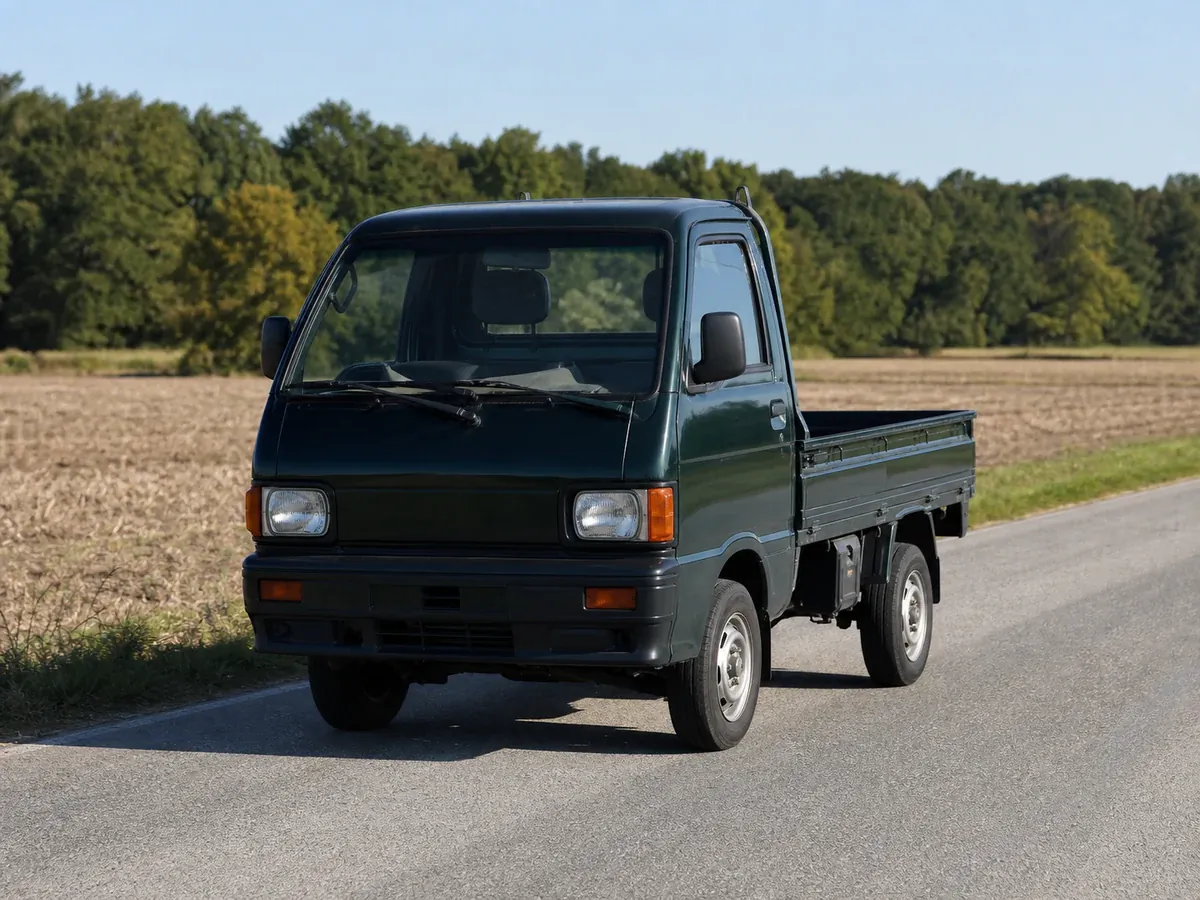
Choose the registration destination before bidding
A federal-age-eligible truck can still face a state title barrier, restricted-road category, local option or insurer refusal.
Compare all 50 states and DC in kei truck laws by state, then open the detailed guide for your state:
- Standard registration route: Alaska, Massachusetts, Michigan, Montana, Texas, Vermont
- Restricted road route: Alabama, Arkansas, Florida, Louisiana, Minnesota, North Carolina, Ohio, Tennessee
- Case-specific review: Arizona, California, Connecticut
- Future route, not yet open: Colorado
- No ordinary road route: Georgia, Hawaii, Maine, Oregon
- Everywhere: obtain an insurance answer for the exact chassis
USA federal eligibility & landed-cost checker
Use the documented month and disclose the engine status. Unknown inputs return a cautious answer.
Screen a proposed Japanese kei truck
Illustrative USD estimate only. Agencies, CBP and the destination jurisdiction make the actual decisions.
Your USA pathway
Enter the truckThe documented manufacture month controls the 25-year route.
Age and original-engine configuration are separate checks.
USA kei-truck import FAQs
Ready to import kei truck to USA? Direct answers to the federal questions that should be resolved before bidding or shipment.
Can I legally import a Japanese kei truck into the United States?
Yes, a Japanese kei truck can generally enter through the ordinary age-based federal route once it is at least 25 years old by its actual manufacture month. EPA requirements, Customs entry and state registration remain separate checks.
Is the U.S. 25-year rule based on model year?
No. NHTSA measures 25 years from the vehicle’s date of manufacture. Use the month and year on reliable Japanese records or other acceptable age evidence rather than subtracting model years.
Which HS-7 declaration applies to a 25-year-old kei truck?
A qualifying vehicle is normally declared under Box 1 of DOT Form HS-7 because it is at least 25 years old and is not required to conform to current Federal Motor Vehicle Safety Standards.
Does EPA use the same 25-year threshold as NHTSA?
No. EPA has a separate exemption route for a vehicle at least 21 years old when it contains the same engine and configuration originally installed. Importers commonly declare a qualifying vehicle under EPA Form 3520-1 Code E.
Can an engine-swapped kei truck use EPA’s 21-year exemption?
Not automatically. A replacement engine can defeat the original-configuration basis of the exemption. Obtain vehicle-specific EPA guidance before purchase or shipment if the engine identity or configuration is uncertain.
Can I import a kei truck that is younger than 25 years?
Usually not through the ordinary age route. A nonconforming vehicle under 25 generally needs an existing NHTSA eligibility decision, a Registered Importer and the applicable bond and conformity process; do not assume a normal Japanese kei truck qualifies.
What documents are needed at U.S. entry?
Keep the original Japanese export or deregistration record, a reliable translation, invoice and bill of sale, proof of payment, bill of lading, manufacture-date and chassis evidence, DOT Form HS-7, EPA Form 3520-1 and the broker’s Customs entry records.
What duty applies to a Japanese kei truck?
Classification and current tariff measures control the amount. A 2026 CBP ruling classified an imported Honda Acty truck at a 25% general rate, but the broker must confirm the completed vehicle’s current HTS classification and all additional measures at entry.
Does right-hand drive stop a kei truck from being imported federally?
No. NHTSA states that right-hand drive by itself neither prohibits entry nor makes a younger nonconforming vehicle compliant. State registration and practical insurance treatment still need separate confirmation.
Does federal import clearance guarantee a state title or registration?
No. Federal admission only resolves the federal import transaction. The destination state controls title, registration, inspection and road use, and local rules or insurance availability can add another practical gate.
Can a 25-year-old kei truck be driven on every public road?
No. Road-use permissions vary by state and can vary by local jurisdiction or road class. Check the dedicated state guide and confirm the exact county or municipality before buying.
What should Mirai verify before I commit to a truck?
Mirai should verify the stamped chassis, manufacture month, original engine identity, export documents, body configuration, condition, purchase evidence and your intended state and county before the truck is bought or booked for shipment.
Primary sources & verification method
Federal claims are grounded in current NHTSA, EPA, CBP and USITC material. State outcomes are deliberately delegated.
- NHTSA — importation and certification FAQs
- DOT Form HS-7
- EPA — importing vehicles and engines
- EPA Form 3520-1
- CBP — importing a motor vehicle
- CBP ruling N359221 — Honda Acty truck classification
- USITC — current Harmonized Tariff Schedule
Vehicle-specific verification order
Prove the manufacture month, reconcile chassis and engine, pre-clear the destination state/county, prepare HS-7 and 3520-1, obtain current tariff advice, then preserve every release record for title processing.
Source a USA-eligible kei truck by exact month, engine and destination
Ready to import kei truck to USA? Send Mirai the model, chassis, manufacture month, body, equipment, budget, state and county. We can verify the Japanese evidence and condition before the federal and local workflow begins, and fit tires, a battery or other parts before the truck ships.